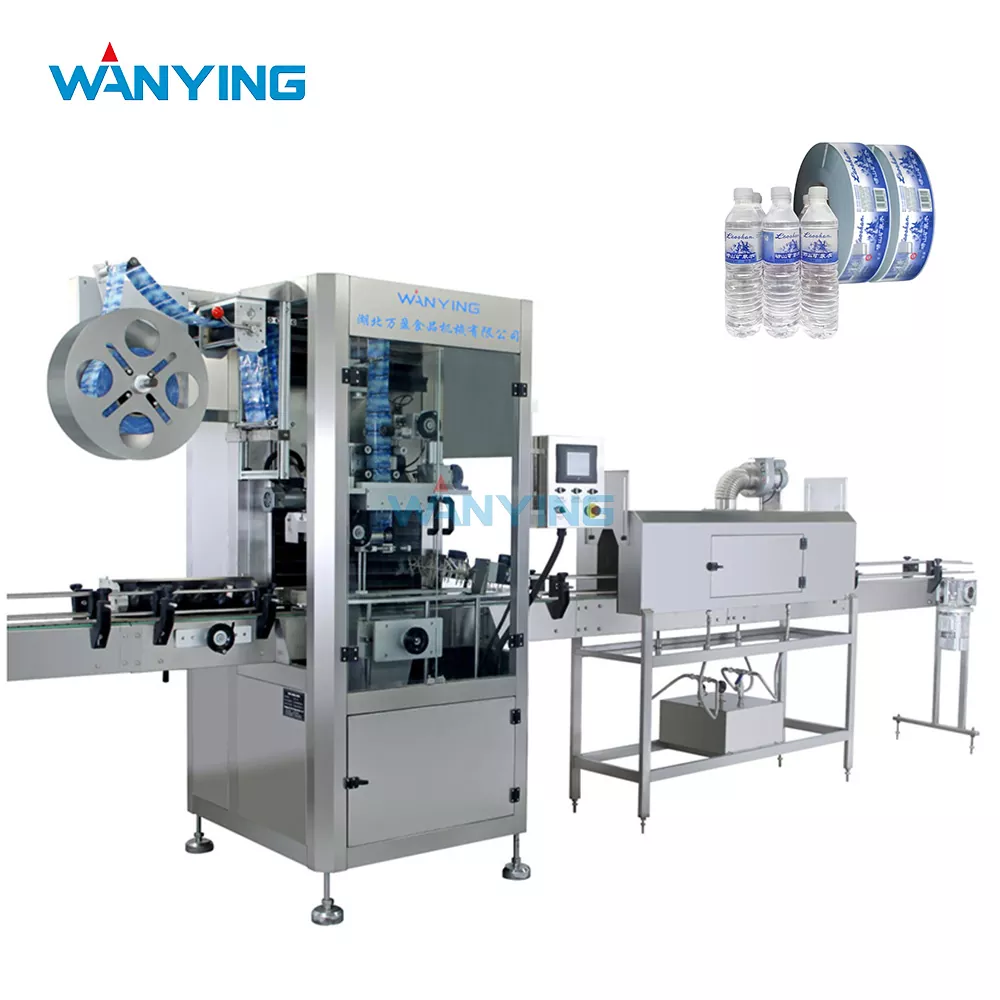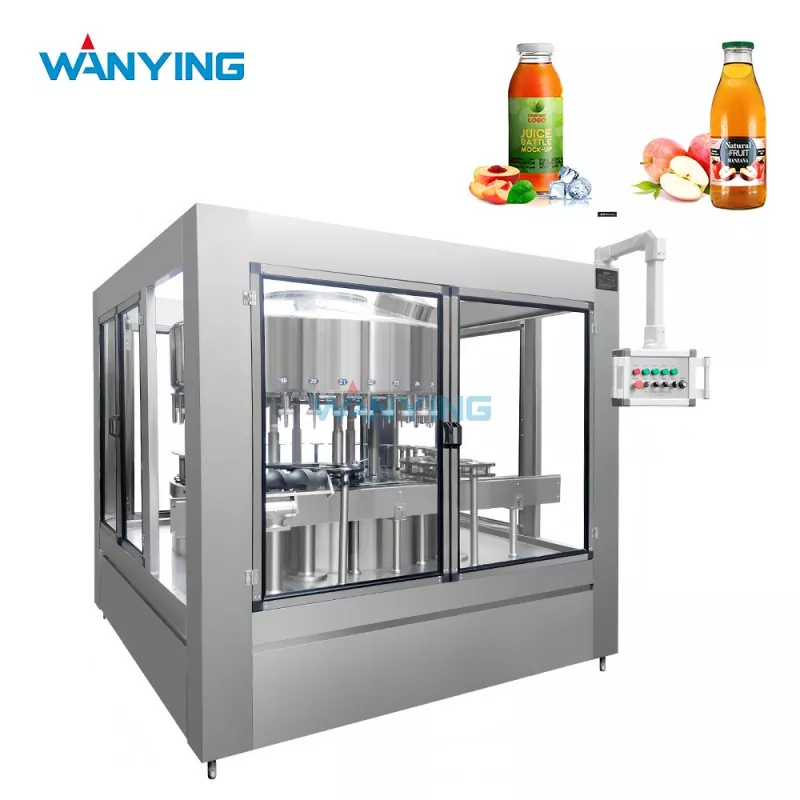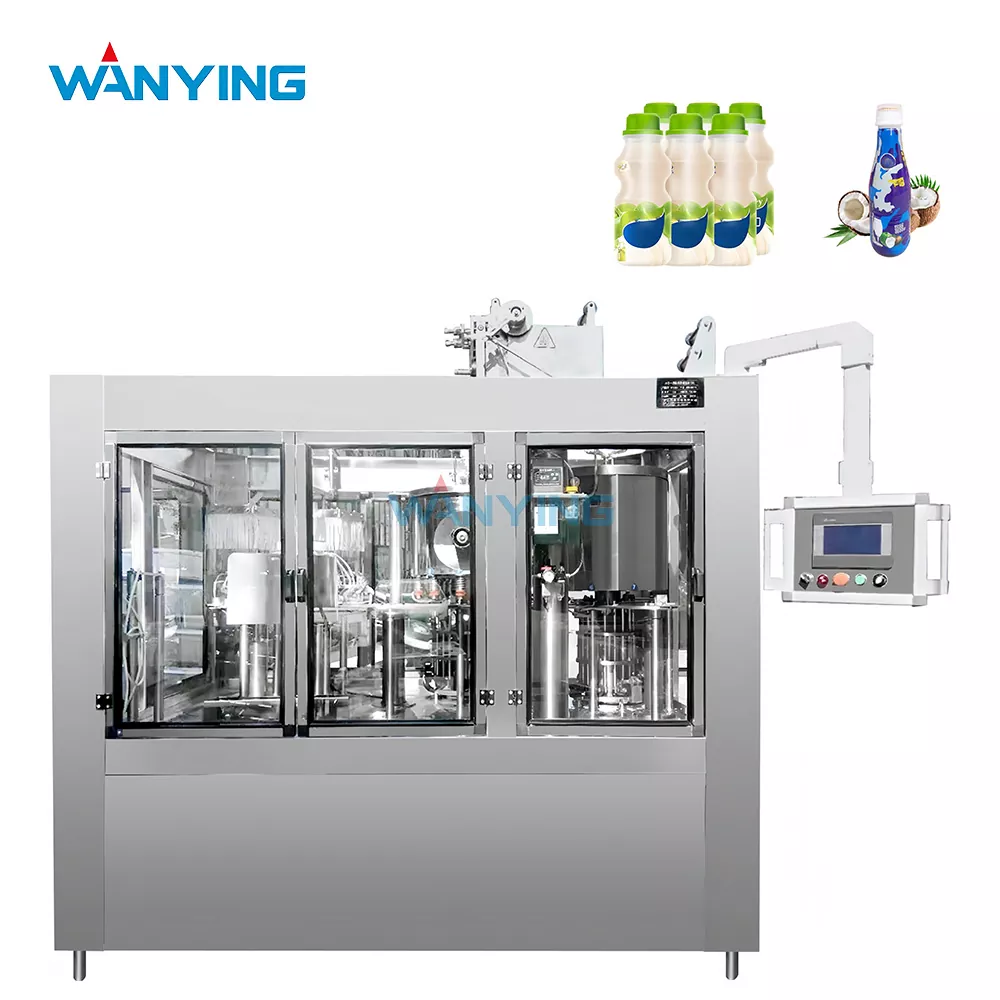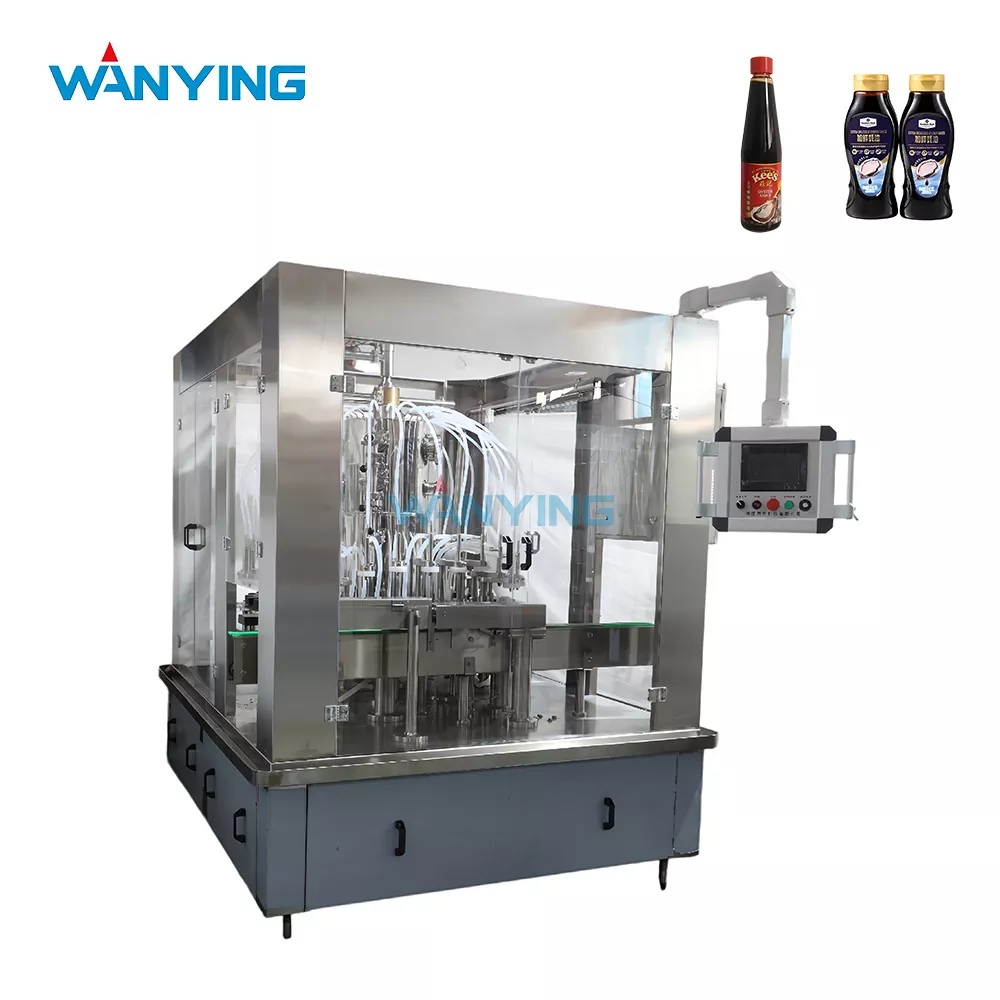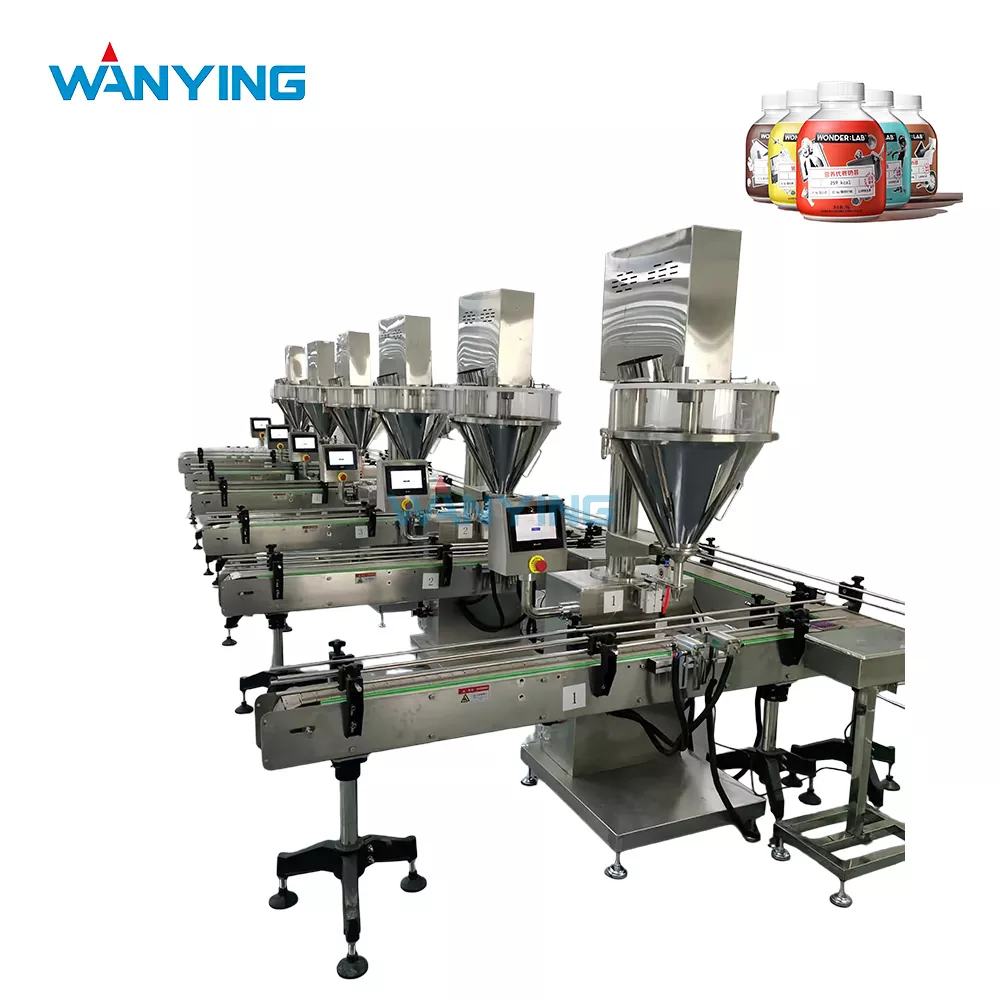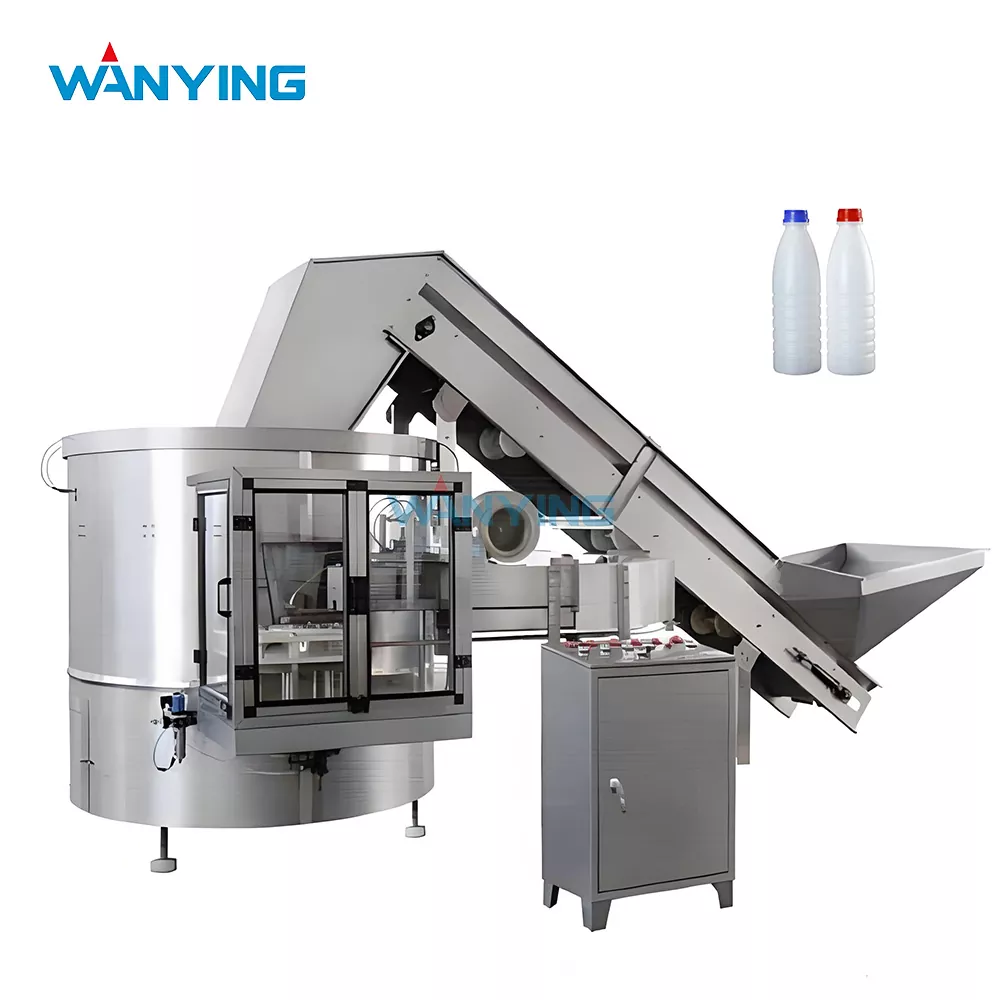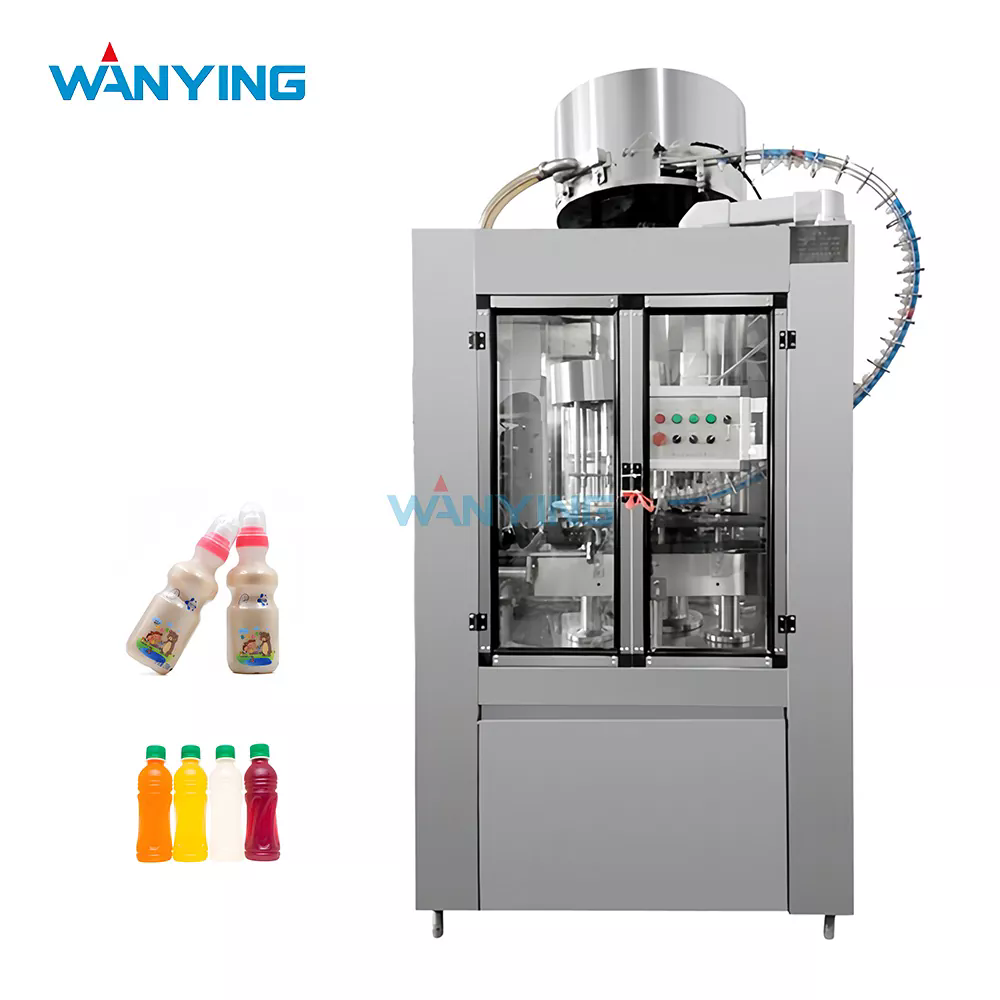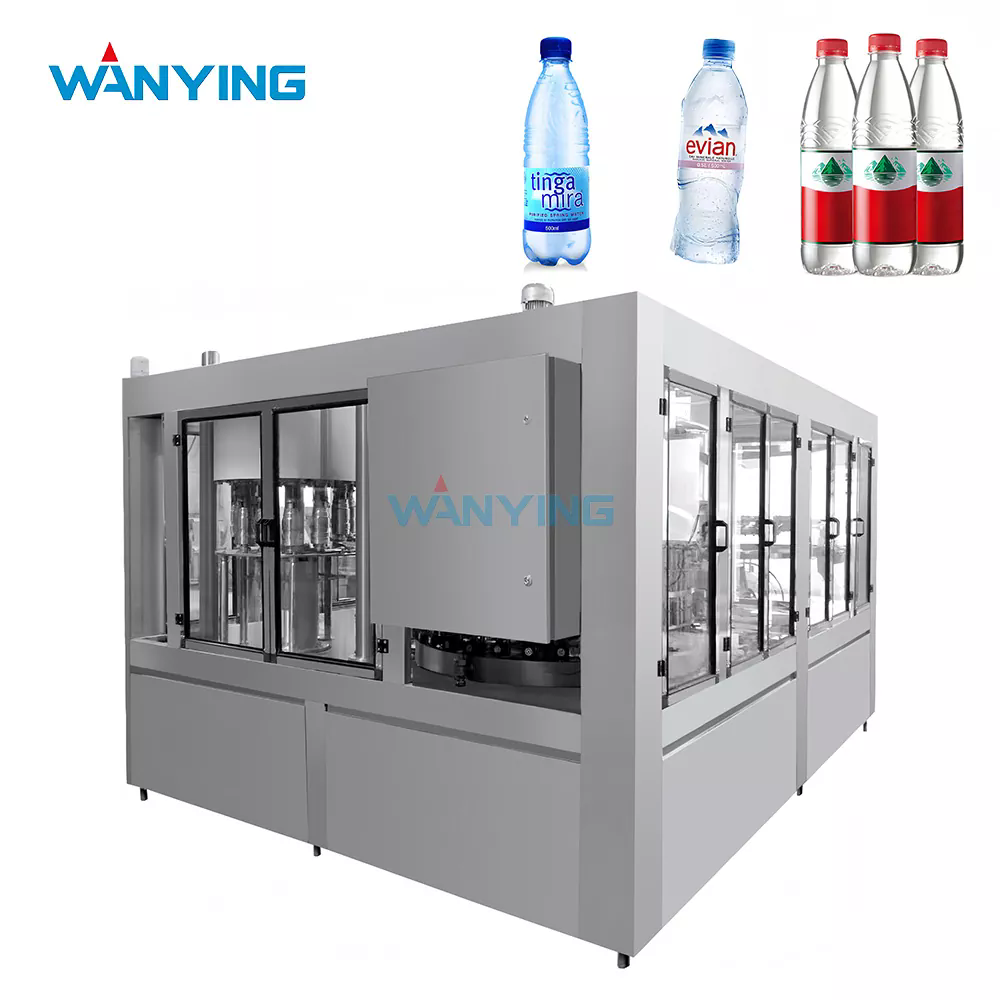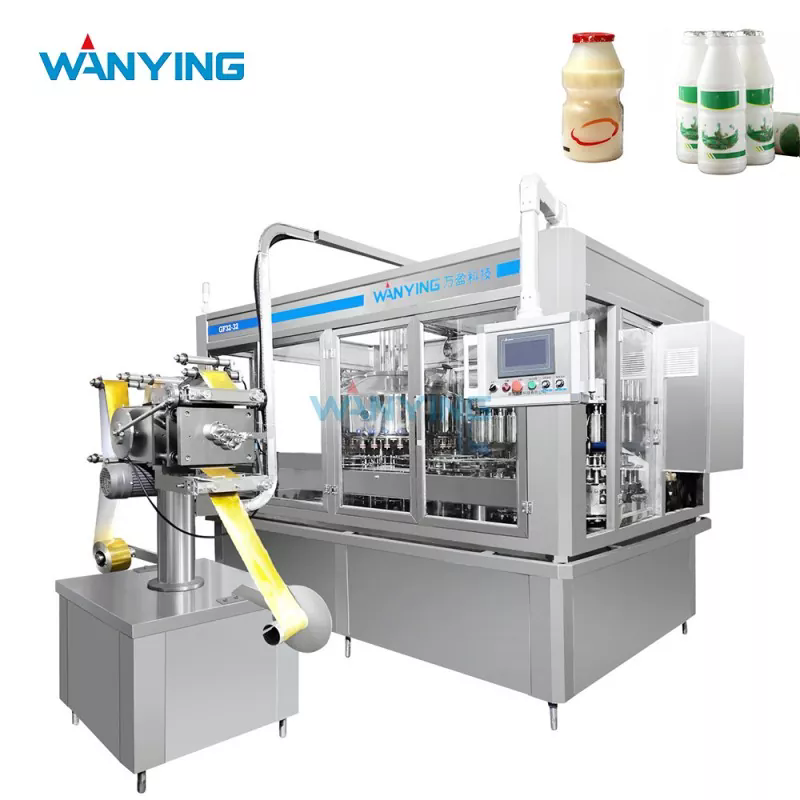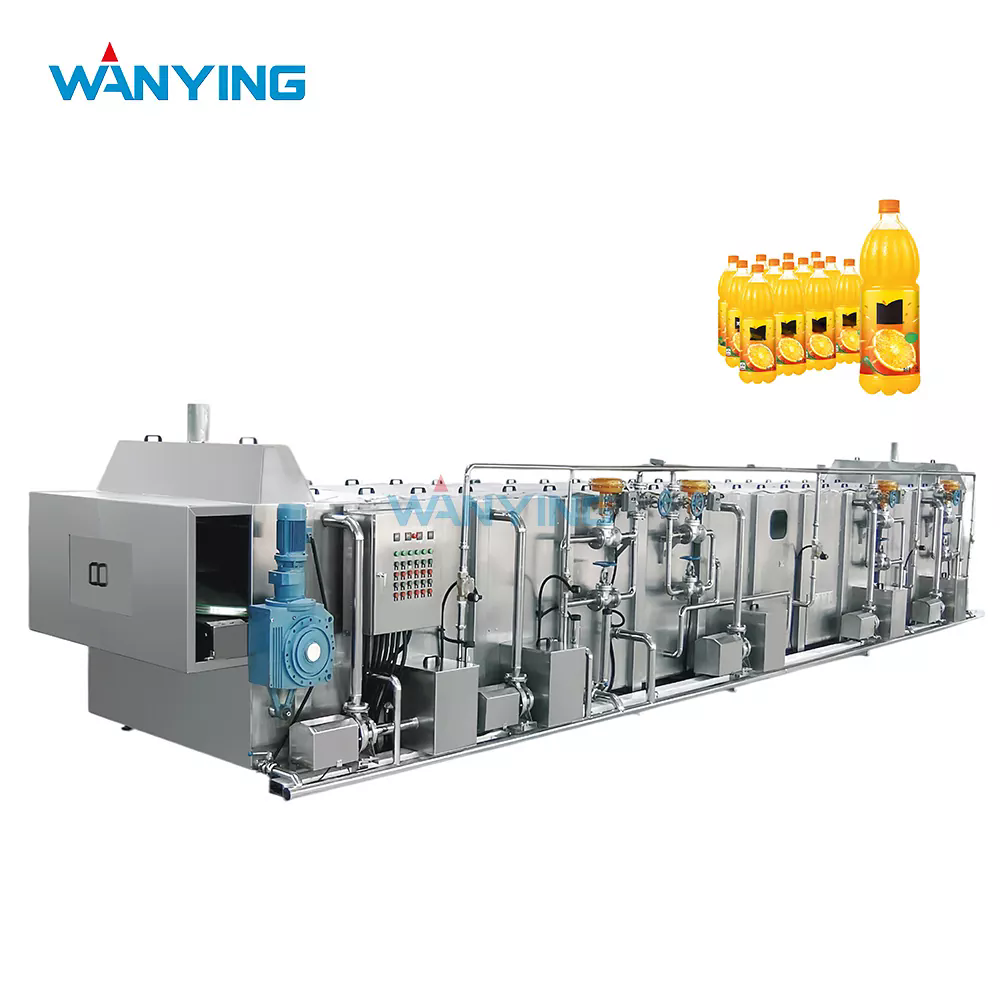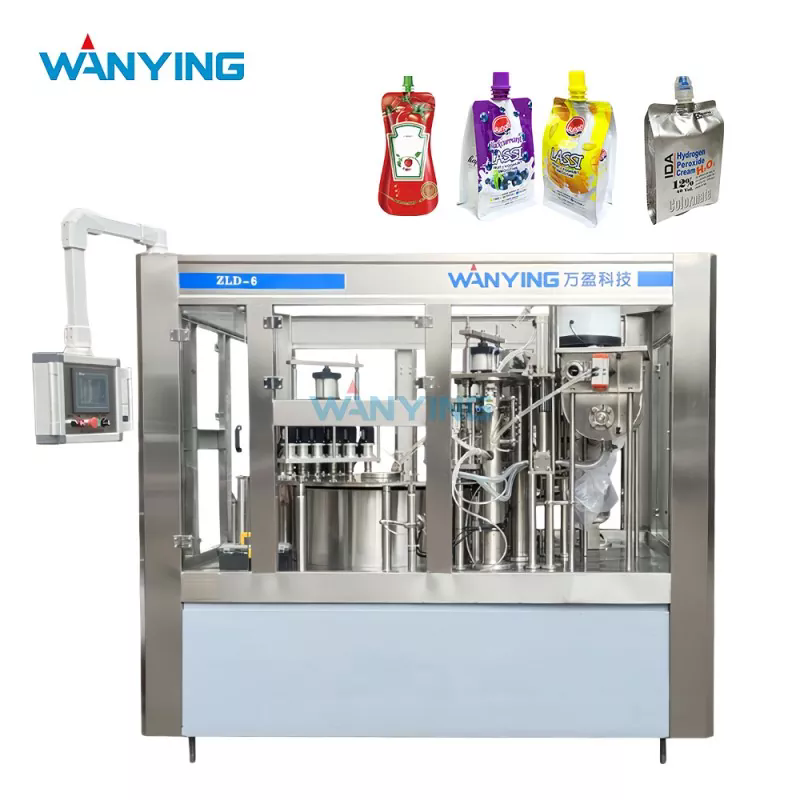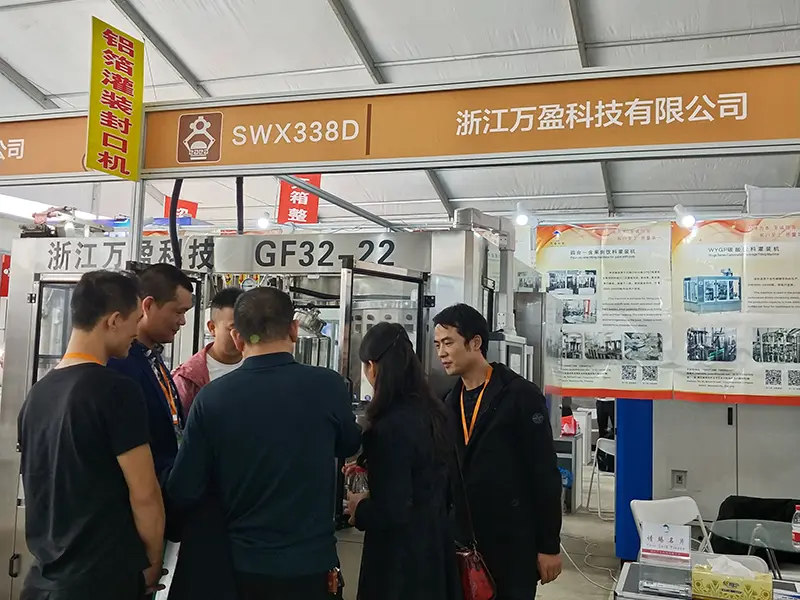
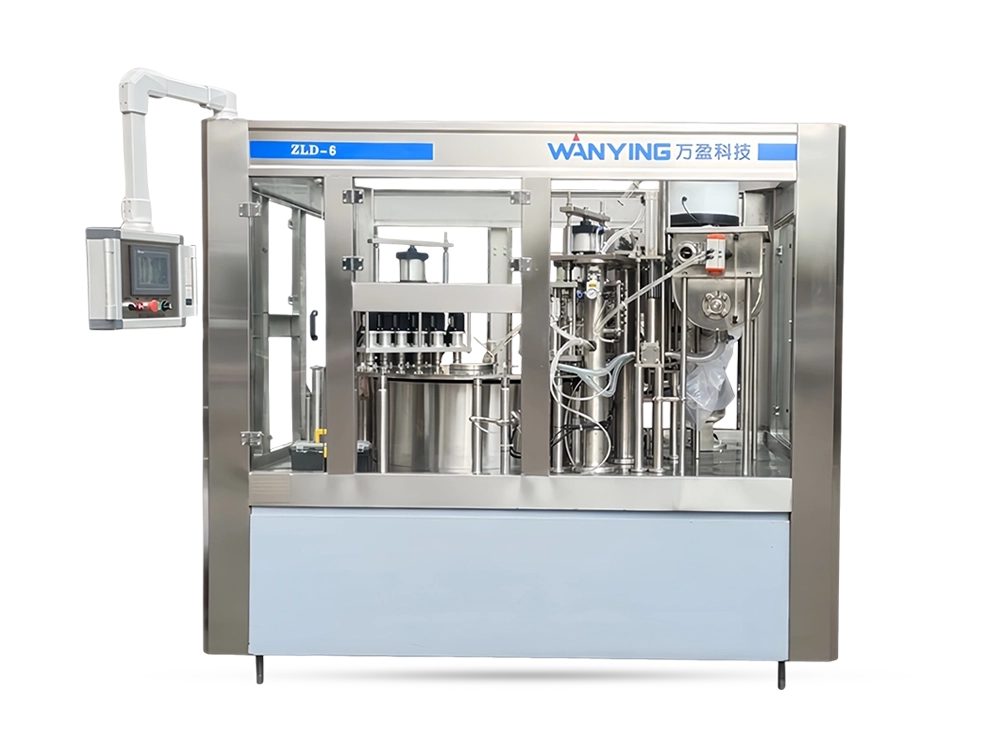
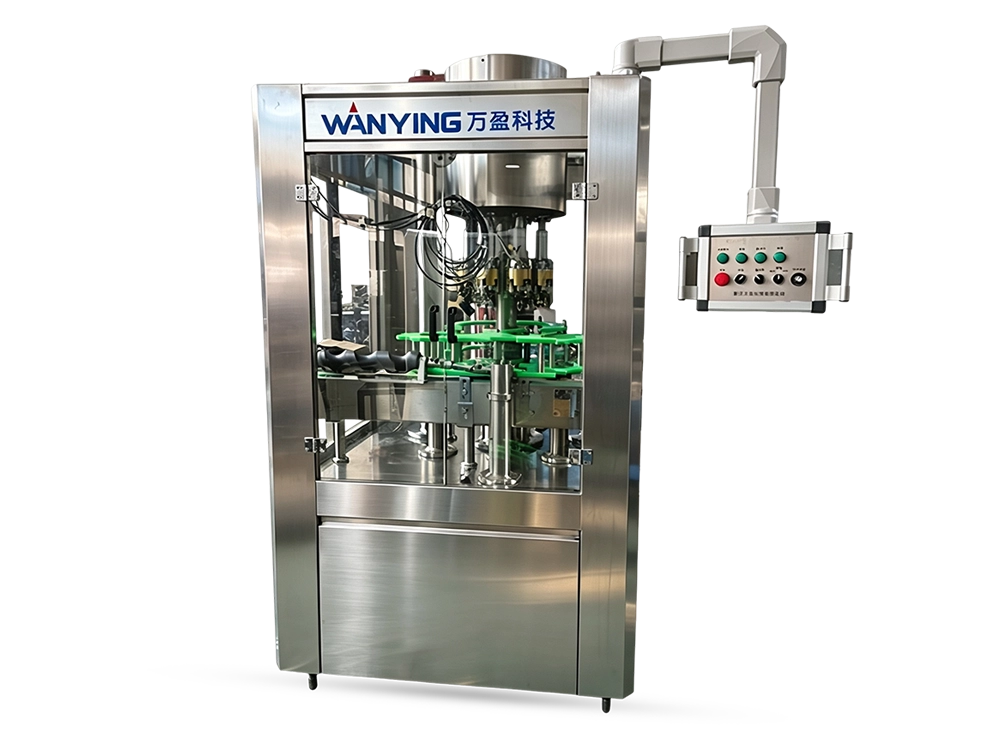
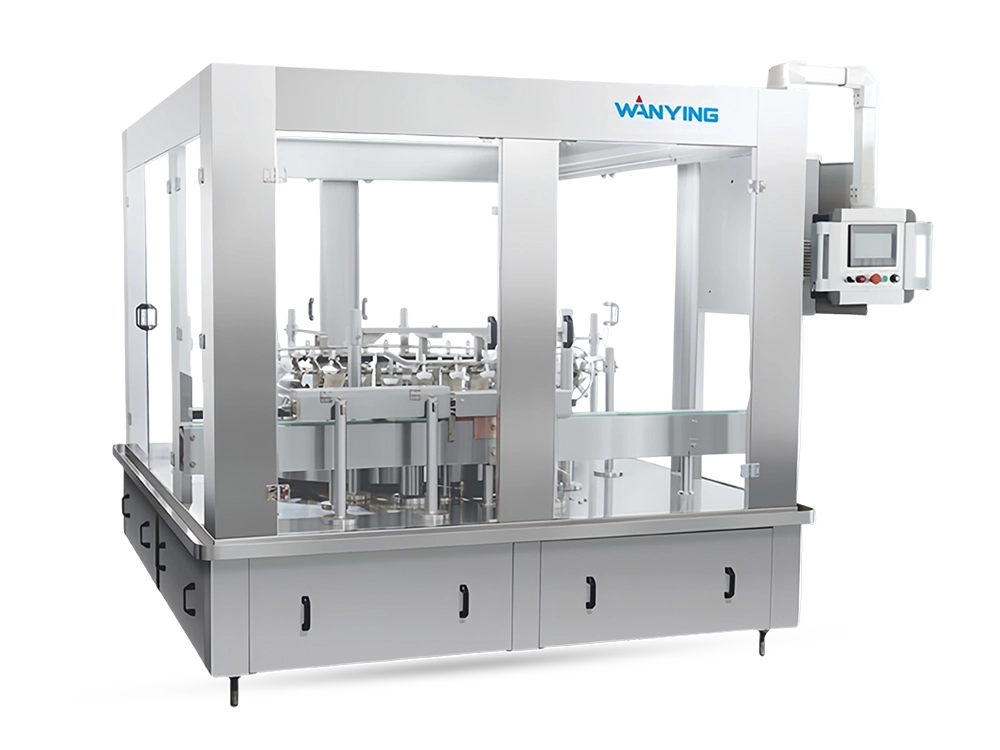
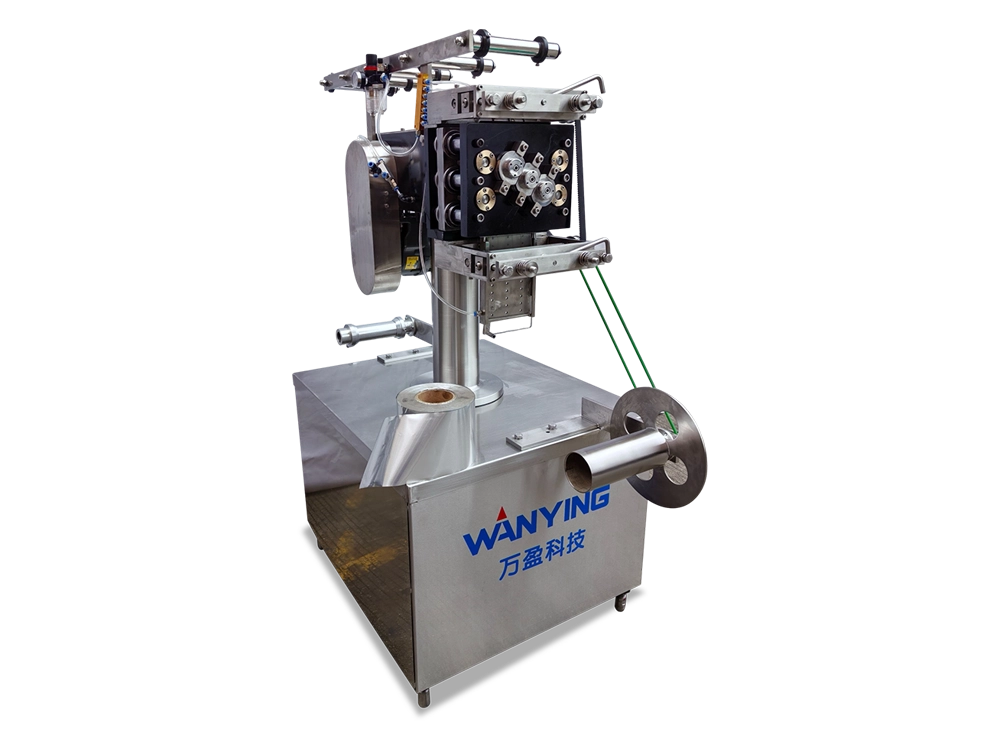
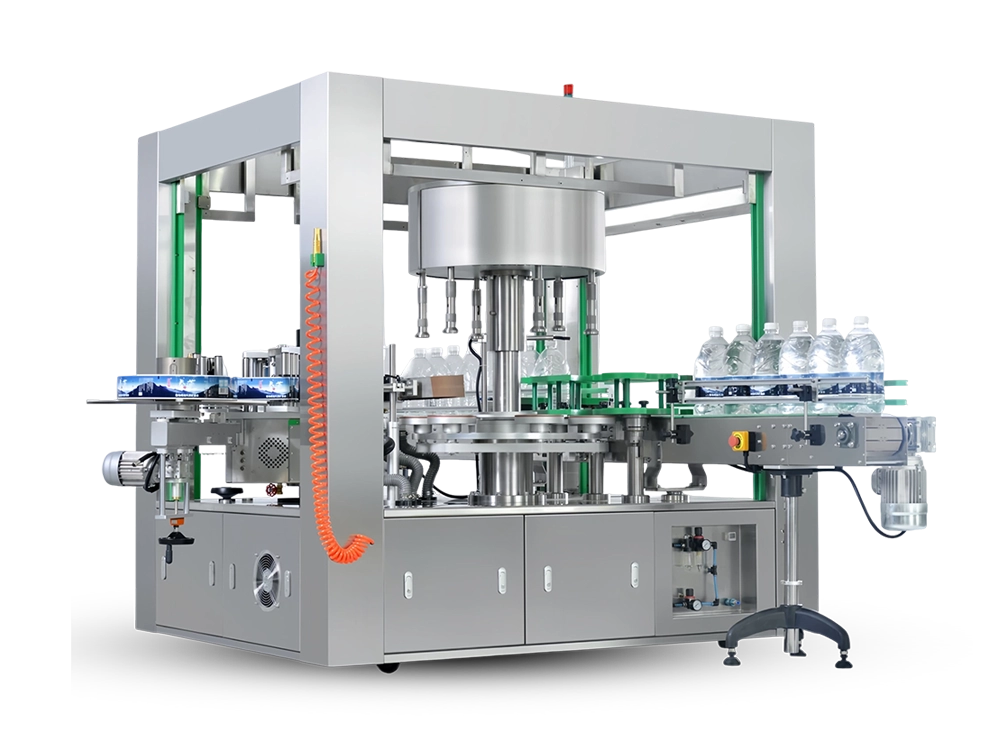
When beverage manufacturers need consistent output, controlled carbonation, and reliable filling accuracy, Wanying provides a practical Carbonated Beverage Filling Machine designed for modern soft drink and sparkling beverage production. Supporting 2,000–12,000 bottles per hour and PET or glass bottles from 200 ml to 2,000 ml, the system is engineered to reduce foaming, minimize CO₂ loss, and maintain stable filling performance.
A Carbonated Beverage Filling Machine is a specialized filling system developed for beverages containing dissolved carbon dioxide. Unlike conventional liquid fillers, it must carefully control pressure, product flow, and filling conditions to prevent excessive foaming and carbonation loss. Wanying's solution combines pressure-controlled filling technology, food-grade stainless-steel contact parts, PLC touchscreen control, and flexible bottle compatibility. With capacities from 2,000 to 12,000 bottles per hour, the equipment can serve small and medium beverage factories as well as high-volume automated production lines.
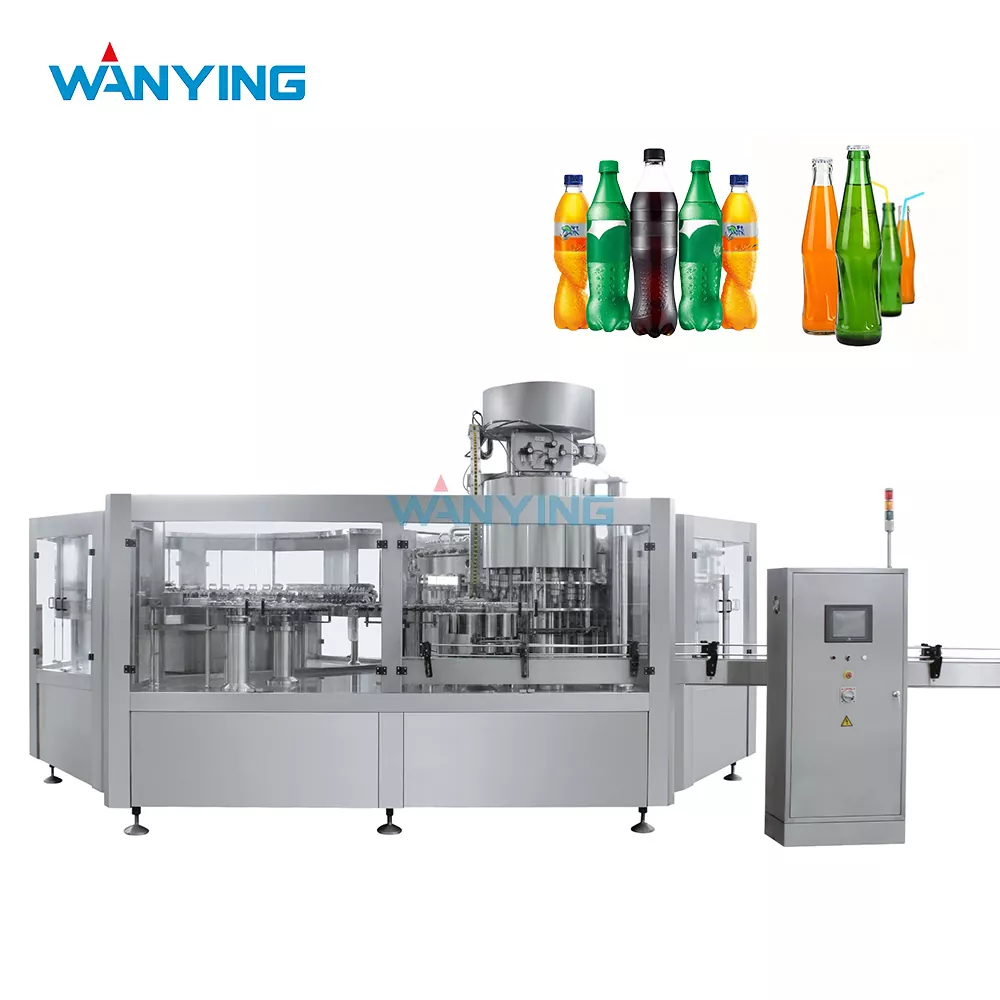
Table of Contents
- What Is a Carbonated Beverage Filling Machine?
- Why Is Specialized Filling Equipment Important for Carbonated Drinks?
- What Are the Key Features of Wanying's Filling Machine?
- Key Technical Specifications
- What Beverages Can the Machine Handle?
- How Can It Be Integrated Into an Automated Production Line?
- How Should Manufacturers Choose the Right Machine?
- Quality Control and After-Sales Support
- Frequently Asked Questions
- Conclusion
What Is a Carbonated Beverage Filling Machine?
A Carbonated Beverage Filling Machine is specialized equipment used to transfer carbonated liquids into bottles while maintaining controlled pressure and minimizing the release of dissolved CO₂. It is commonly used for sparkling water, soda, cola-style drinks, fruit-flavored carbonated beverages, and other sparkling formulations.
The filling process is more demanding than filling still liquids because carbonated beverages can foam rapidly when pressure conditions change too quickly. Excessive foaming can cause product overflow, inconsistent fill levels, beverage waste, and unnecessary production downtime.
Wanying's equipment addresses these challenges through an optimized pressure-controlled filling process. The system is designed for stable beverage transfer while maintaining carbonation as much as possible throughout the filling operation.
Why Is Specialized Filling Equipment Important for Carbonated Drinks?
Carbonated beverage production requires greater control than many conventional liquid-filling applications. The interaction between product pressure, bottle pressure, filling speed, temperature, and CO₂ concentration can directly influence final product quality.
A suitable filling system can help manufacturers achieve:
- Reduced foaming: Controlled filling conditions help minimize excessive foam during bottle filling.
- Better carbonation retention: Appropriate pressure management helps reduce unnecessary CO₂ loss.
- Consistent fill levels: Stable filling parameters contribute to more uniform finished bottles.
- Lower product waste: Reduced overflow and spillage can improve material utilization.
- Higher production efficiency: Automated filling reduces repetitive manual operations.
- Flexible production: Adjustable configurations allow manufacturers to work with different bottle formats.
What Are the Key Features of Wanying's Filling Machine?
Wanying designs its carbonated beverage equipment around the practical requirements of beverage factories. The system combines filling precision, production flexibility, hygienic construction, and automated controls.
Pressure-Controlled Filling
The core advantage is optimized constant-pressure filling. Maintaining more stable pressure conditions helps reduce the rapid CO₂ release that can result in excessive foaming and product loss.
Food-Grade Stainless Steel Construction
Product-contact components can be manufactured using SUS304 or optional SUS316L stainless steel. These materials provide a hygienic and durable solution for beverage-processing environments.
PLC and Touchscreen Control
The PLC-based control system and touchscreen interface allow operators to manage filling parameters and production settings efficiently. This simplifies operation while making it easier to adjust the system for different production requirements.
Flexible Bottle Compatibility
The equipment supports both PET and glass bottles, with container volumes ranging from approximately 200 ml to 2,000 ml. This flexibility makes it suitable for different beverage packaging strategies.
Customizable Production Capacity
Production capacity can range from 2,000 to 12,000 bottles per hour. Manufacturers can select a suitable configuration according to order volume, factory scale, bottle specifications, and future expansion plans.
Key Technical Specifications
The following specifications provide a practical overview of the standard performance range:
| Item | Specification |
|---|---|
| Production Capacity | 2,000–12,000 bottles/hour |
| Applicable Bottle Volume | 200–2,000 ml |
| Filling Accuracy | Within ±1% |
| Bottle Type | PET / Glass |
| Product-Contact Material | SUS304 / Optional SUS316L |
| Control System | PLC + Touchscreen |
| Suitable Products | Soft Drinks, Sparkling Water, Soda, Flavored Carbonated Beverages |
Actual production performance depends on factors such as beverage characteristics, bottle design, filling configuration, operating conditions, and production-line layout. Manufacturers should therefore confirm the final configuration with the equipment supplier before purchasing.
What Beverages Can the Machine Handle?
The equipment is intended primarily for carbonated liquid products and can be configured for several beverage categories.
- Sparkling water: Suitable for natural, flavored, and sugar-free sparkling water production.
- Carbonated soft drinks: Suitable for fruit-flavored sodas and cola-style beverages.
- Functional sparkling beverages: Applicable to selected vitamin, probiotic, and functional carbonated drinks.
- Specialty beverages: Suitable for regional fruit sodas and emerging small-format sparkling beverages.
Because beverage formulations can vary significantly, production trials and technical confirmation are recommended when the product contains unusual ingredients, high acidity, pulp, or other characteristics that may affect filling behavior.
How Can It Be Integrated Into an Automated Production Line?
A filling machine can function as the central component of a larger automated beverage packaging system. Wanying can configure auxiliary machinery around the customer's production capacity, bottle format, factory space, and automation objectives.
A typical automated carbonated beverage line may include:
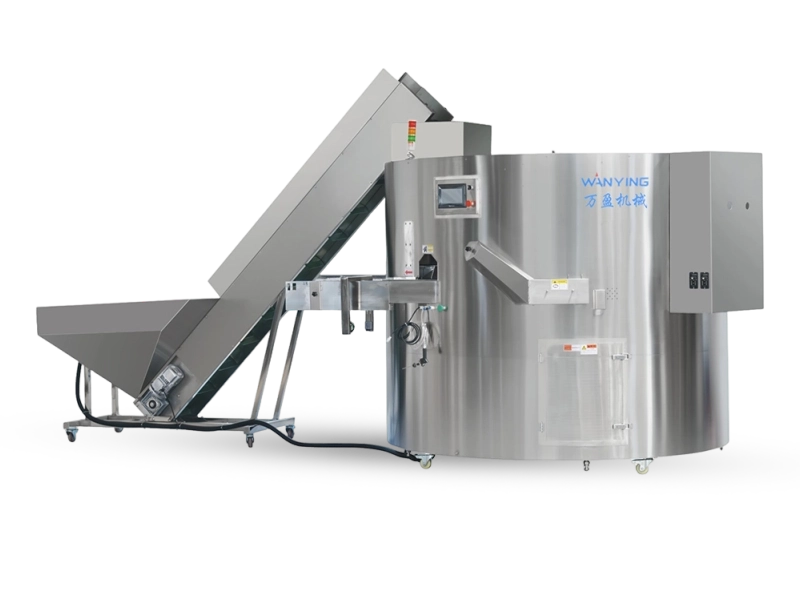
- Bottle unscrambler: Organizes bottles before they enter the filling section.
- Bottle washing or rinsing equipment: Prepares empty containers for hygienic filling.
- Carbonated beverage filling machine: Performs controlled filling while minimizing foaming and carbonation loss.
- Capping machine: Seals filled bottles efficiently after filling.
- Inkjet coder: Prints production information such as batch or date codes.
- Labeling machine: Applies product labels automatically.
- Case packer: Packs finished bottles for storage and transportation.
This modular approach allows manufacturers to start with the core filling equipment and add additional automation as production demand increases. It can also reduce manual bottle handling and improve overall production consistency.
How Should Manufacturers Choose the Right Machine?
Choosing a Carbonated Beverage Filling Machine should involve more than comparing the maximum bottles-per-hour figure. Buyers should evaluate the complete production requirement before placing an equipment order.
Consider Production Capacity
Estimate current demand and potential future growth. Selecting equipment that is significantly oversized can increase investment and operating costs, while insufficient capacity may restrict future expansion.
Consider Bottle Materials and Sizes
Confirm whether the production line will use PET, glass, or both. Bottle volume, neck dimensions, shape, and changeover requirements should also be considered during configuration.
Consider Beverage Characteristics
Carbonation level, temperature, viscosity, acidity, flavoring ingredients, and other formulation characteristics can influence filling performance. Technical parameters should be matched to the actual beverage.
Consider Hygiene and Materials
Food-grade stainless-steel contact parts are important for beverage production. Depending on the product and operating environment, SUS304 or SUS316L may be selected.
Consider Future Automation
If production is expected to expand, buyers should choose a machine that can integrate with bottle unscramblers, capping machines, labeling systems, coding equipment, and case-packing equipment.
Quality Control and After-Sales Support
Reliable beverage machinery depends not only on the machine design but also on manufacturing and testing practices. Wanying states that its production process covers component inspection, precision machining, assembly inspection, and full-machine testing before shipment.
Key quality-control stages include:
- Inspection of stainless-steel, electrical, pneumatic, and other incoming components.
- Precision machining of beverage-contact components.
- Inspection of pipelines, wiring, transmission systems, and assembly quality.
- No-load and material-loaded simulation testing.
- Cleaning, protection, and preparation before shipment.
Wanying also provides production-line planning, installation and commissioning guidance, operator training, remote technical support, OEM spare-parts supply, and long-term technical consultation. These services are particularly valuable for beverage manufacturers purchasing automated equipment for the first time.
Frequently Asked Questions
1. What beverages can a Carbonated Beverage Filling Machine fill?
It is primarily designed for carbonated products such as sparkling water, soda, fruit-flavored carbonated drinks, and selected functional sparkling beverages. It is not intended as a general-purpose filler for non-carbonated liquids without the appropriate configuration.
2. Can the machine handle different bottle sizes?
Yes. The equipment can support PET and glass bottles with capacities ranging from approximately 200 ml to 2,000 ml. Appropriate mechanical adjustments and filling-parameter changes are required when switching between bottle specifications.
3. What production capacity is available?
Wanying's carbonated beverage filling equipment covers approximately 2,000 to 12,000 bottles per hour. The appropriate configuration can be selected according to the customer's production volume and automation requirements.
4. Can I purchase only the filling machine?
Yes. The main filling unit can be purchased as a standalone machine. Manufacturers can also choose a complete automated production line incorporating bottle handling, washing, filling, capping, labeling, coding, and case packing.
5. How does the machine reduce foaming?
The system uses optimized pressure-controlled filling to provide more stable filling conditions. This helps reduce excessive foaming and unnecessary beverage loss compared with unsuitable filling methods.
6. Can the equipment be customized?
Yes. Configuration can be adapted to production capacity, bottle type, beverage characteristics, factory layout, and automation requirements. Buyers should provide detailed technical information so the final system can be properly engineered.
Conclusion
A reliable Carbonated Beverage Filling Machine is essential for manufacturers that want to maintain consistent filling quality while controlling foaming, carbonation loss, labor requirements, and production costs. With a capacity range of 2,000–12,000 bottles per hour, PET and glass bottle compatibility, PLC touchscreen control, food-grade stainless-steel contact components, and modular production-line integration, Wanying offers a flexible solution for different beverage manufacturing scales.
Whether you are building a new sparkling beverage factory, upgrading an existing filling line, or expanding production capacity, selecting equipment according to your actual beverage characteristics and future production goals is critical. For customized equipment configuration, production-line planning, technical specifications, and purchasing support, contact us today and let Wanying help you develop a more efficient and reliable carbonated beverage filling solution.