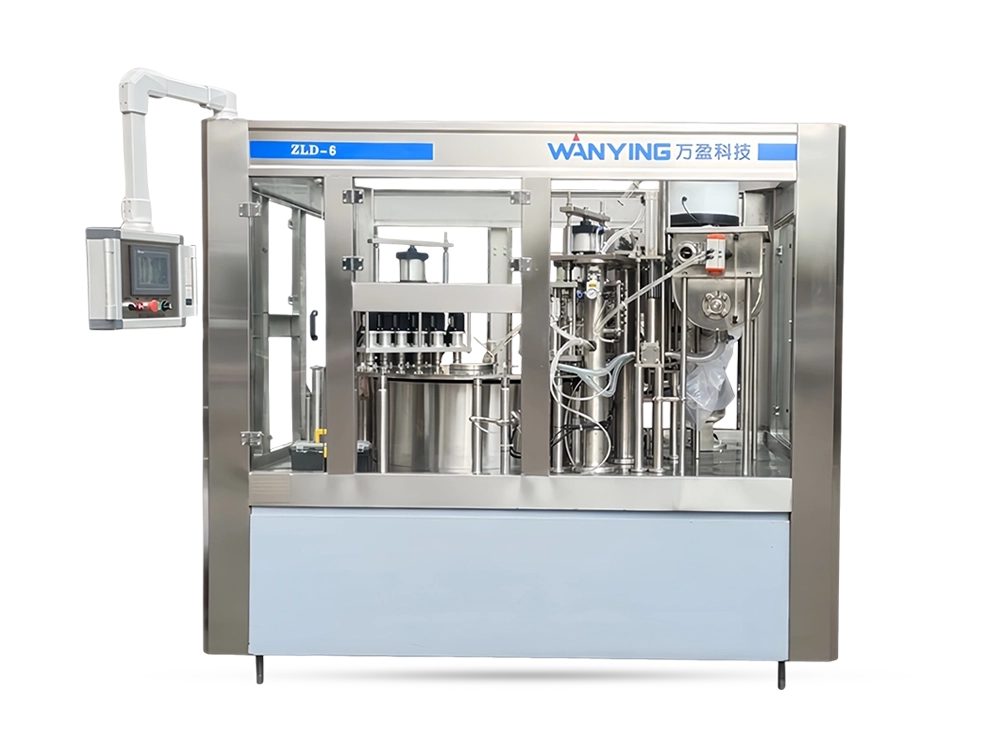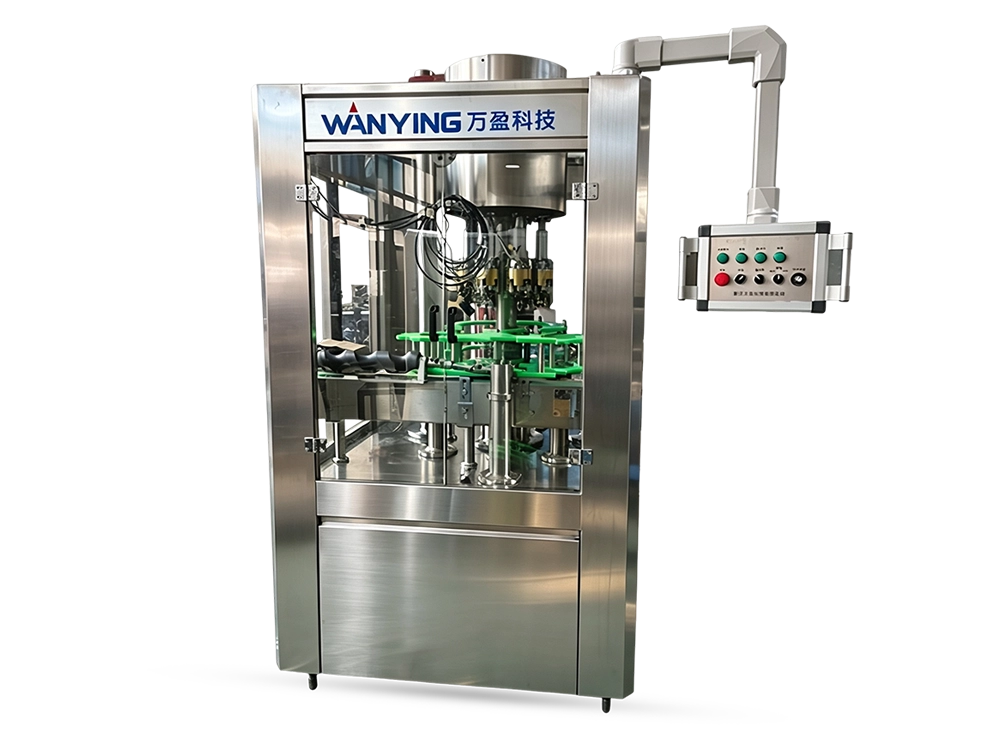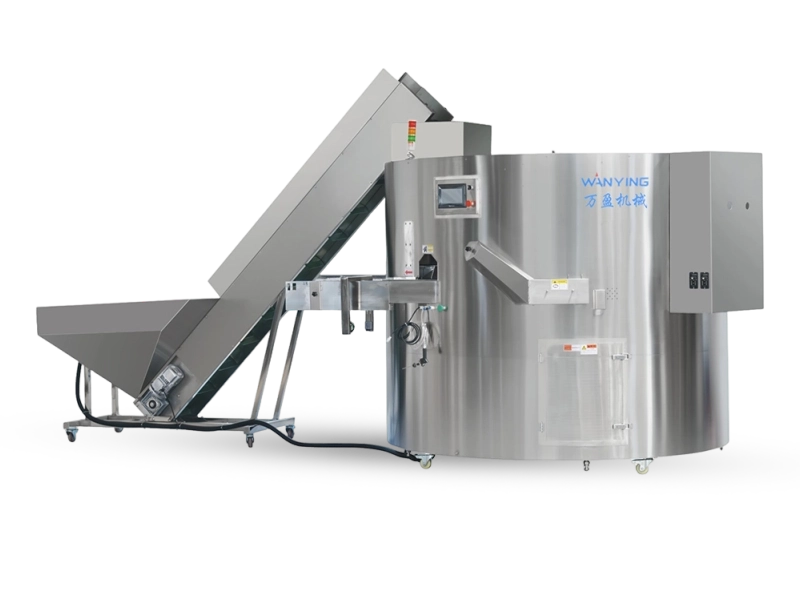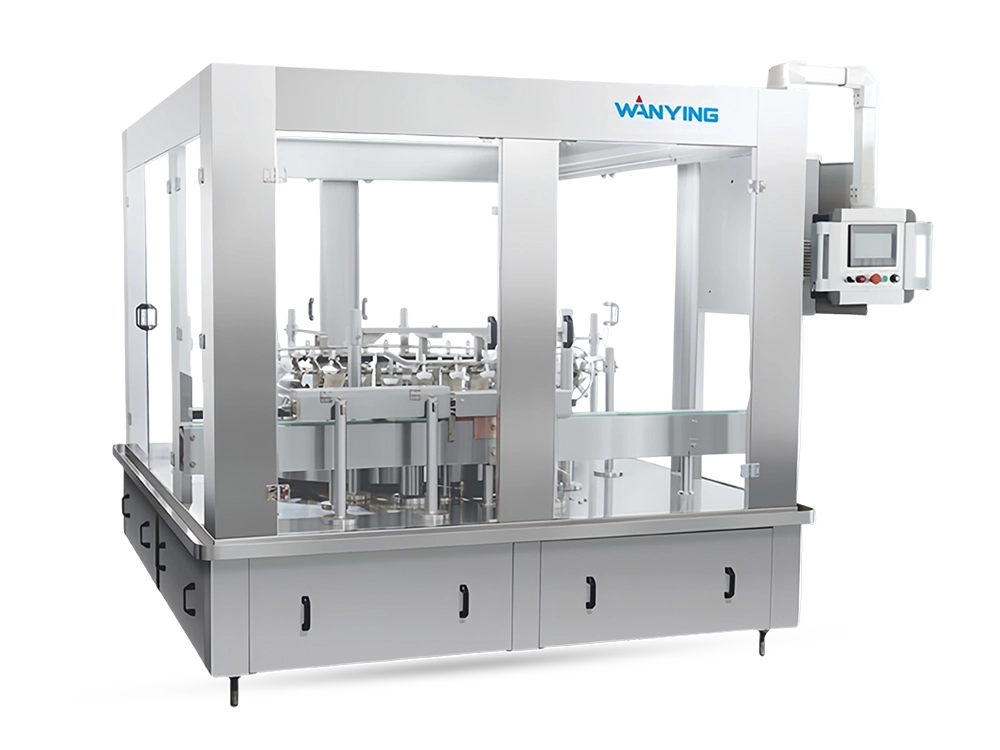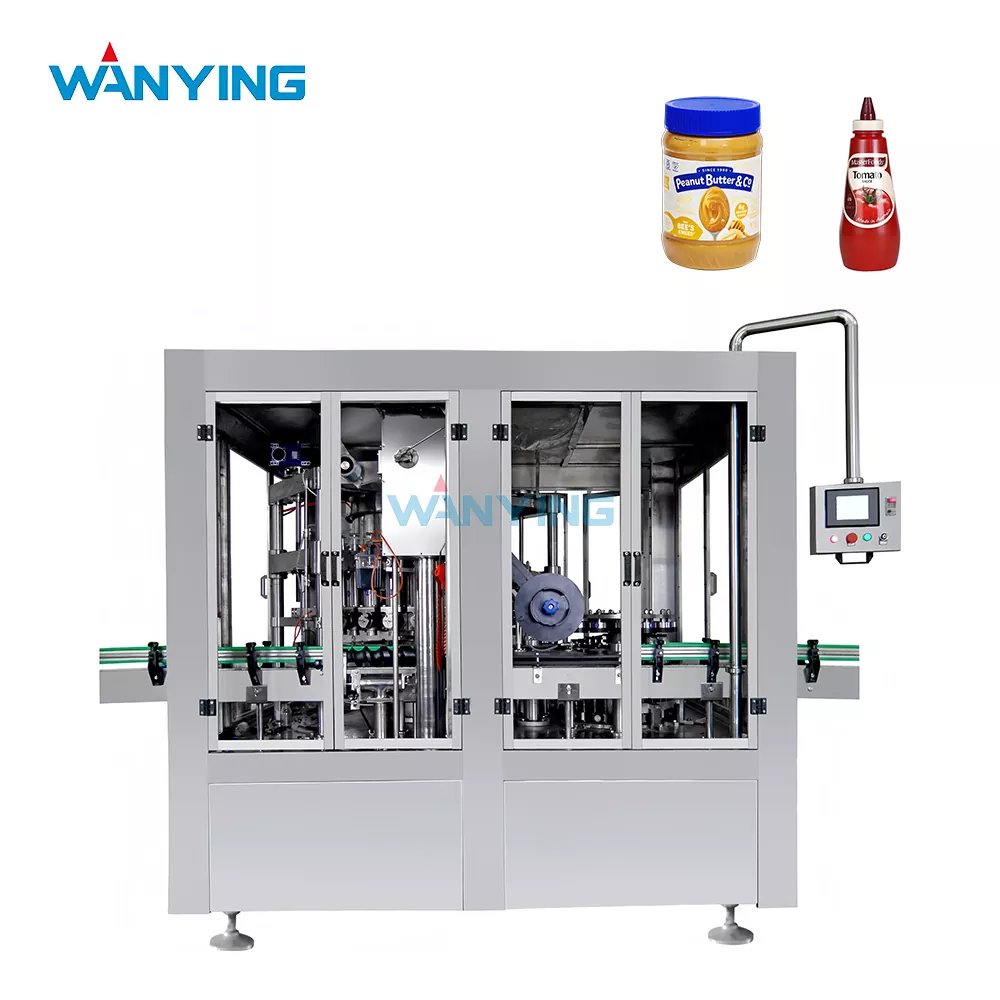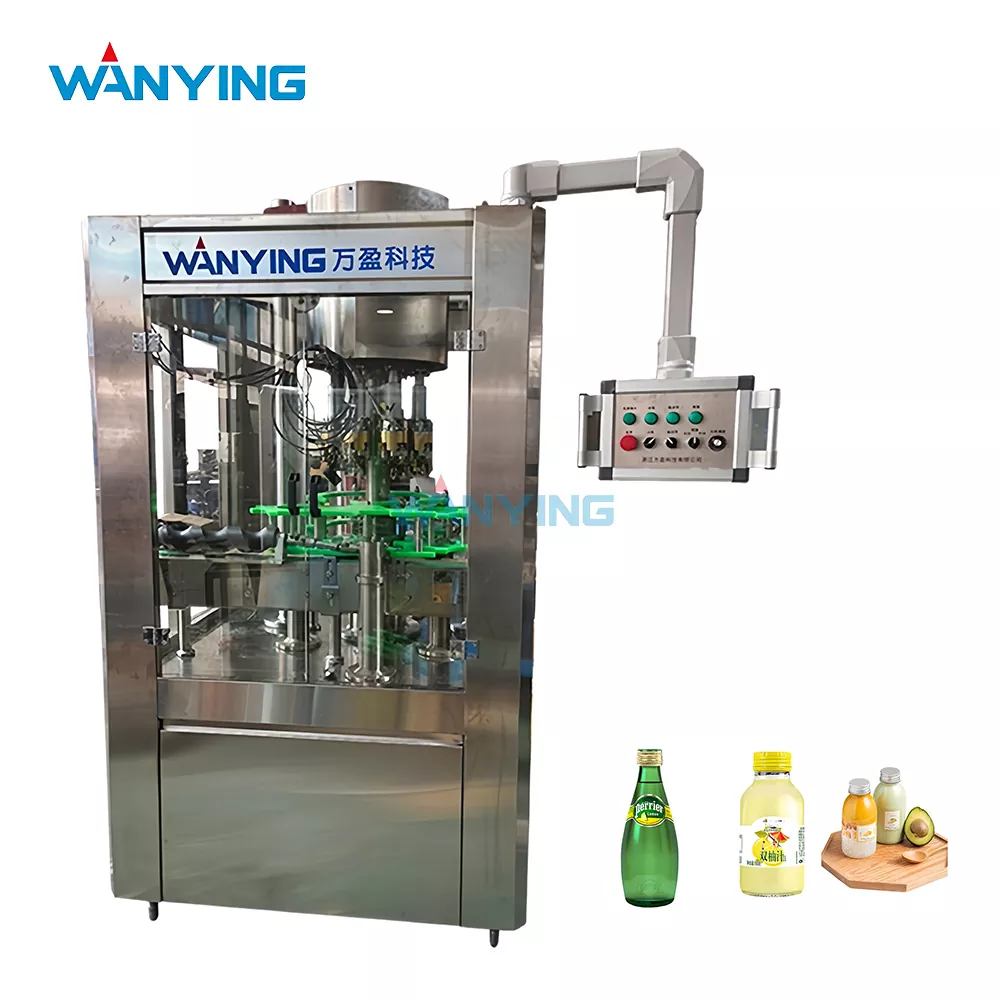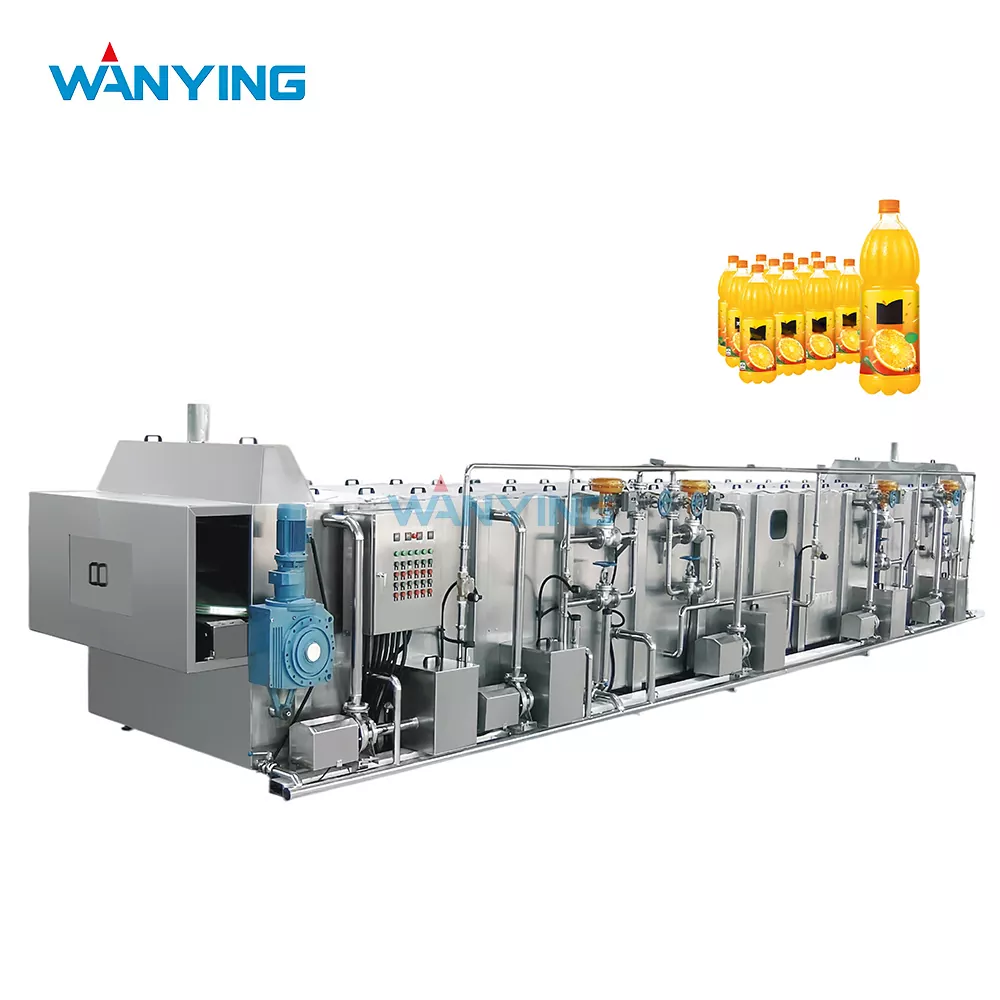
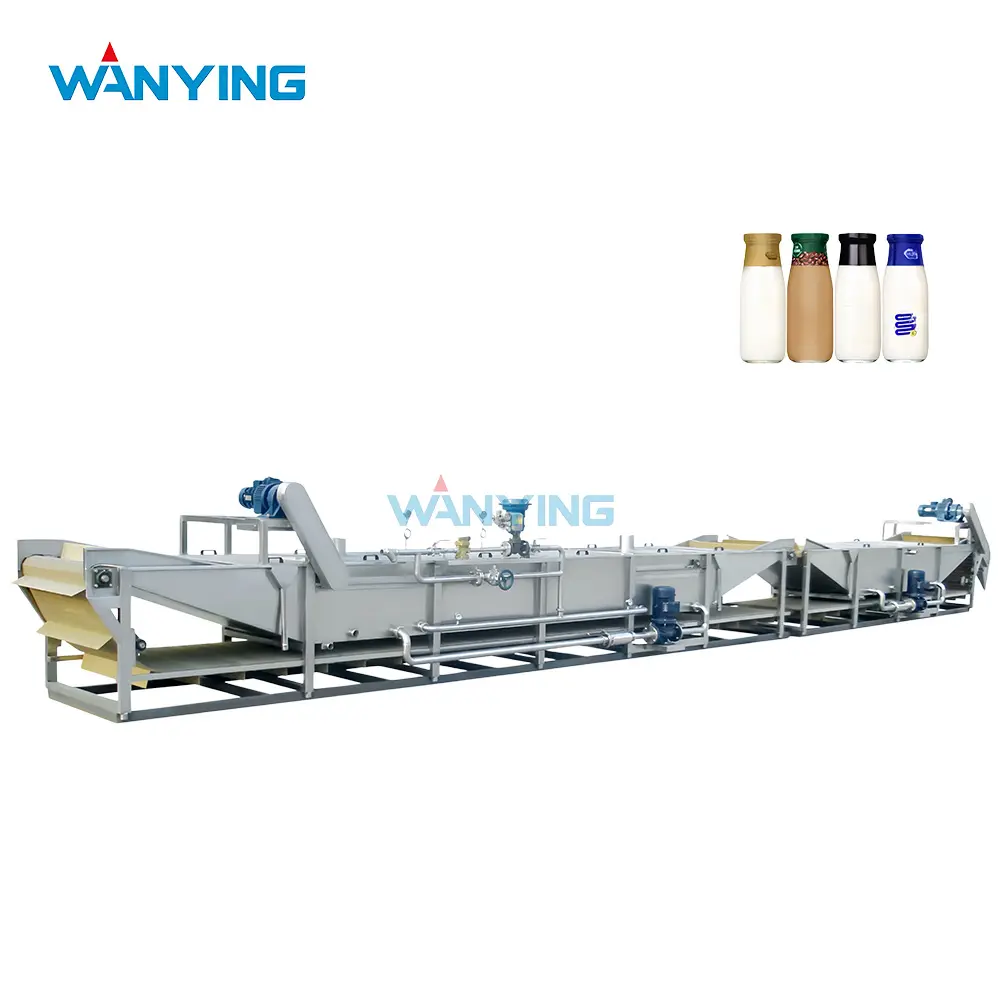
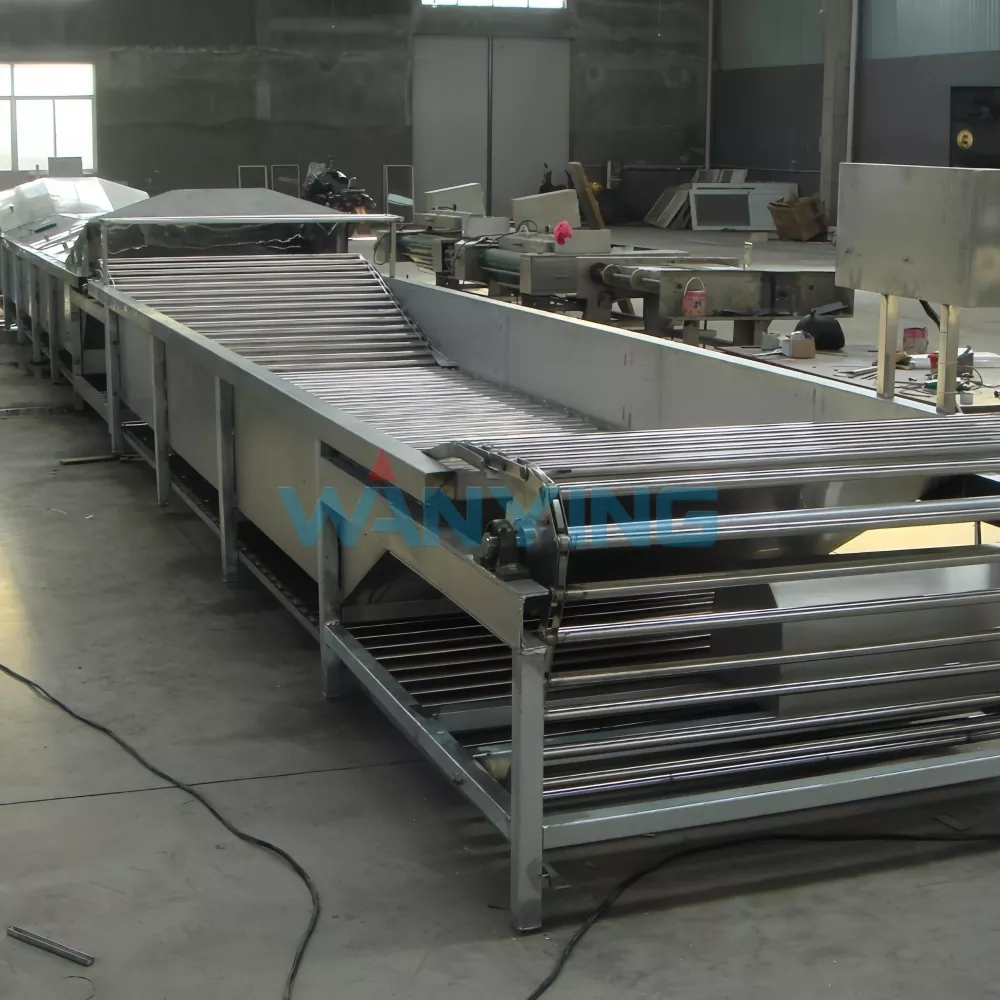
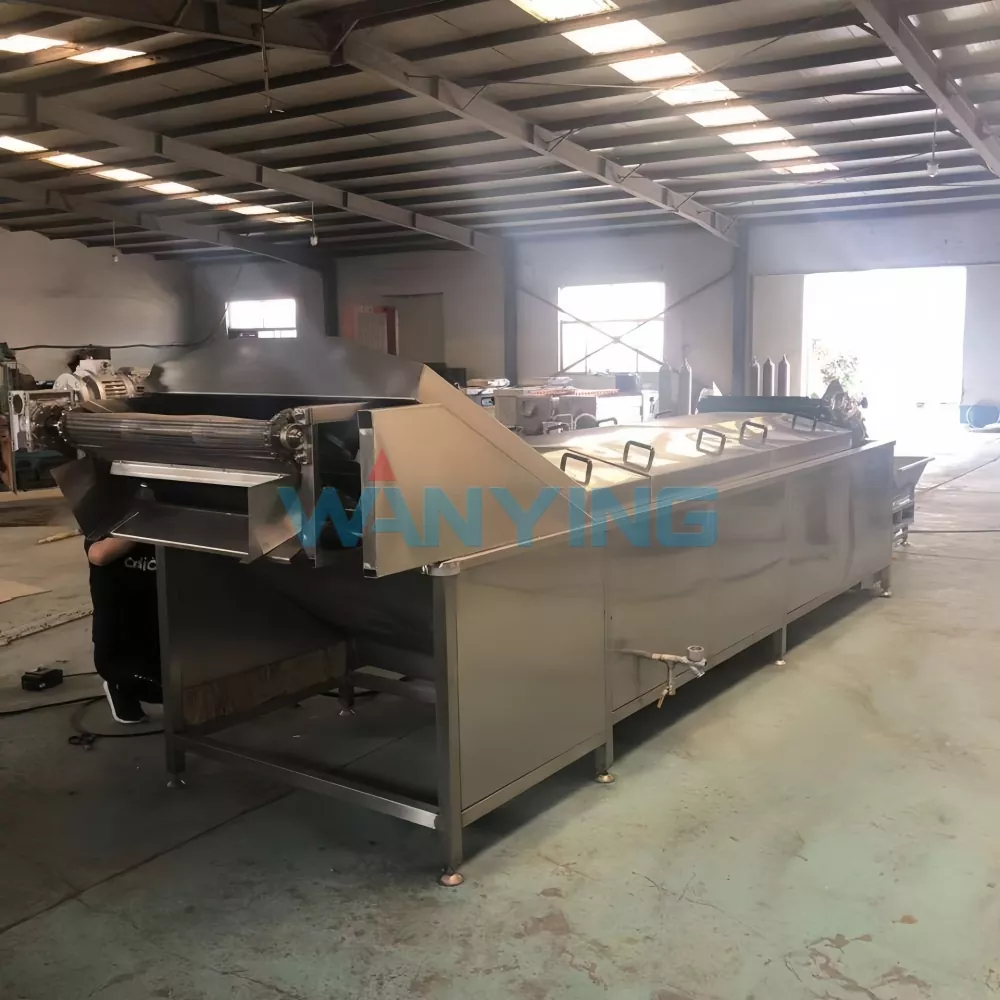
This design is particularly effective for thick sauces, fermented bean curd jars, condiments in heavy glass bottles, and canned fruits or vegetables where product density or container geometry makes spray coverage unpredictable. Engineered with a continuous chain conveyor that gently transports containers through sequential heating, holding, and cooling baths, the Wanying Water Bath Pasteurizer delivers precise pasteurization units (PU) with minimal maintenance demands. Its robust construction, energy-efficient water recirculation, and user-friendly control system have made it a practical choice for mid-sized producers seeking reliable food safety without over-engineering their thermal processing lines.
A water bath pasteurizer operates on a simple yet highly effective principle: filled and sealed containers are conveyed through a series of water-filled tanks maintained at progressively increasing temperatures, held at pasteurization temperature for a controlled duration, then gradually cooled through subsequent baths. The entire container—including the bottom, sidewalls, and neck—is fully immersed in water, which provides superior heat transfer compared to spray systems, especially for products with high viscosity or containers with irregular surfaces.The Wanying system features:
· Multiple independent bath sections (typically 4–7 tanks), each with its own heating, circulation, and temperature control
· Submerged chain conveyor with adjustable carrier bars to accommodate different container heights and diameters
· Overflow weirs and water recirculation to maintain consistent water levels and thermal stability
· Automatic level control to compensate for container displacement and evaporation losses
· Integrated cooling section that gradually reduces product temperature to prevent condensation and label damage
|
Feature |
Benefit |
|
Complete immersion |
Eliminates cold spots; ensures uniform heat penetration for dense or viscous products |
|
Gentle conveying |
Submerged chain with low-friction guides reduces bottle-to-bottle impact, minimizing breakage |
|
Superior thermal stability |
Large water volume buffers temperature fluctuations even during infeed surges |
|
Simplified maintenance |
No spray nozzles to clog; fewer moving parts in the wet section |
|
Energy-efficient design |
Counter-flow water cascade between baths recovers heat; insulated tanks reduce standby losses |
|
Flexible container handling |
Accepts glass, metal cans, PET (with temperature limitation), and ceramic-style jars without changeover tooling |
|
Parameter |
Specification |
|
Number of baths |
5 (Heating 1, Heating 2, Holding, Cooling 1, Cooling 2) |
|
Temperature range |
Ambient +5°C to 98°C |
|
Conveyor width |
600–1,800 mm (customizable) |
|
Conveyor speed |
0.3–3.0 m/min (variable-frequency drive) |
|
Immersion depth |
150–400 mm (adjustable via overflow weir height) |
|
Dwell time range |
8–50 minutes (speed-dependent) |
|
Heating source |
Steam, hot water, or thermal oil heat exchanger |
|
Cooling source |
Chilled water or cooling tower water |
|
Control system |
Siemens PLC with 7" HMI touchscreen, PID temperature control per bath |
|
Material |
SUS304 stainless steel (bath liners, conveyor frame, covers), optional SUS316 for corrosive products |
|
Overall dimensions |
10,000–22,000 mm (length) × 2,500–3,500 mm (width) × 2,200 mm (height) |
Water bath pasteurization is often chosen precisely because spray systems have failed to deliver consistent results. Over our years of designing these systems, Wanying has identified and resolved several recurring operational pain points:
· Temperature stratification – without proper circulation, hot water rises and cold water sinks, creating vertical temperature gradients. Our solution: submerged circulation jets at multiple depths, driven by dedicated pumps that ensure bath temperature varies by less than 0.3°C from top to bottom.
· Container floating – lighter containers (plastic bottles, certain pouches) tend to float, disrupting conveyor engagement and causing jams. Our carrier bars include gentle hold-down rails that keep all containers fully submerged without crushing.
· Water contamination buildup – as products travel through the bath, small leaks or residue can degrade water quality. Our system includes continuous filtration with automatic backwash, plus a skimming weir that removes floating oils and debris.
· Label wash-off – hot water immersion can loosen glue on paper labels. We offer optional label-protection additives for the first heating bath and recommend pre-testing labels with our clients before full production.
Different products demand different pasteurization strategies, and Wanying's engineering team customizes the bath configuration accordingly:
Products like tomato paste, peanut butter, chocolate spread, and oyster sauce have poor convective heat transfer. For these, we:
· Extend the holding bath length to increase dwell time by 30–40%
· Use higher water temperature (up to 95°C) to overcome internal thermal resistance
· Install additional circulation pumps to maximize water movement around containers
Result: core temperature reaches target within 80% of dwell time, ensuring adequate PU without over-cooking the surface layer
The combination of high salt content, fragile tofu texture, and heavy glass jars presents unique challenges:
· We use a gentler temperature ramp (heating rate ≤3°C per minute) to prevent thermal stress on the jars
· Super duplex stainless steel (2205) is used for bath liners to resist chloride corrosion
· The cooling bath is extended to avoid sudden temperature drops that can cause brine cloudiness
Result: product texture remains intact; brine clarity is maintained for visual appeal
Metal cans respond quickly to water bath heating but require careful cooling to prevent can buckling:
· Our holding temperature is kept at 88–92°C for 15–25 minutes depending on can size
· Cooling baths are graduated (85°C → 70°C → 55°C → 40°C) to prevent internal vacuum formation that can distort can ends
· Conveyor speed is coordinated with the can filling rate to maintain constant immersion time per can
For 1L+ glass bottles of juice or iced tea:
· Preheating starts at a lower temperature (45°C) to avoid thermal shock
· We add a sixth bath (Preheat 1 and Preheat 2) to create a gentler temperature slope
· Carrier bars are padded with food-grade silicone to cushion heavy bottles
A water bath pasteurizer operates in a demanding environment: constant moisture, thermal cycling, and—for certain products—corrosive conditions. Wanying's component selection reflects this reality:
|
Component |
Selected Brand/Type |
Rationale |
|
PLC and HMI |
Siemens S7-1200 |
Proven in wet environments; extensive input/output capacity for future additions |
|
Temperature sensors |
PT100 with 4-wire connection, Omron transmitters |
High accuracy (±0.1°C); resistant to long-term drift |
|
Circulation pumps |
Grundfos stainless steel, vertical multistage |
Corrosion-resistant, energy-efficient, low noise |
|
Heat exchangers |
Plate type, with titanium or 316L plates |
Rapid heat transfer; easy to clean; titanium option for salt-brine products |
|
Conveyor chain |
Plastic modular (POM) with stainless steel pins |
Low friction, corrosion-resistant, easily replaceable segments |
|
Bath insulation |
80 mm polyurethane foam with stainless steel cladding |
Minimizes heat loss; easy surface cleaning |
Our manufacturer status allows us to maintain direct quality control over every fabrication step—from laser-cutting bath panels to welding and pressure-testing—ensuring that the final assembly meets our internal standard of zero leaks before any machine leaves the workshop.
While factory testing confirms mechanical integrity, the true test is in production conditions. Wanying's commissioning protocol includes:
We place 24 data-logging thermocouples inside containers distributed across the conveyor width and height. These log temperature throughout the entire bath sequence. The data is analyzed to confirm that:
· Every container reaches the target pasteurization temperature
· The variation between the warmest and coolest containers does not exceed 1.2°C at holding bath exit
· The cooling rate does not exceed 2.5°C per minute to prevent thermal shock
With your product, we run a full shift's worth of production, taking samples at 15-minute intervals. These are tested for:
· Total plate count (TPC) and specific pathogens (per your product standard)
· Brix, pH, viscosity, and color (sensory parameters)
· Seal integrity (torque test for closures, vacuum check for cans)
We do not leave until your team can confidently operate the system, perform routine maintenance, and troubleshoot common alarms. Our training includes hands-on practice with:
· Daily start-up and shut-down procedures
· Bath temperature setpoint adjustments
· Conveyor speed changes for product format variation
· Cleaning and sanitization of bath internals
· Emergency stop and power-failure response protocols
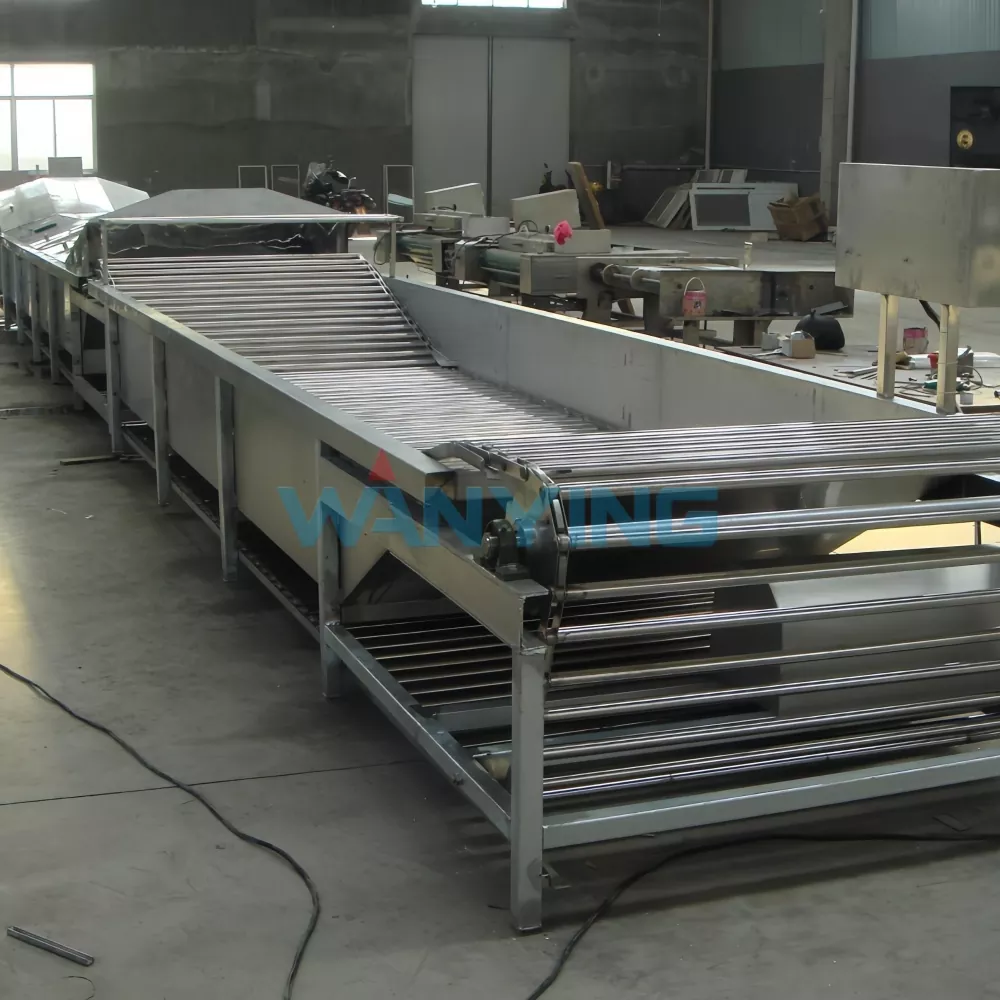
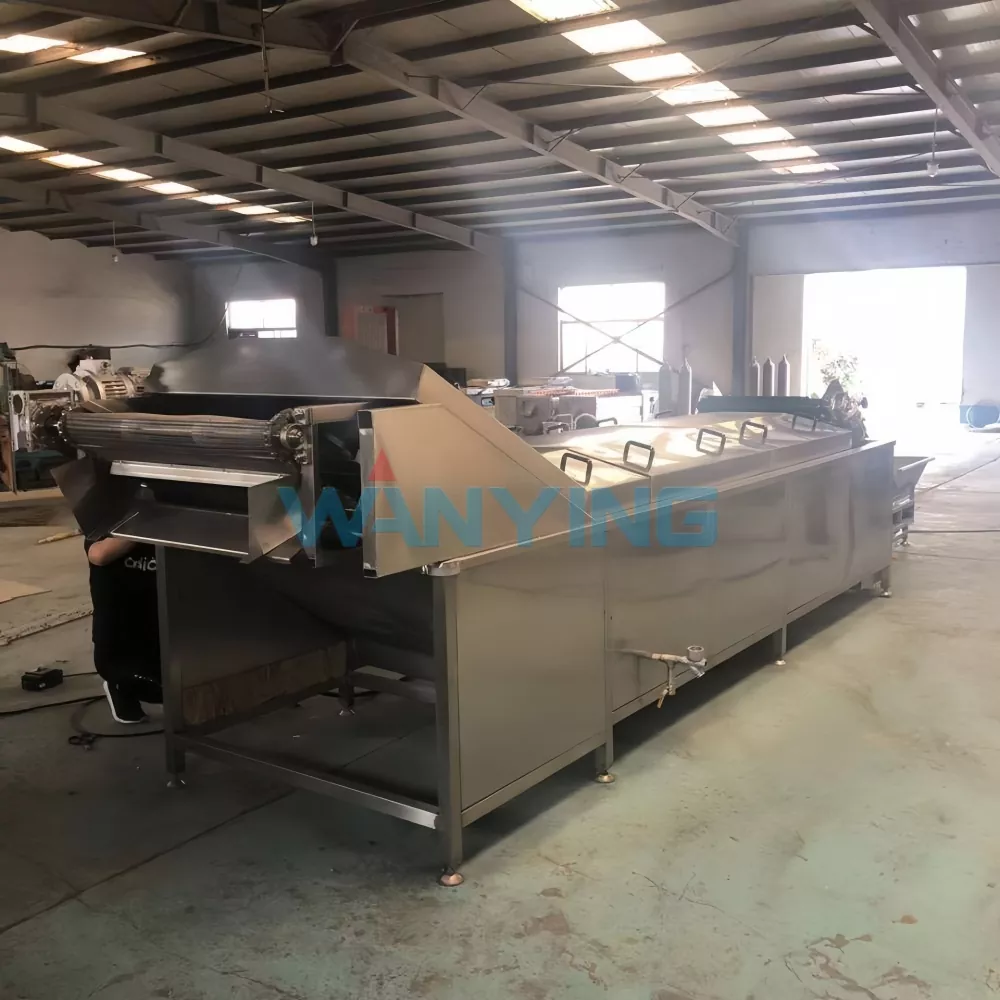
The complete immersion of containers in water provides heat transfer coefficients 2–3 times higher than spray systems. This means:
· Shorter holding times for the same PU level, increasing line throughput
· Better heat penetration for large-diameter or thick-walled containers
· Consistent product quality even when the infeed temperature varies (e.g., morning start-up vs. afternoon steady state)
With no spray nozzles, there is no risk of clogging from particulate matter, hard water scale, or product residue. The only routine cleaning tasks are:
· Skimming the water surface for floating debris (daily)
· Draining and replenishing bath water (weekly, depending on product load)
· Inspecting conveyor chain tension and carrier bar condition (monthly)
This simplicity translates directly to less downtime and lower maintenance labor costs.
If your line runs multiple container types on different shifts, the water bath pasteurizer requires no hardware changeover—simply adjust the conveyor speed via the HMI to change dwell time. The carrier bars are designed with adjustable spacing to accommodate container diameters from 40 mm to 150 mm without replacement parts.
This client produces concentrated tomato paste (28°Brix) in 3 kg metal cans for export to European markets. Their existing spray tunnel pasteurizer could not achieve consistent core temperature due to the paste's high viscosity, resulting in spoilage rates of 2–3% and occasional customer rejections.Wanying Solution:
· 6-bath water pasteurizer with extended holding section (22 minutes at 92°C)
· High-flow circulation pumps to maximize water movement around the cans
· Automated pH monitoring and caustic dosing to keep bath water neutral and prevent can corrosion
Results After 8 Months:
· Spoilage rate dropped from 2.8% to 0.2%
· Can end buckling eliminated through optimized cooling gradient
· Export rejections: zero since installation
· Steam consumption: 15% lower due to bath insulation and counter-flow heat recovery
Additional benefit: the slower heating rate improved paste color retention, earning the client a premium price from their European buyer
A family-owned business producing premium fermented bean curd in traditional ceramic-style jars needed to scale up production while preserving the product's distinctive texture and flavor. Their manual batch pasteurization process was labor-intensive and yielded inconsistent shelf-life results.Wanying Solution:
· 5-bath water pasteurizer with super duplex stainless steel bath liners
· Gentle temperature profile: 50°C → 62°C → 76°C (holding, 18 min) → 68°C → 45°C
· Special carrier bars with rubberized inserts to prevent jar-to-jar contact and chipping
· Continuous filtration to remove brine droplets that could cloud the water
Outcome:
· Production capacity increased from 2,000 jars/day to 6,000 jars/day with same labor
· Shelf-life extended from 6 months to 12 months without preservatives
· Product texture rated "identical to hand-crafted" by blind taste panel
The owner credited the uniform heating with eliminating the "overcooked edge" that had occurred in batch processing
After 14 months, the client ordered a second unit for their new facility
Coconut cream (65% fat content) has challenging thermal properties—fat can separate when overheated, and the product is prone to browning if pasteurized too aggressively. The client's existing system could not reliably achieve commercial sterility without quality loss.Wanying Solution:
· 7-bath configuration with very gradual preheat (42°C → 50°C → 58°C → 67°C → 76°C holding → 65°C → 50°C → 35°C)
· Lower holding temperature (76°C) with longer dwell (35 minutes) to achieve required PU without fat separation
· Nitrogen blanket over the holding bath to reduce oxygen exposure and prevent oxidation
Results:
· No fat separation observed in any post-pasteurization sample
· Product color (L-value) remained within 2% of pre-pasteurization measurements
· Shelf-life exceeded 24 months in independent stability testing
The client now exports to Japan and South Korea, where quality standards are exceptionally stringent
Payback period: 11 months, driven by reduction in rejected batches and premium pricing for "natural color" product
Pickled mustard greens and chili peppers are packed in brine in heavy glass jars. The high salt and acid content makes them corrosive to standard materials, and the high particulate load in the brine can foul spray nozzles—making spray pasteurization impractical.Wanying Solution:
· 4-bath water pasteurizer (shorter system due to product's low pH, which requires lower PU)
· All wetted parts in 2205 duplex stainless steel
· 100-micron filtration with automatic backwash to remove vegetable debris
· Low-speed conveyor to prevent jar tipping (pickle jars have non-uniform bottoms)
Performance Metrics (One Year):
· Zero corrosion-related failures in the pasteurizer
· No nozzle clogging issues (there are none—another advantage over spray systems)
· Product safety consistently passed all regulatory inspections
The system has been operating 6 days/week, two shifts/day, with average downtime of only 1.2 hours/month
To achieve optimal results, please ensure:
· Containers are properly sealed – water ingress during immersion can be a safety hazard; we recommend a positive pressure seal test before the pasteurizer infeed
· No external labels with water-soluble adhesive – we can advise on label types that withstand immersion, or we can relocate labeling to post-pasteurization
· Uniform filling levels – overfilled containers may expand and leak; underfilled containers may float; we provide fill-level guidelines
The water bath pasteurizer is designed for seamless line integration:
· Infeed – synchronizes with your filler discharge via a conveyor speed-matching interface
· Outfeed – delivers containers at a controlled temperature for direct loading to your labeling, sleeving, or case packing line
· PLC communication – supports Modbus, Profibus, or Ethernet/IP for centralized line control
The pasteurization bath water must be maintained for both food safety and equipment longevity:
· Total hardness: ≤200 ppm (to prevent scale on heat exchangers and container surfaces)
· pH: 6.0–8.0 (neutral range minimizes corrosion and container interaction)
· Chlorine residual: ≤0.5 ppm (to avoid pitting of stainless steel)
We include a water treatment recommendation guide and can source appropriate filtration and chemical dosing equipment as part of the package.
A: The fundamental difference lies in the heat transfer mechanism. A water bath completely immerses containers, providing 360° contact with water, which is ideal for:
· High-viscosity products (sauces, pastes, creams) where heat penetration is slow and uneven with spray
· Large or oddly-shaped containers (1.5L+ glass jars, ceramic crocks, oval tins) that spray systems may not fully cover
· Products prone to label damage – immersion is gentler on labels than high-pressure spray
· Plants with hard water – bath systems are unaffected by spray nozzle scaling
A spray tunnel is generally preferred for high-speed lines with small, uniform containers (standard beverage bottles, 330 mL cans) where space is limited and steam consumption must be minimized. Water baths occupy more floor space and have higher thermal inertia, but they offer superior uniformity and lower maintenance.At Wanying, we recommend the water bath design when your product fails spray pasteurization QC consistently, or when you prioritize reliability and simplicity over maximum line speed.
A: Glass breakage in a water bath pasteurizer is typically caused by one of three factors: thermal shock, mechanical impact, or internal pressure buildup. We address each:
· Thermal shock – our preheat baths raise temperature gradually (2–4°C per minute) to eliminate sudden expansion. The ΔT between successive baths never exceeds 15°C.
· Mechanical impact – the submerged conveyor uses modular plastic chain with smooth carrier bars padded with silicone strips. We also include side guides that keep bottles centered and prevent them from bumping against each other.
· Pressure buildup – the holding bath temperature is controlled to prevent boiling of the product's liquid phase; for carbonated beverages, we reduce holding temperature and increase dwell time instead.
Our track record: across all installed water bath pasteurizers, the average breakage rate is 0.3–0.5%, comparable to or better than spray tunnel performance for the same container types.
A: Wanying operates as a full-service supplier with a dedicated after-sales team. Our support includes:
· Commissioning and training – our engineers stay on-site for 3–5 days to complete installation, run validation tests, and train your operators. We provide comprehensive manuals, video guides, and troubleshooting flowcharts.
· Remote diagnostic support – every machine is equipped with remote access capability. With your permission, our engineers can log in to the PLC to check alarm histories, adjust parameters, or guide your team through fault-finding. Response time: within 2 hours during business hours, 8 hours after-hours.
· Spare parts inventory – we maintain a stock of critical wear parts at our factory in China, including conveyor chain segments, temperature sensors, pump seals, and heat exchanger gaskets. Routine parts are dispatched within 24 hours; custom-engineered parts within 7–10 days.
· Preventive maintenance contracts – for clients seeking maximum uptime, we offer annual service visits during which we perform comprehensive inspection, calibration, and component replacement per schedule. These contracts also include priority technical support and discounted spare parts pricing.
· Warranty coverage – 24 months on structural frame and bath liners, 12 months on electrical and mechanical components. We stand behind our workmanship with a straightforward claims process.
|
Consideration |
Wanying's Advantage |
|
Customization depth |
We do not offer "standard" models; every system is configured for your product, container, and site conditions |
|
Material selection |
From SUS304 to 2205 duplex to titanium, we match the alloy to your product's corrosivity |
|
Process expertise |
Our team includes food technologists who understand pasteurization targets across pH and viscosity ranges |
|
Component traceability |
Full documentation of every major component's serial number and test certificate |
|
Installation support |
We manage the entire commissioning process, including thermal mapping and bacteriological validation |
|
Cost transparency |
Direct from our factory—no middleman mark-ups; we provide detailed cost breakdowns at quotation |
|
After-sales network |
Service hubs in major China food-processing regions, plus partner agents in Southeast Asia, Africa, and the Middle East |
The Wanying Water Bath Pasteurizer offers a straightforward, reliable, and highly effective solution for food producers who need consistent pasteurization results across challenging product types. By relying on immersion rather than spray, it eliminates the common failure points of nozzle clogging, uneven coverage, and insufficient heat penetration that plague alternative systems. Its robust construction, flexible thermal profiling, and energy-conscious design make it a dependable workhorse for mid- to large-scale operations producing sauces, fermented products, canned goods, and beverages in non-standard containers.With decades of field experience, a commitment to transparent validation, and a global service mindset, Wanying ensures that your investment in thermal processing is protected by more than just a warranty—it is backed by engineering integrity and responsive partnership.
Address
Xihenao Industrial Zone, Fenglin Town, Yangxin County, Huangshi City, Hubei Province, China
Tel