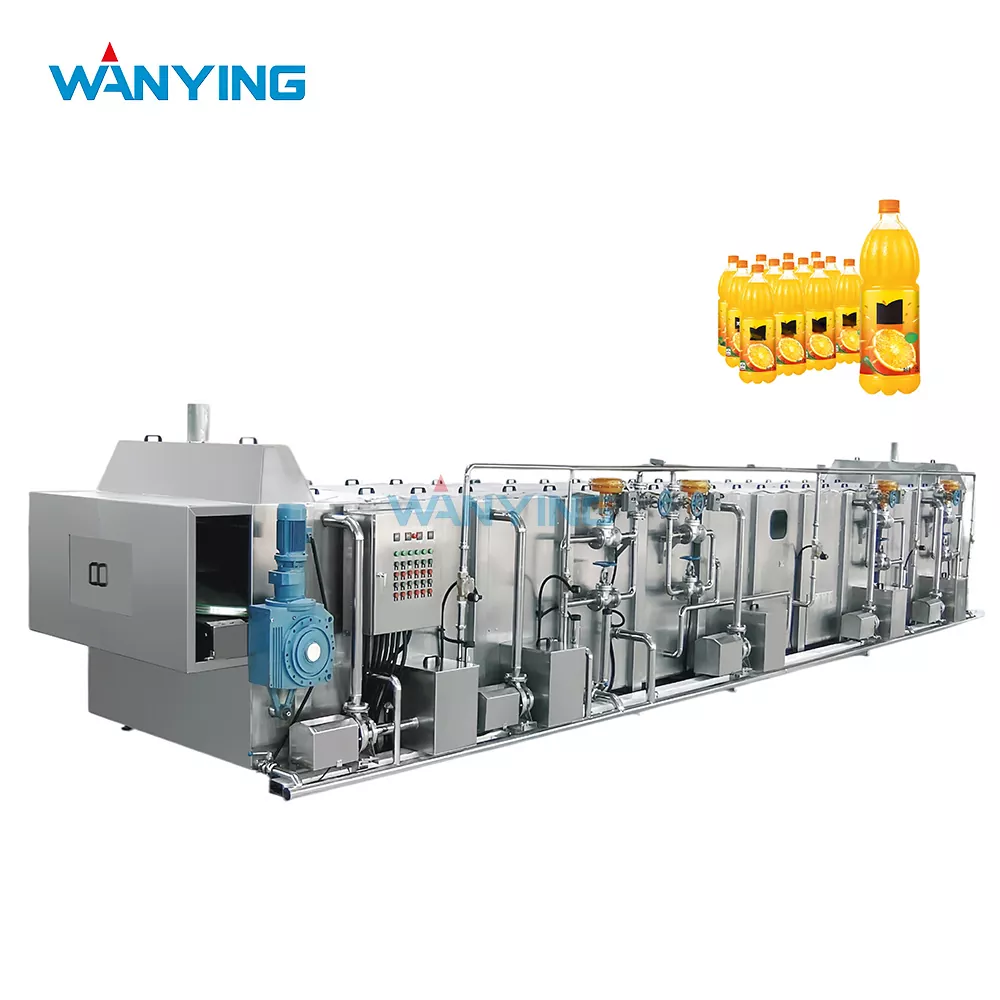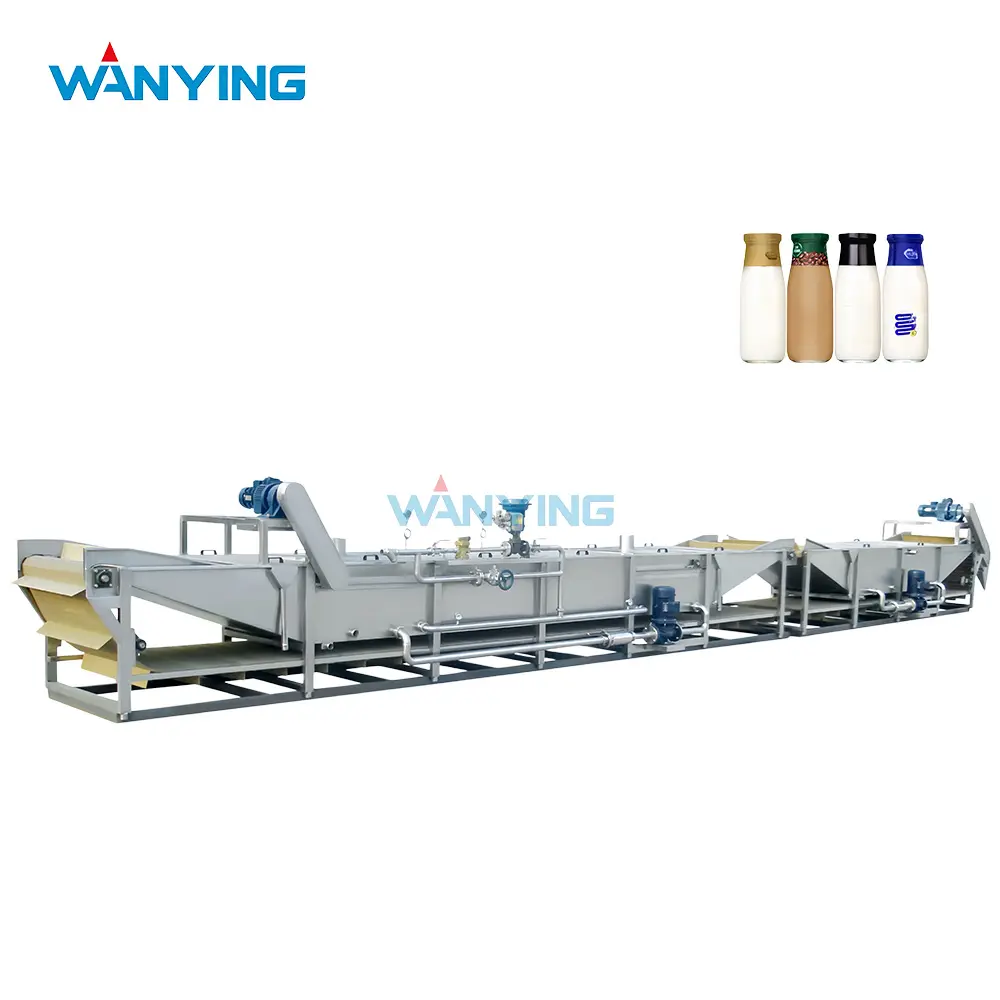
Wanying has launched two types of sterilization equipment—the Tunnel Pasteurizer and the Water Bath Pasteurizer—specifically designed for the sterilization of finished condiments such as fermented bean curd, soy sauce, vinegar, and various sauces. These units cater to different operational needs: continuous high-volume mass production and small-batch, multi-variety intermittent production. They effectively eliminate pathogens and inhibit spoilage enzymes, extending shelf life while preserving the product's original flavor and texture. They integrate seamlessly with upstream and downstream equipment—such as filling, capping, labeling, and boxing machines—to form a complete, automated production line. This helps manufacturers resolve issues related to short shelf life, uneven sterilization, and high labor costs associated with mass production.
Utilizing a gentle, low-temperature pasteurization process, it effectively eliminates pathogens and molds in sauces, fermented bean curd, and seasonings, while breaking down endogenous enzymes that accelerate spoilage. Finished products meet food safety standards for microbial levels, mitigating the risk of failing market quality inspections.
Unlike high-temperature, high-pressure sterilization equipment, pasteurization employs gentle temperature control. It avoids overcooking the product, thereby fully preserving the characteristic fermented aromas and textures of fermented bean curd, sauces, brewed vinegar, and soy sauce, while preventing issues like bland flavor or darkened color.
Standardized sterilization significantly extends the shelf life of condiments stored at room temperature. Manufacturers no longer need to rely on cold-chain warehousing and transport, enabling sales across diverse channels—including offline supermarkets, e-commerce platforms, and long-distance wholesale—while reducing operational costs associated with cold-chain logistics.
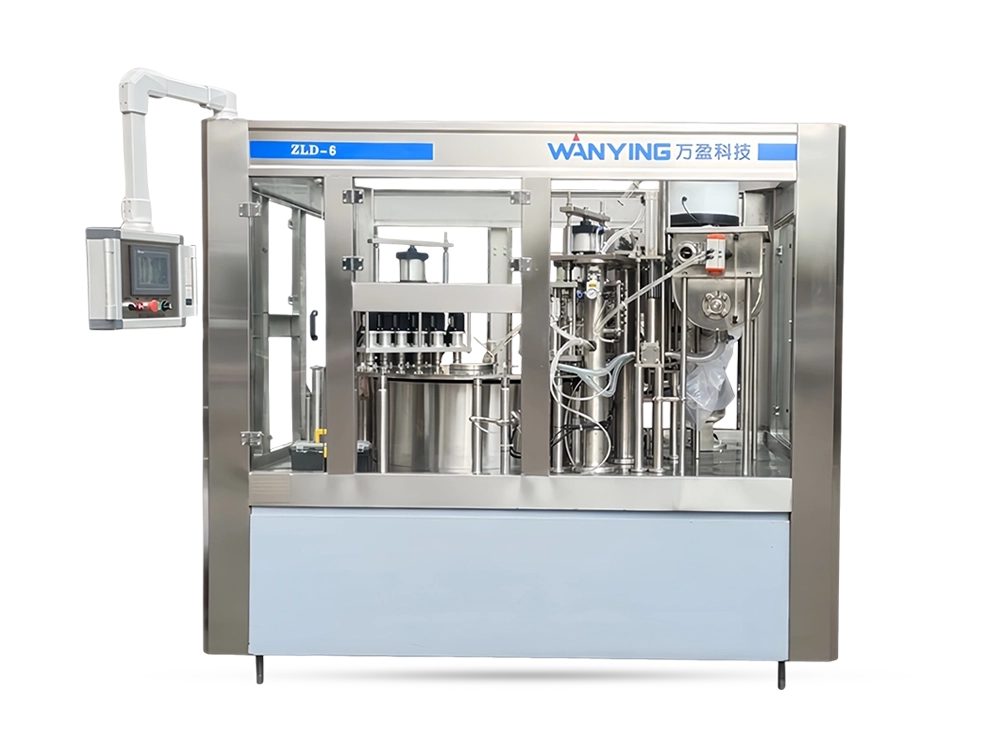
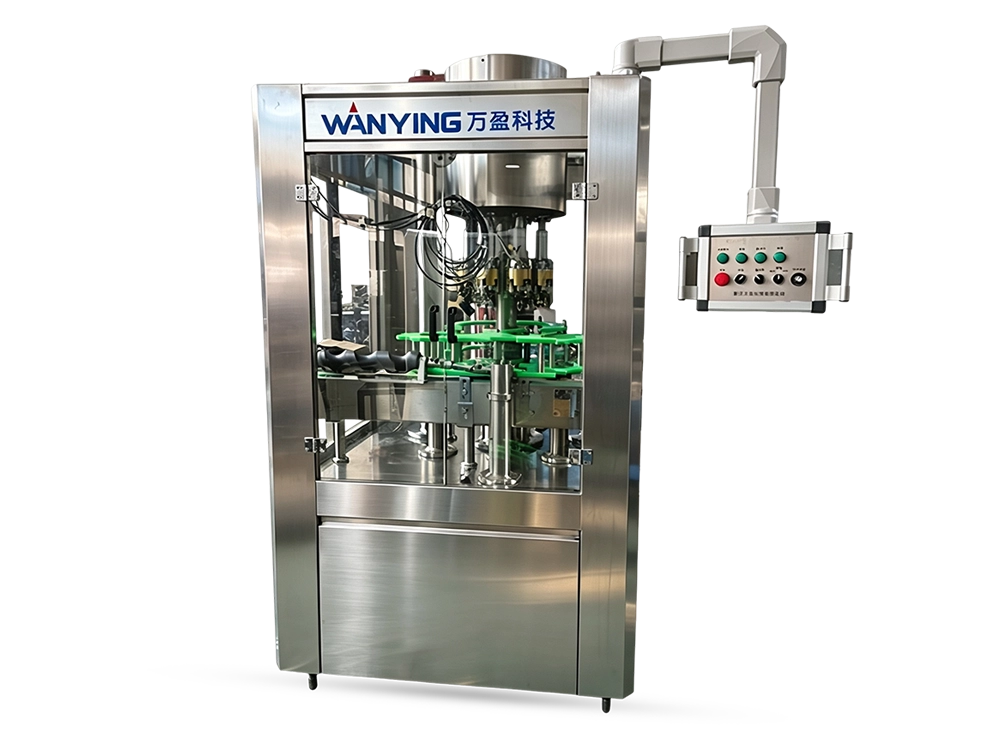
The sterilization equipment connects directly to upstream filling and capping machines and downstream labeling, coding, and boxing equipment. This enables a fully automated workflow from capping to sterilization and packaging, eliminating the need for manual handling and reducing bottle breakage caused by accidental impact.
1) Tunnel Pasteurizer
The equipment features three independent temperature zones: preheating, constant-temperature pasteurization, and multi-stage cooling. It continuously conveys glass or plastic bottles of condiments via a mesh belt, using recirculating hot water sprayed evenly over the bottles to achieve pasteurization. It offers a high degree of automation—requiring no manual loading or unloading—and supports continuous mass production with capacities ranging from thousands to tens of thousands of bottles per hour. It integrates directly into fully automated filling lines, requires linear factory floor space, and is suitable for medium-to-large-scale condiment factories.
2) Water Bath Pasteurizer
This system utilizes total immersion in a constant-temperature hot water tank; entire crates of finished products are fully submerged, ensuring all-around coverage with no pasteurization "dead zones." The equipment has a simple structure and lower initial investment costs. It supports batch-based, intermittent production and offers flexibility for processing various condiment specifications and product types. It is ideal for small-to-medium-sized processing plants, small-batch trial production of new products, and scenarios requiring frequent product rotation.
1) Prioritize the Tunnel Pasteurizer if: The factory has high daily output and requires 24-hour continuous production; a fully automated filling line is in place, requiring seamless equipment integration; the product portfolio focuses on a single "hit" product without the need for frequent category changes; and the facility has ample linear space for equipment layout.
2) Prioritize the Water Bath Pasteurizer if: Factory output is relatively low, focusing on small-batch, multi-variety condiment production; new product samples or customized condiments are frequently introduced, requiring frequent changes in bottle types and materials; facility space is compact, lacking areas for long, linear layouts; or the equipment budget is limited, prioritizing lower upfront procurement costs.
1) Pre-startup checks: Calibrate temperature sensors and verify that temperature control instrument readings are accurate; clear obstructions from spray piping and water bath circulation pumps, and remove debris from water inlet filters; check the tension of the conveyor mesh belt, ensuring there is no misalignment or damage before starting the equipment.
2) Post-production cleaning: Drain residual wastewater from the equipment's water tank and circulation piping; use a high-pressure water gun to rinse the conveyor belt and the inner walls of the tank, removing adhered sauce and stains; drain accumulated water after cleaning to prevent scale buildup and bacterial growth caused by stagnant water.
1) Monthly maintenance: Apply food-grade, high-temperature resistant grease to conveyor chains and drive bearings; thoroughly inspect steam piping and sealing gaskets, promptly replacing any parts showing signs of aging or leakage; remove scale from the surface of heating tubes to ensure heat exchange efficiency.
2) Quarterly maintenance: Disconnect the main power supply and conduct a comprehensive inspection of electrical control circuits and temperature control valves; recalibrate temperature sensors to ensure sterilization temperature deviations remain within standard limits; calibrate conveyor belt tension to prevent tracking issues or jamming during prolonged operation.
When the equipment is shut down for an extended period, thoroughly clean all water circuit chambers and drain accumulated water from piping and tanks; remove and store sealing gaskets separately to prevent degradation from heat; disconnect the main power supply and cover the entire machine to protect it from workshop dust and sauce splashes; perform a full water and power test run before resuming production.
A: Each Tunnel Pasteurizer is equipped with an intelligent PLC temperature control system; sterilization temperature and conveyor belt speed (which determines sterilization duration) can be freely adjusted via the touchscreen. Specific sterilization process parameters can be stored independently for various products—such as fermented bean curd, soy sauce, thick chili sauce, and liquid seasonings—allowing for one-touch parameter recall when switching products, eliminating the need for repeated adjustments.
A: Both equipment models are compatible with condiments packaged in glass bottles and PET plastic bottles. The tunnel spray model features gentle water pressure and atomized spraying, ensuring no impact damage to the bottles; the water bath model provides uniform immersion, allowing for the stable processing of large-capacity plastic bottles and thick-walled glass bottles without the risk of deformation due to pressure.
A: The equipment’s water channels, spray nozzles, and water bath circulation piping feature widened, polished surfaces to minimize the adhesion of viscous sauces. Additionally, the unit is equipped with a detachable filtration system that captures sauce residue; this filter can be quickly removed and rinsed during daily cleaning, effectively preventing clogs in the piping and nozzles.
A: All sterilization equipment from our factory comes with a standard one-year warranty covering the entire unit. During the warranty period, components such as temperature controllers, water pumps, and drive parts are replaced free of charge—provided the damage is not caused by misuse—with no labor fees charged for repairs. For minor issues like temperature deviations or pipe blockages, our technicians can provide rapid remote troubleshooting and guidance; for major equipment failures, we can arrange for an engineer to visit your site for inspection and adjustment.