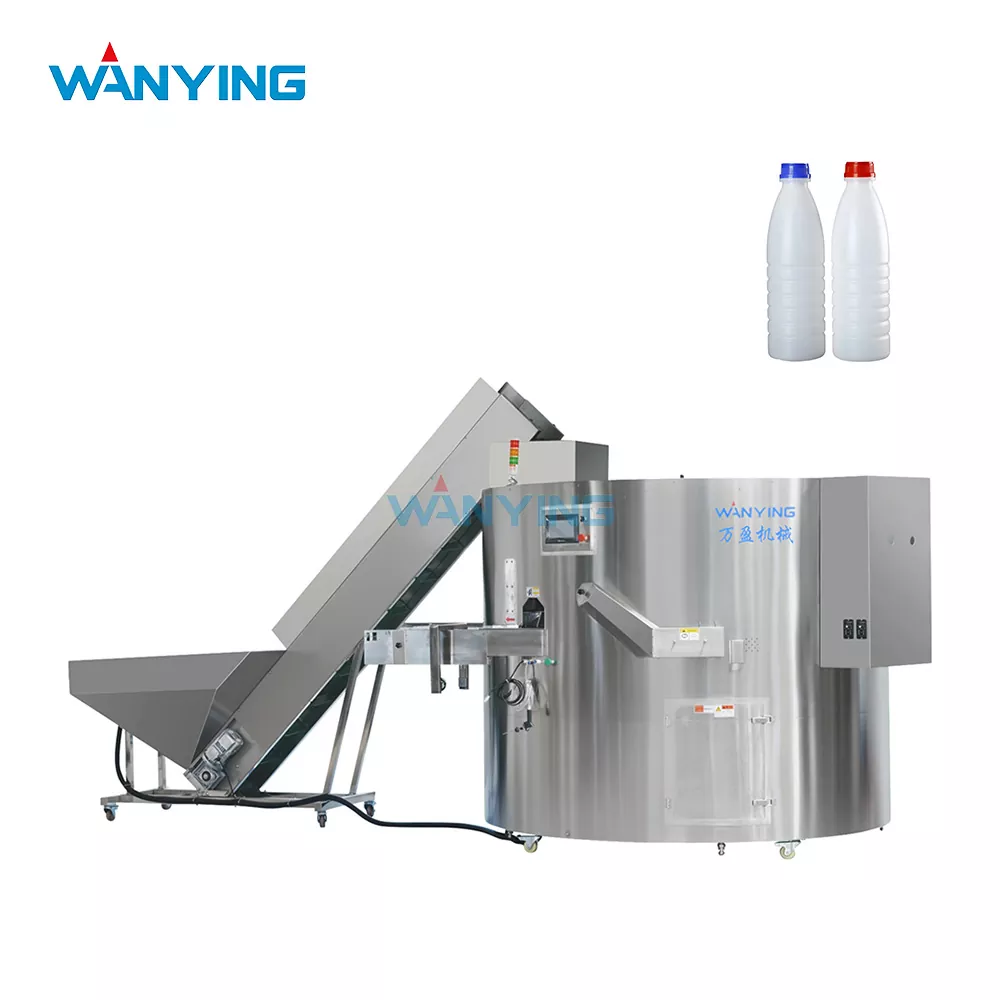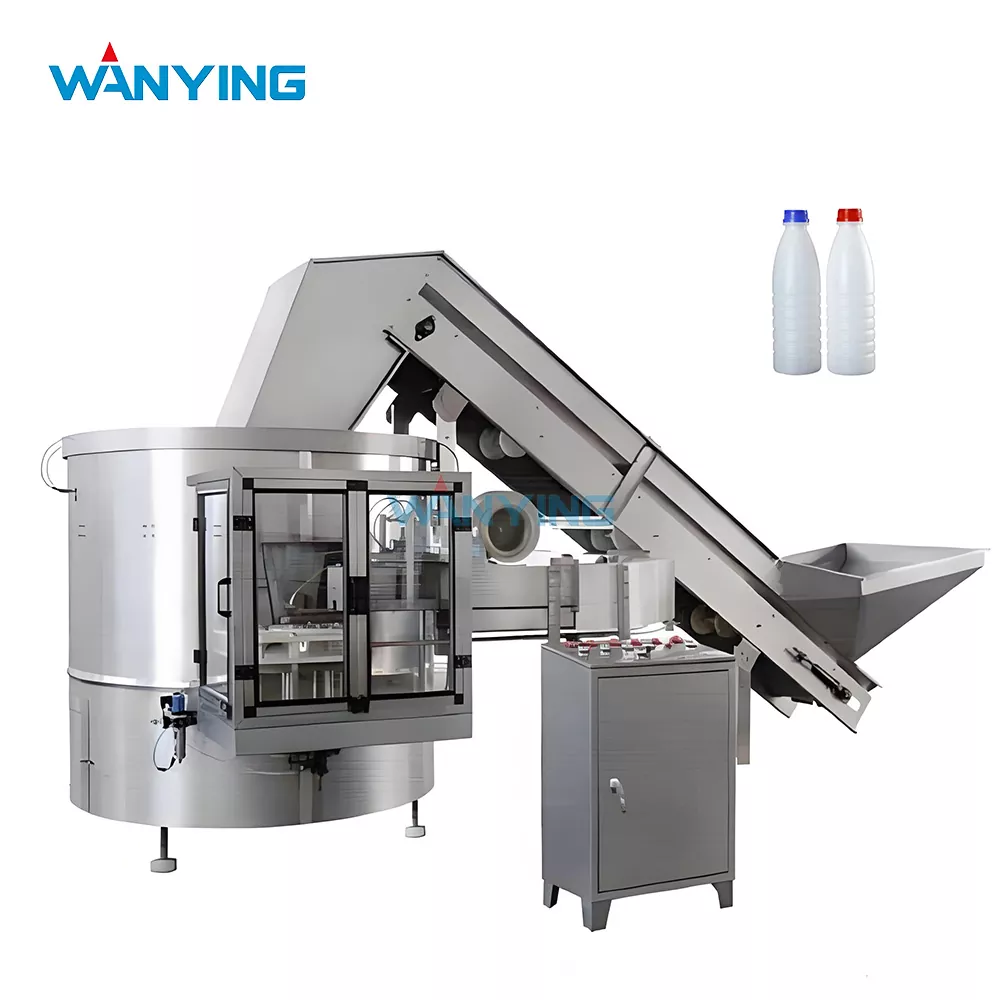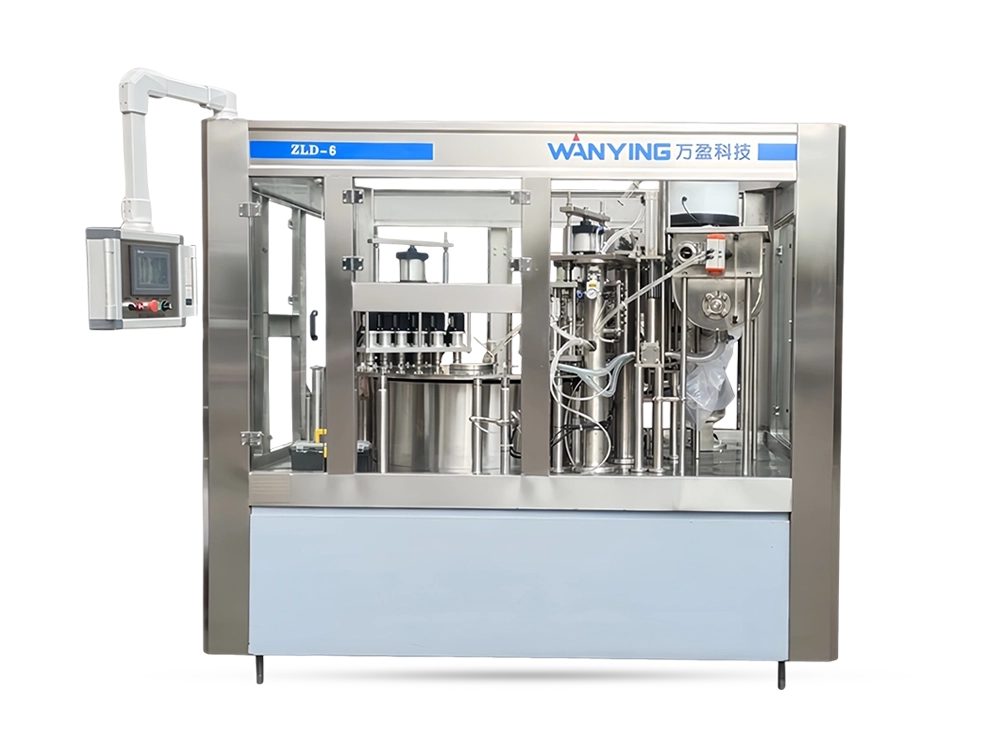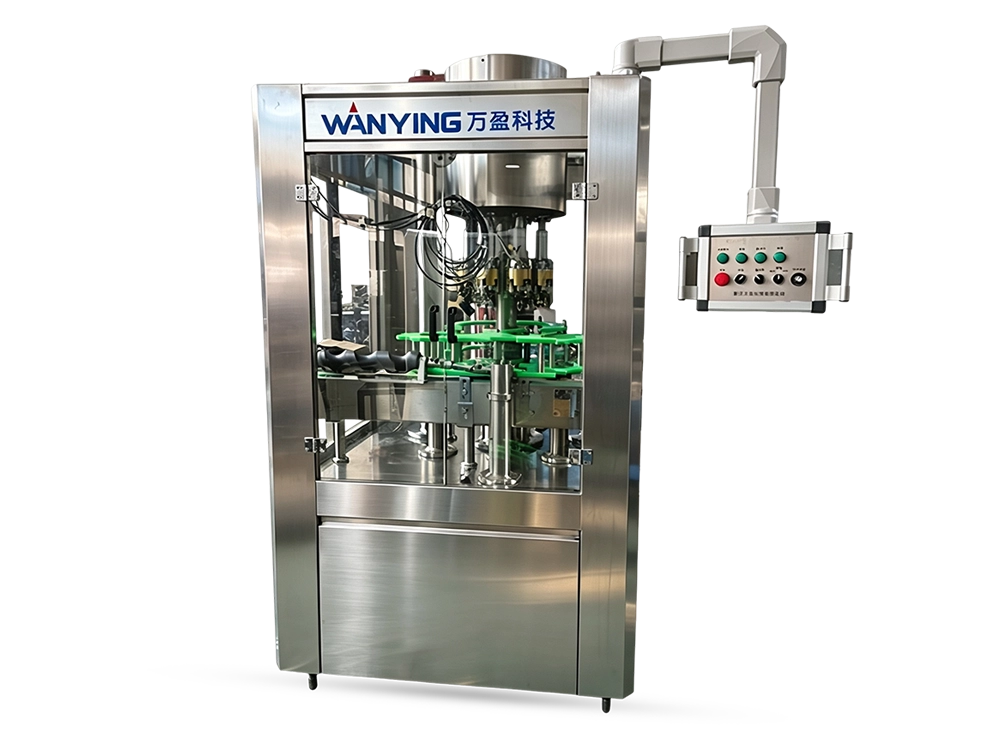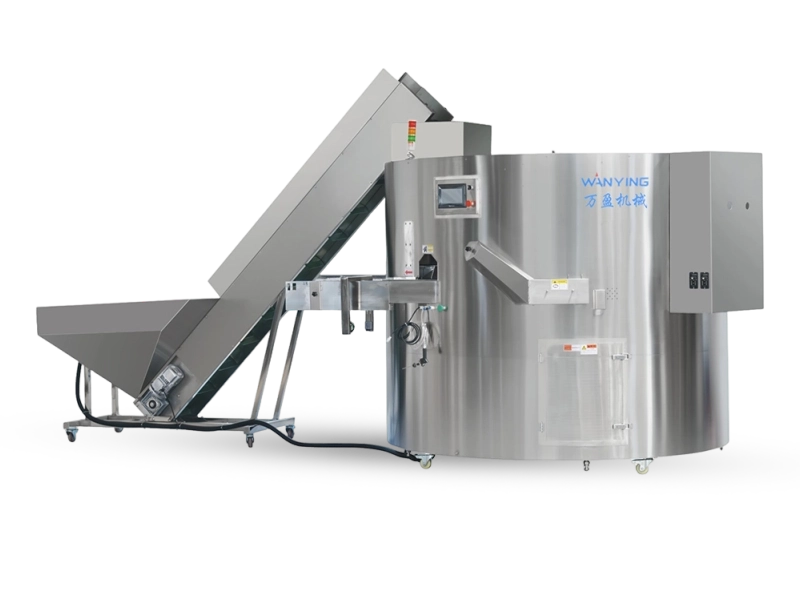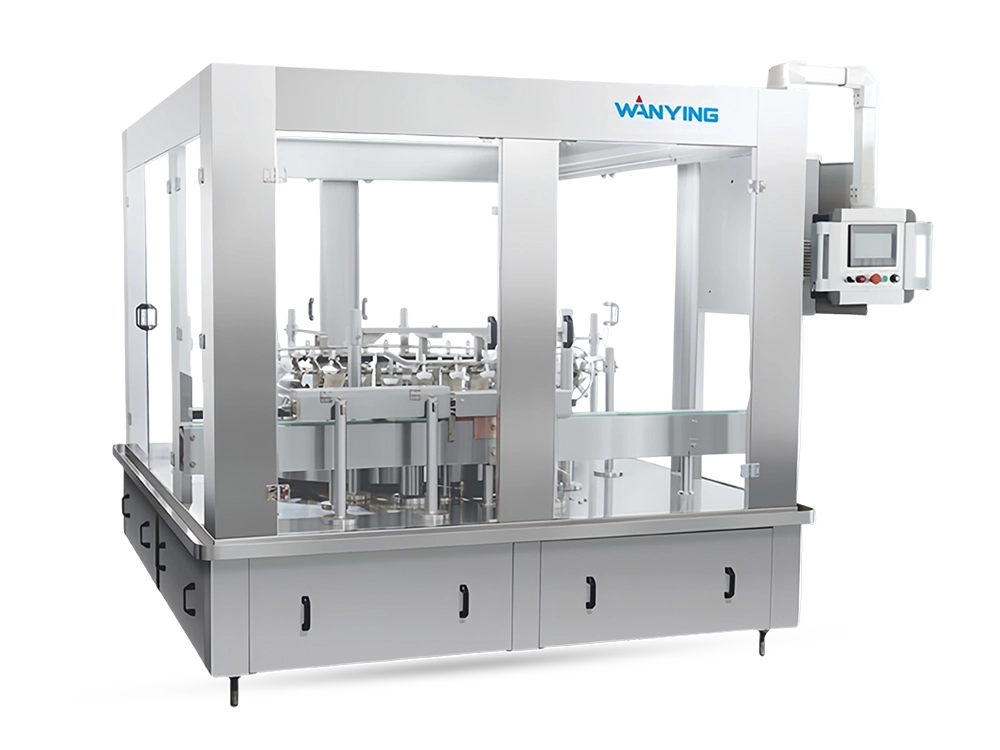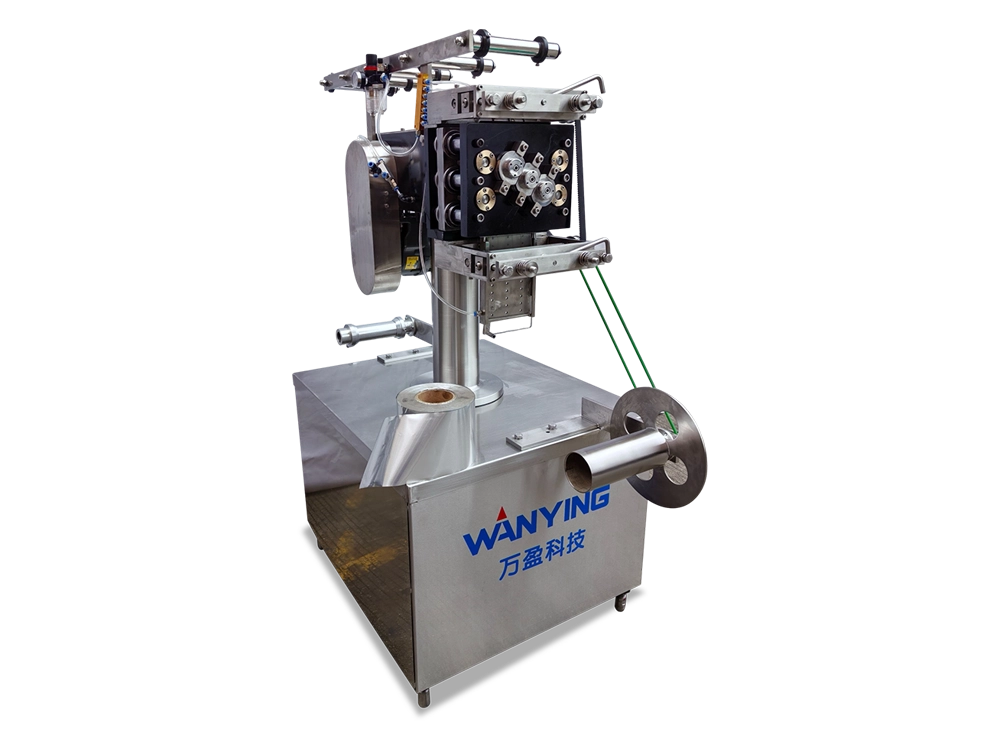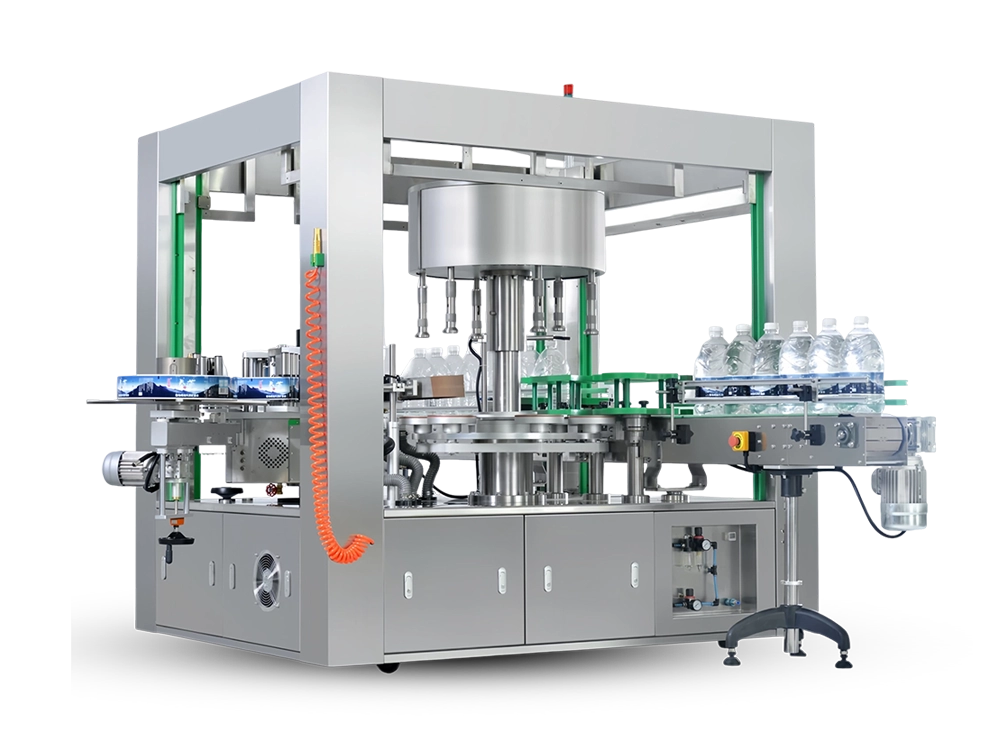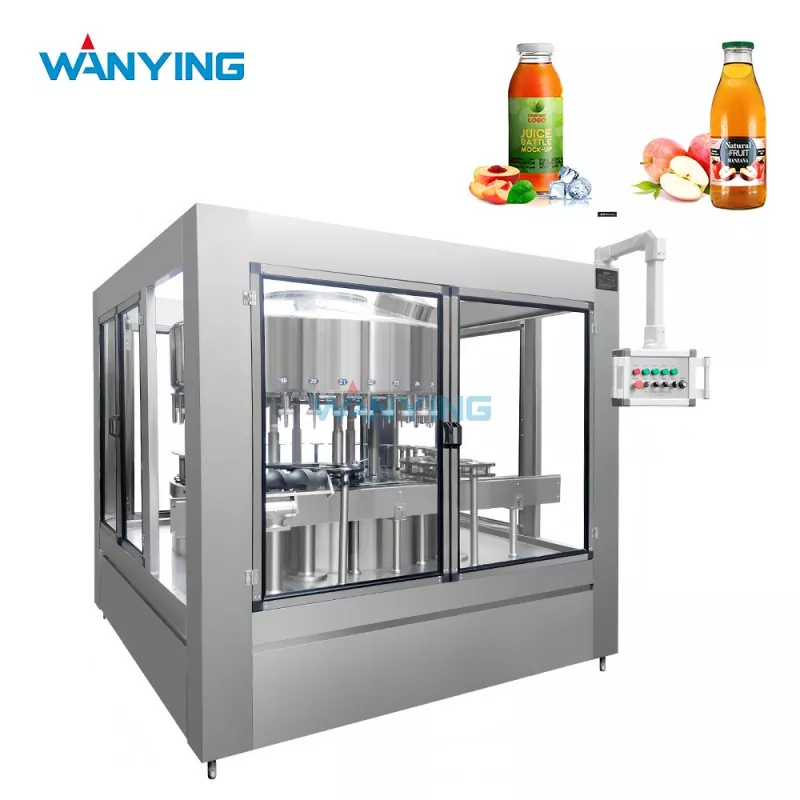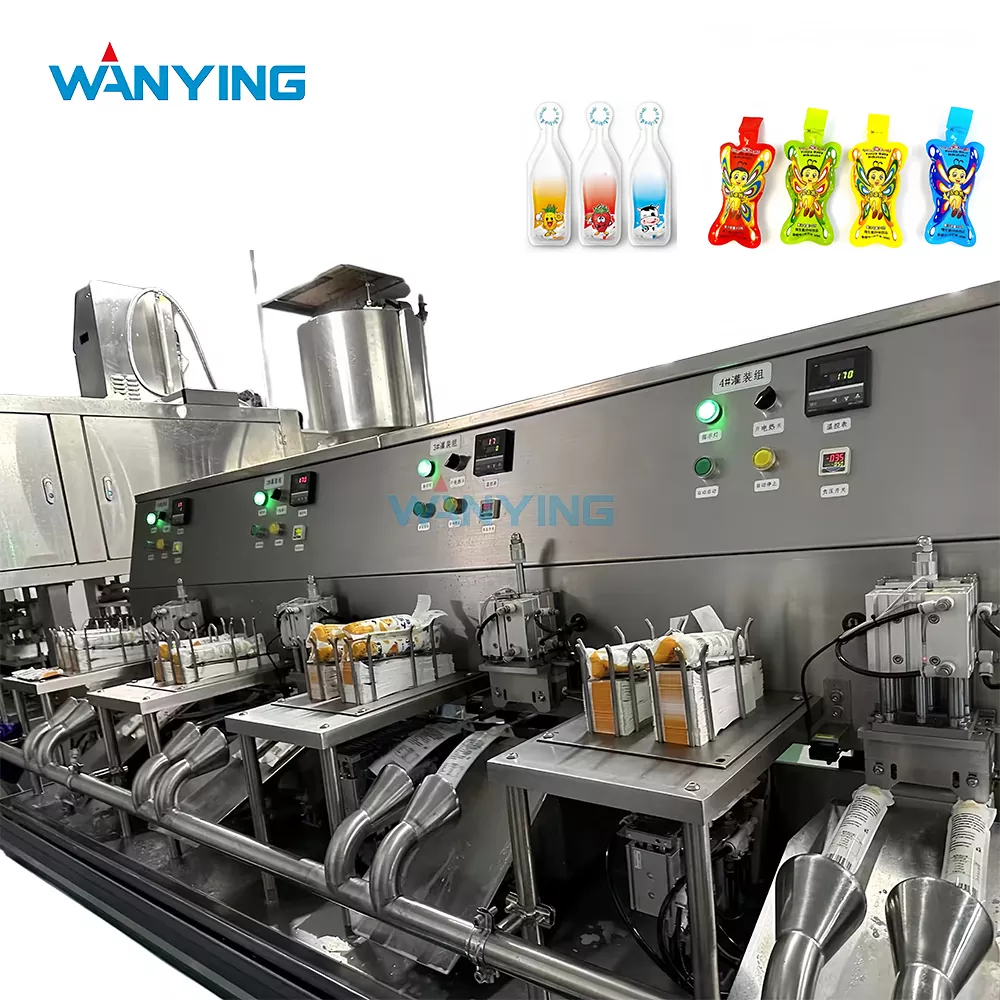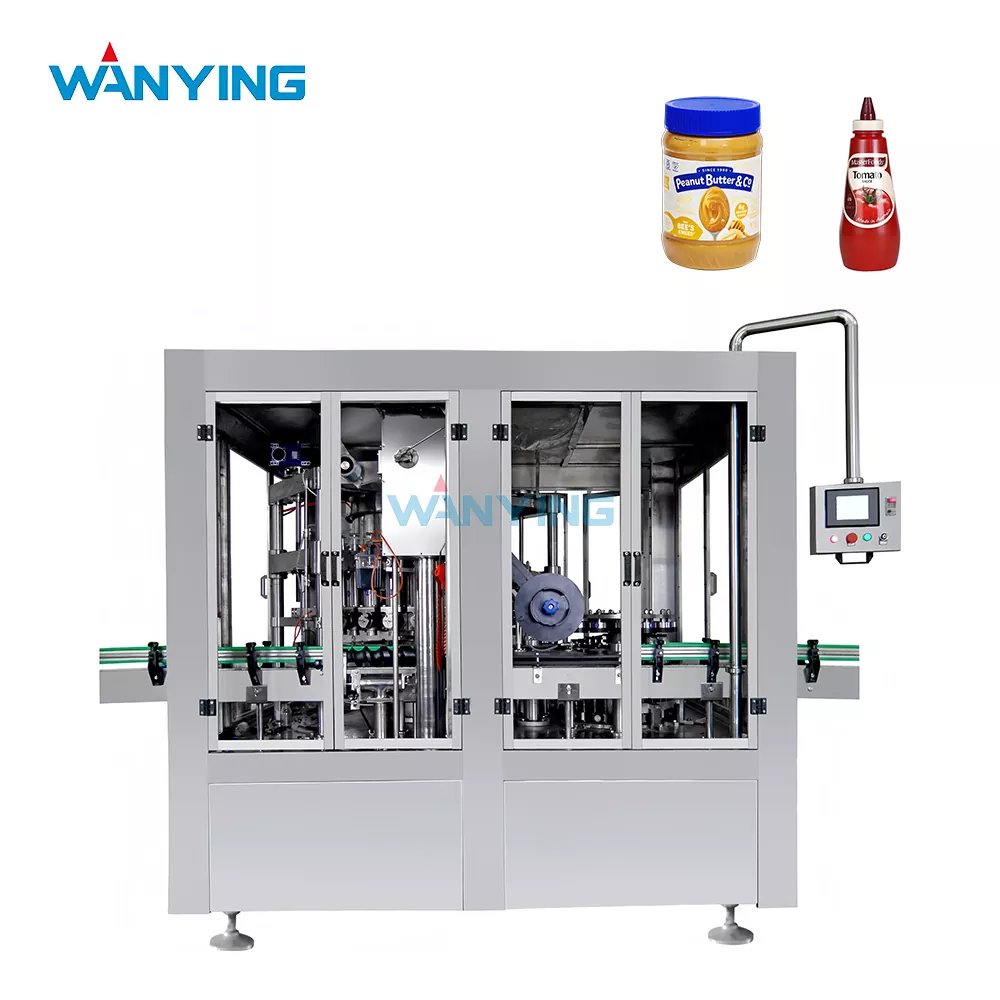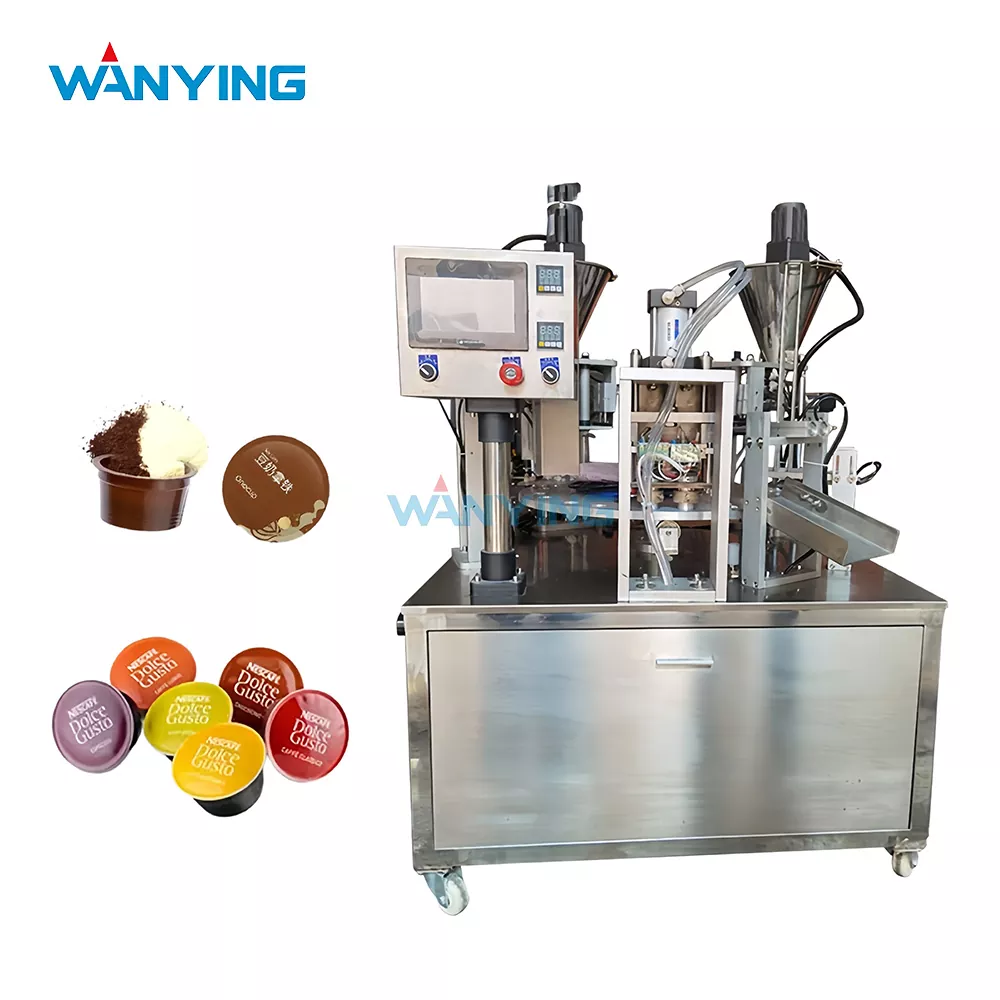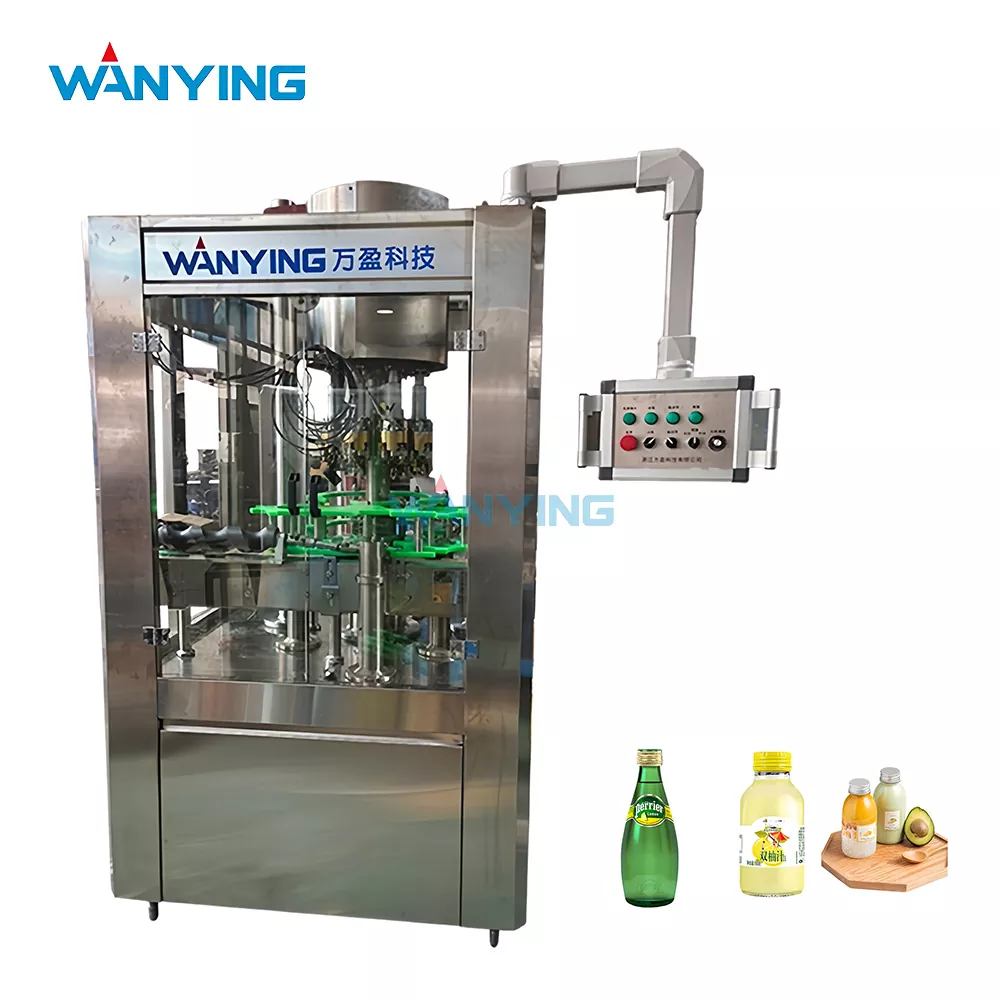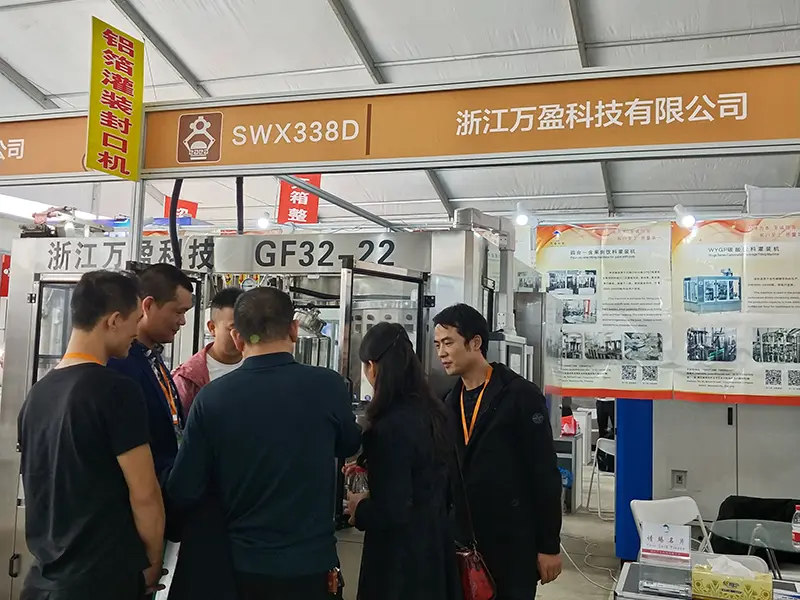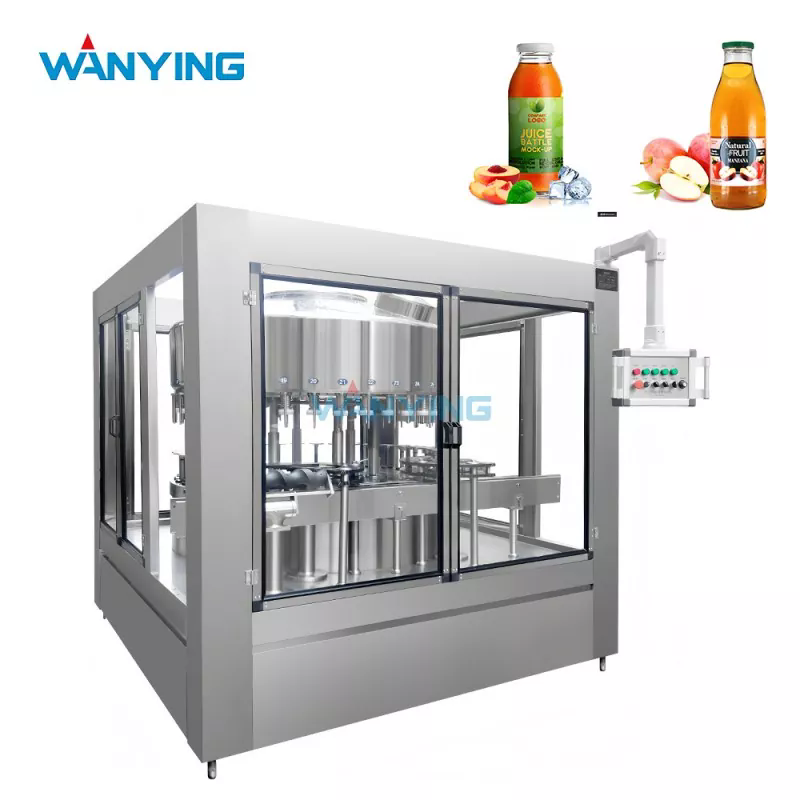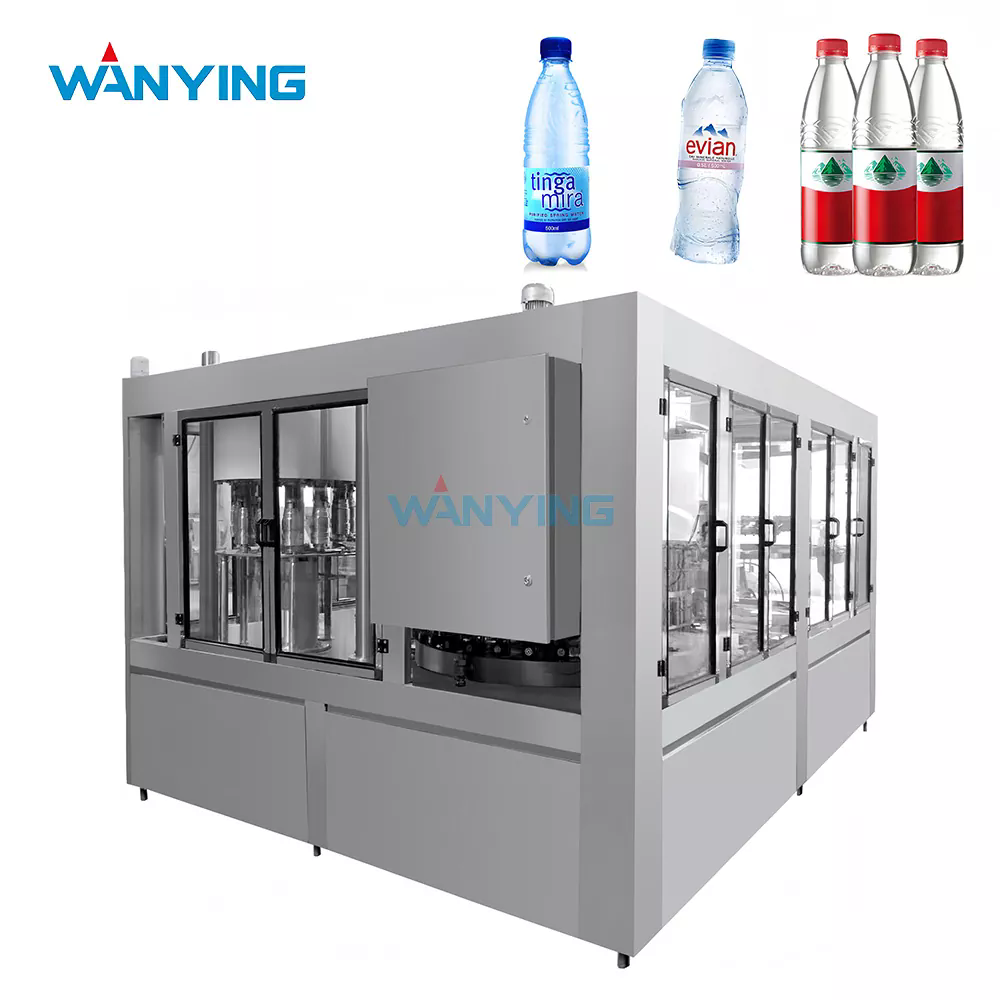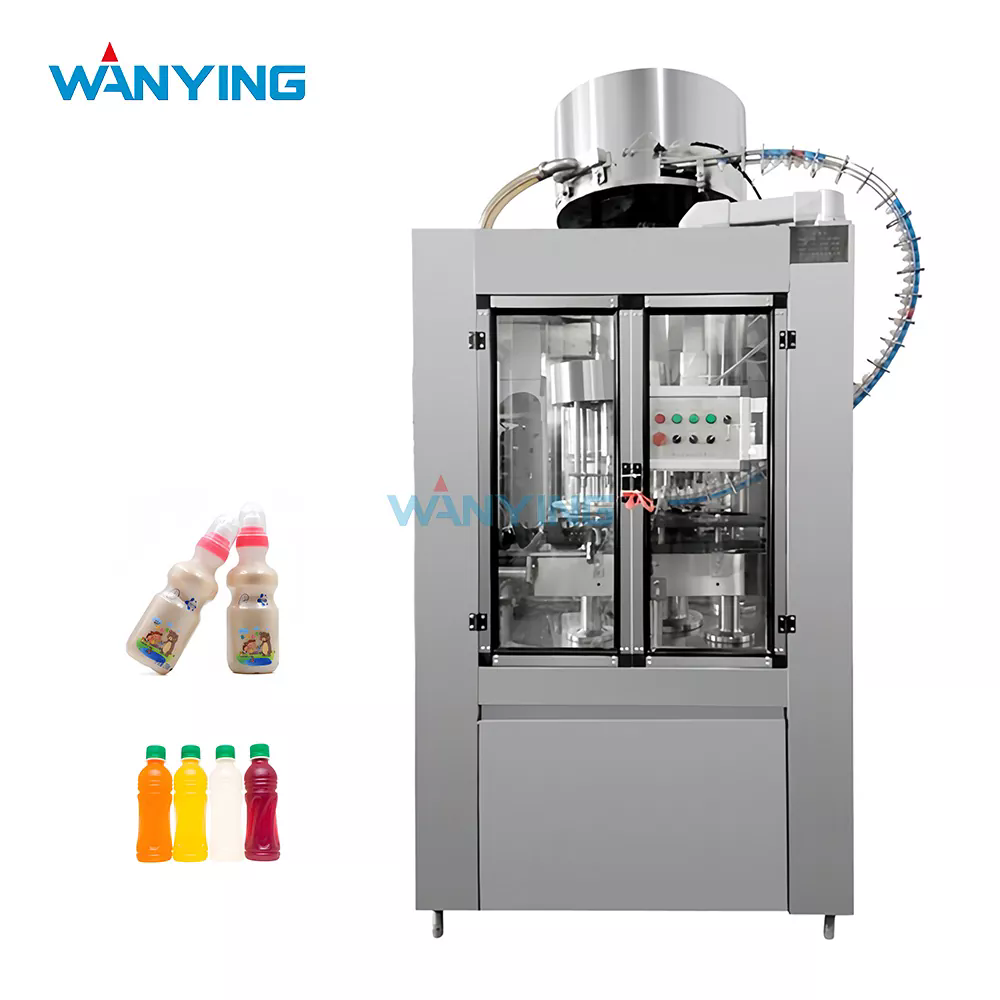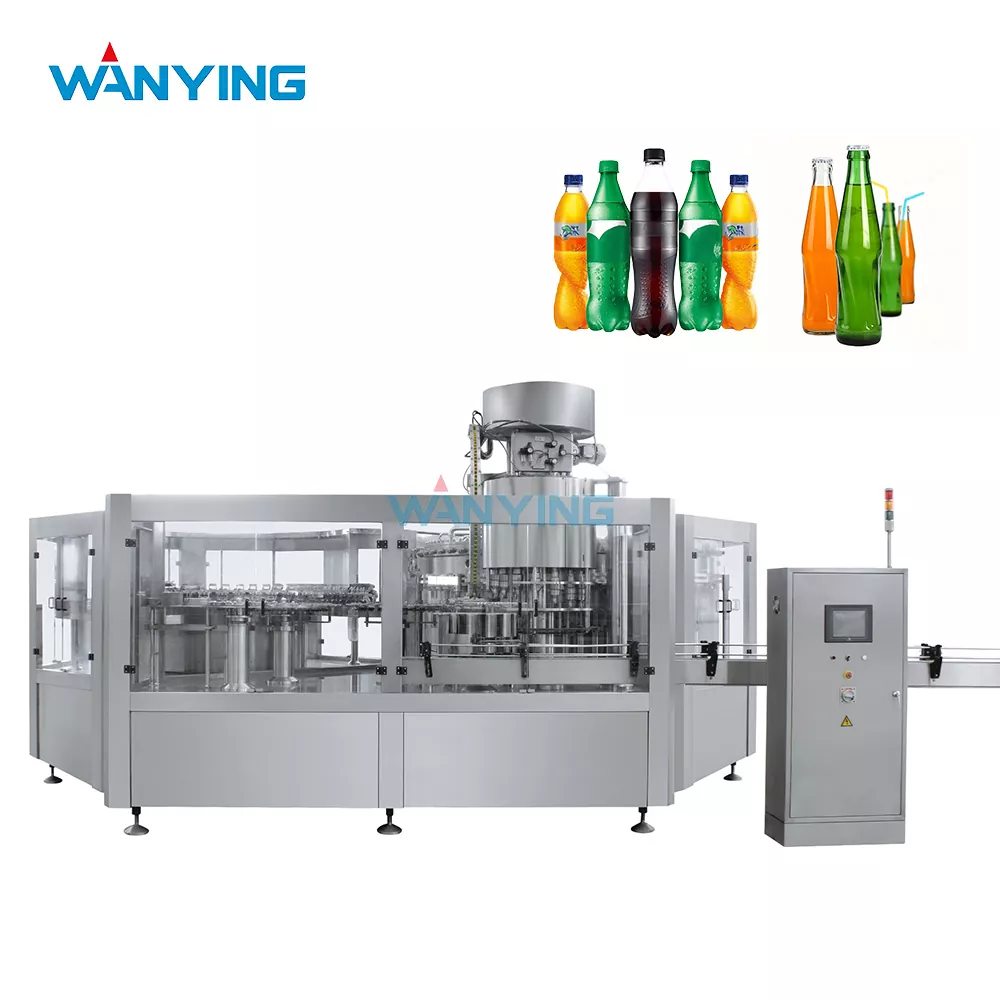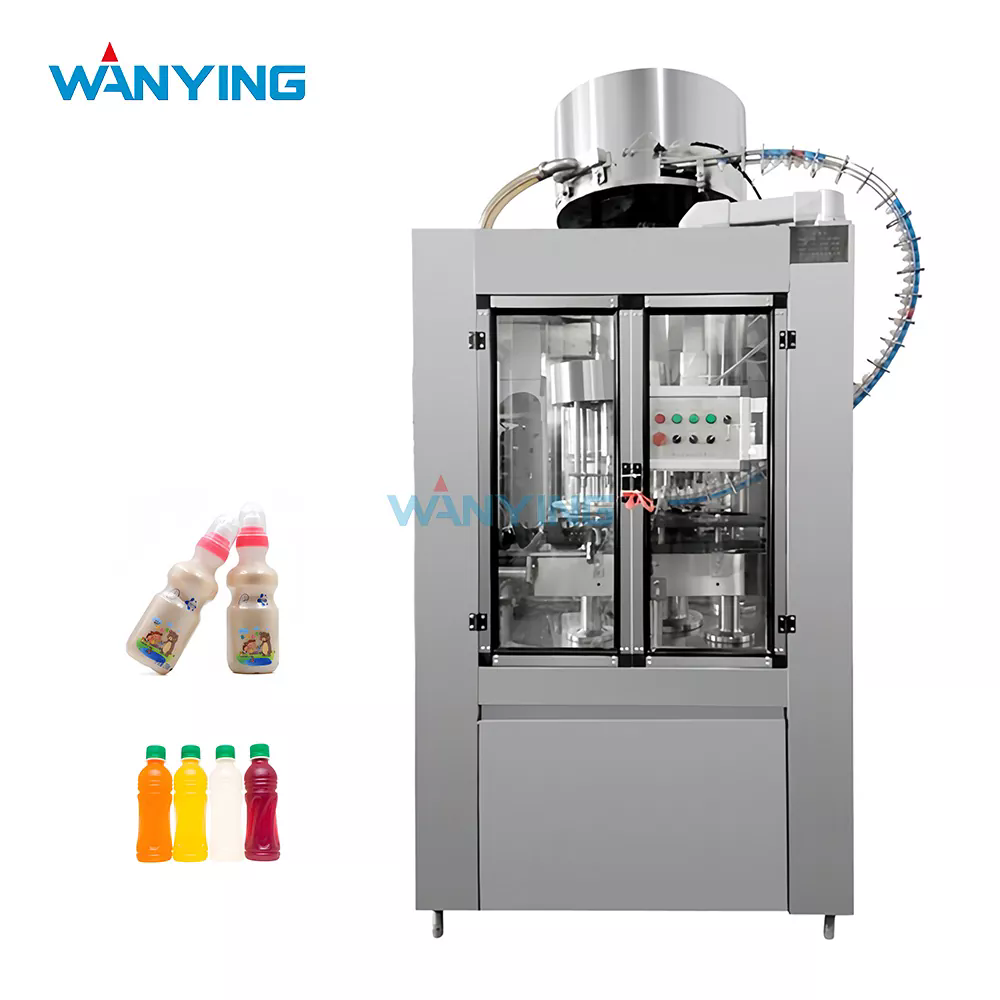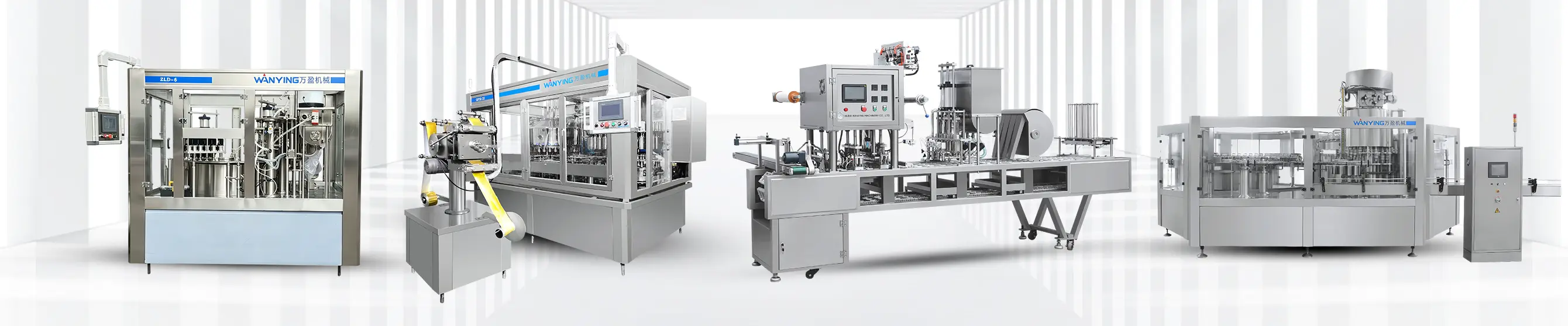
Wanying has independently developed two flagship bottle unscramblers—a fully automatic model and a high-speed model—specifically designed for the upstream sections of production lines for condiments such as fermented bean curd, soy sauce, vinegar, cooking wine, and yellow rice wine. These units can operate as standalone machines or integrate seamlessly with bottle washers, filling machines, and capping machines to form a complete automated production line. They effectively resolve common production pain points, such as slow manual unscrambling, chaotic bottle positioning, conveyor jams, and upstream output failing to keep pace with downstream filling processes.
1. Fully Automatic Bottle Unscrambler: Features an integrated structure for automatic loading, sorting, directional conveying, and automatic empty-bottle replenishment. It eliminates the need for continuous manual bottle feeding, making it ideal for new, standardized, unmanned condiment production lines and medium-to-large food enterprises aiming for reduced-staffing workshop management.
2. High-Speed Bottle Unscrambler: Optimized with enhanced rotary conveying and directional bottle-sorting mechanisms, this model offers higher throughput per unit of time. It synchronizes with high-speed filling and capping machines to eliminate capacity imbalances between process stages, making it suitable for large-scale condiment processing workshops requiring continuous, high-volume production.
1. Flexible Cushioning Conveyor Structure: Soft protective components are installed at all points of contact with the bottle body, and the edges of rotary tables and guide rails are rounded and polished. This prevents scratching the outer walls of glass bottles during sorting and conveying, thereby reducing waste caused by bottle damage.
2. Intelligent Anti-Jam Sensing System: The machine is equipped with sensing components. If multiple bottles stack up or a jam occurs due to bottle-mouth misalignment, the system automatically slows down briefly and makes micro-adjustments to the rotary table to clear the jam autonomously, eliminating the need for manual intervention or downtime for clearing.
3. Precision Directional Sorting: Internal guide rails can be adjusted according to the specific dimensions of the client's glass bottles. They systematically reorient chaotically piled empty bottles into a standard upright position (mouth facing up), ensuring stable transport to the downstream bottle-washing stage.
1. Precision CNC Machining of Core Drive Components: The rotary table, drive chain, and sorting/limiting assemblies are precision-machined as integrated units. This ensures uniform clearances and prevents loosening or jamming during prolonged, high-speed operation.
2. Reliable Drive System Powered by Brand-Name Components: The machine utilizes high-quality, industry-leading components for its electrical control and pneumatic systems. The circuitry offers strong interference resistance, and the pneumatic bottle-separation mechanism features excellent sealing, making it ideal for the humid, moisture-rich environments typical of condiment production facilities.
3. Full-Load Simulated Production Testing: Before shipment, every bottle unscrambler undergoes a continuous, full-load test run using the client's specific glass bottles. Parameters such as rotary table speed and bottle spacing are fine-tuned, and the machine is only cleared for delivery after confirming there are no issues with bottle jams or tipping.
1. Pre-Start Checks: Before daily operation, inspect the guide rails and the rotary table's soft protective pads for wear or detachment. Ensure photoelectric sensors are free from sauce residue or dust. Check pneumatic lines for leaks and electrical terminals for tightness before starting the equipment.
2. Standardized Operation: Do not dump large batches of empty bottles into the hopper at once; feeding them in layers reduces stacking and jamming. Do not arbitrarily alter factory-set speed parameters. When switching bottle types, adjust rail spacing incrementally according to procedure; never force or pry the limiting assemblies.
3. Daily Shutdown Cleaning and Maintenance: After production, clear the hopper and rails of residual glass fragments and dust. Wipe down machine surfaces that contact the bottles with clean water to prevent metal corrosion caused by prolonged exposure to sauce residue or moisture. Avoid spraying water directly onto the electrical control box or sensors to prevent short circuits.
4. Periodic In-Depth Maintenance: Apply specialized lubricating grease to the rotary table drive chain and bearings every 30 days. Every six months, disassemble and inspect the bottle-separation limiting fixtures and buffer components for wear, replacing worn parts promptly to prevent operational failures.
Unlike general-purpose packaging machinery manufacturers, Wanying focuses on production lines for glass-bottled condiments such as fermented bean curd and soy sauce. Our bottle unscramblers feature structures specifically optimized for glass condiment bottles, offering far superior compatibility compared to standard models.
We operate a 2,000-square-meter standardized production facility, handling everything from component machining to final machine assembly in-house. By eliminating intermediary markups, we allow customers to purchase equipment at factory-direct prices, significantly reducing initial investment costs.
With years of experience serving condiment manufacturers nationwide, we have accumulated a vast portfolio of successful installations across various production capacities and bottle types. Customers can visit nearby operational sites to see the equipment running firsthand.
We offer flexible configurations—combining our filling, capping, and case-packing machines—to create complete production lines. Post-delivery services include remote commissioning, on-site installation, and operator training. We provide a one-year warranty on the entire machine and a long-term supply of genuine replacement parts, ensuring peace of mind regarding equipment maintenance and operation.