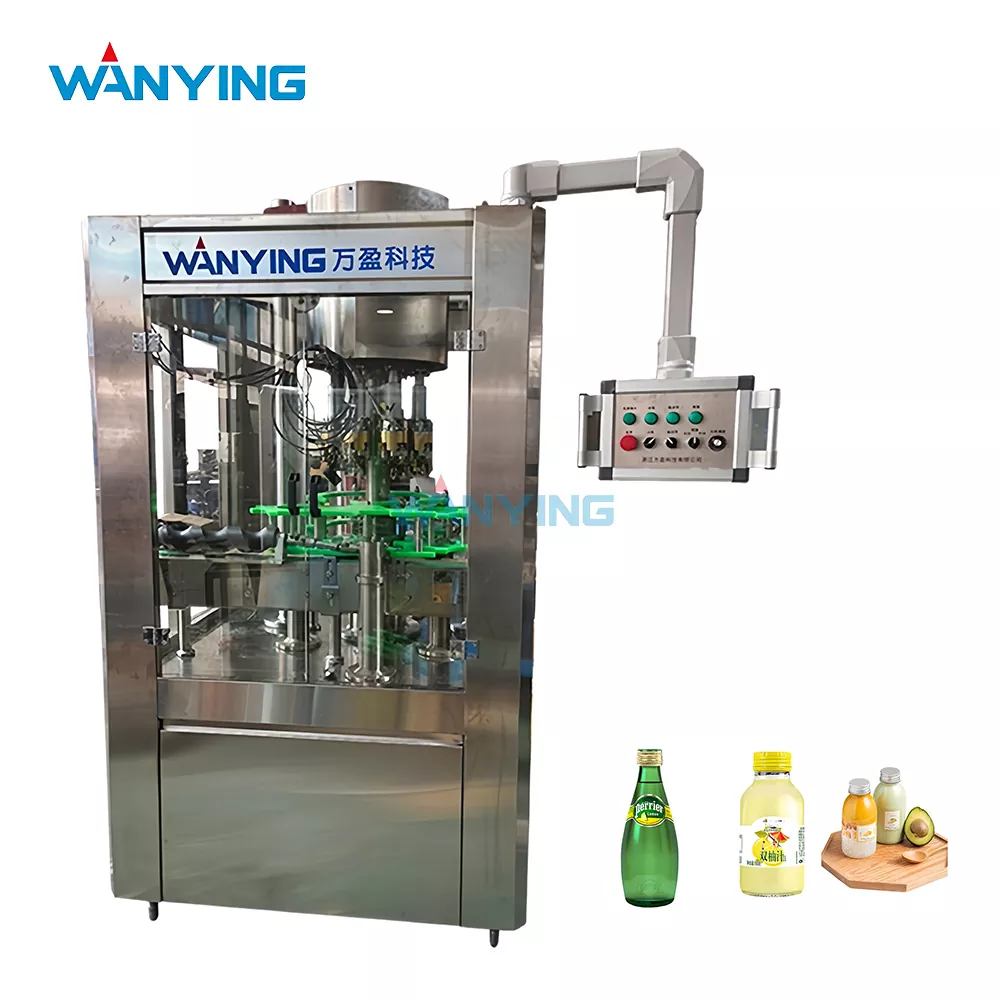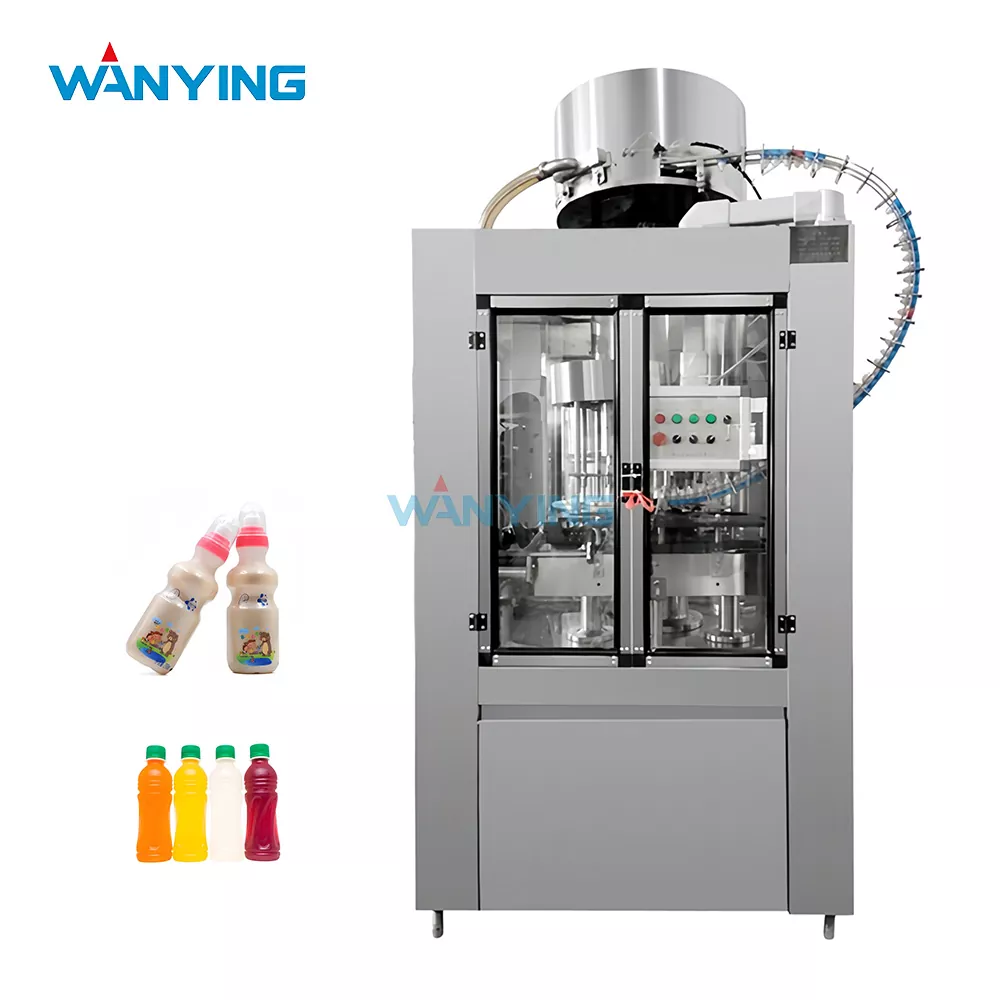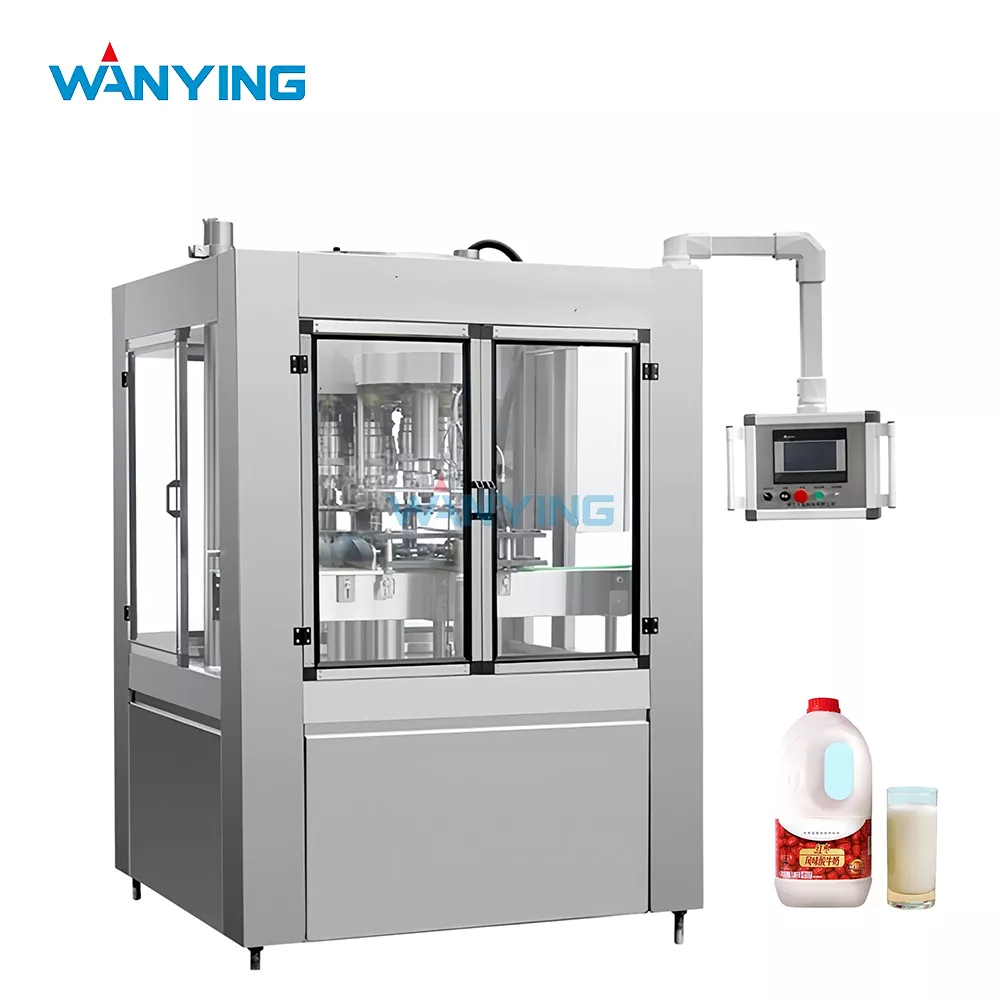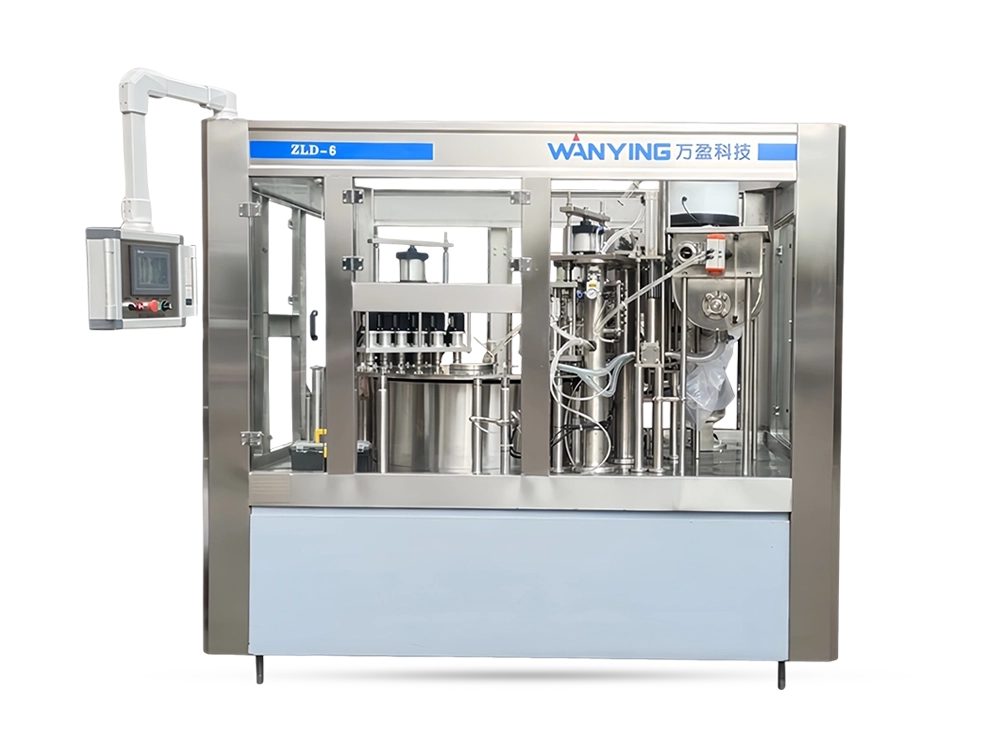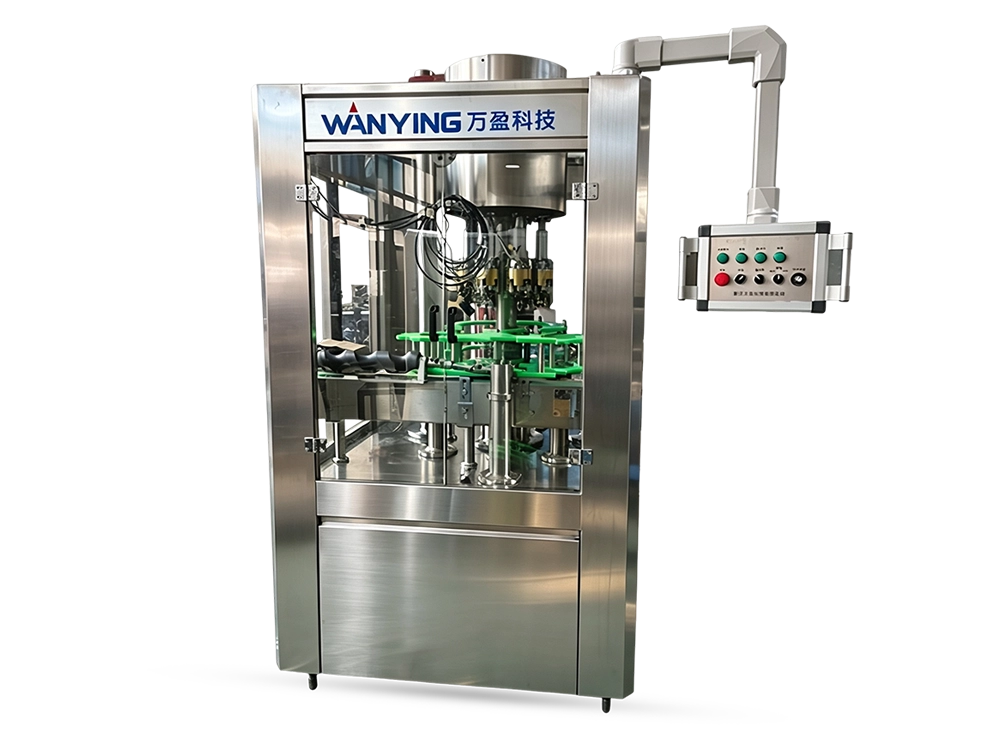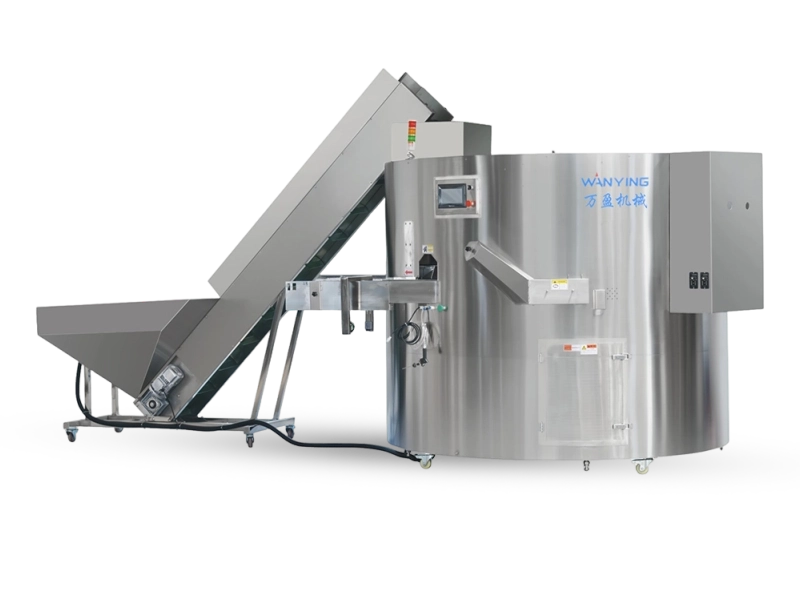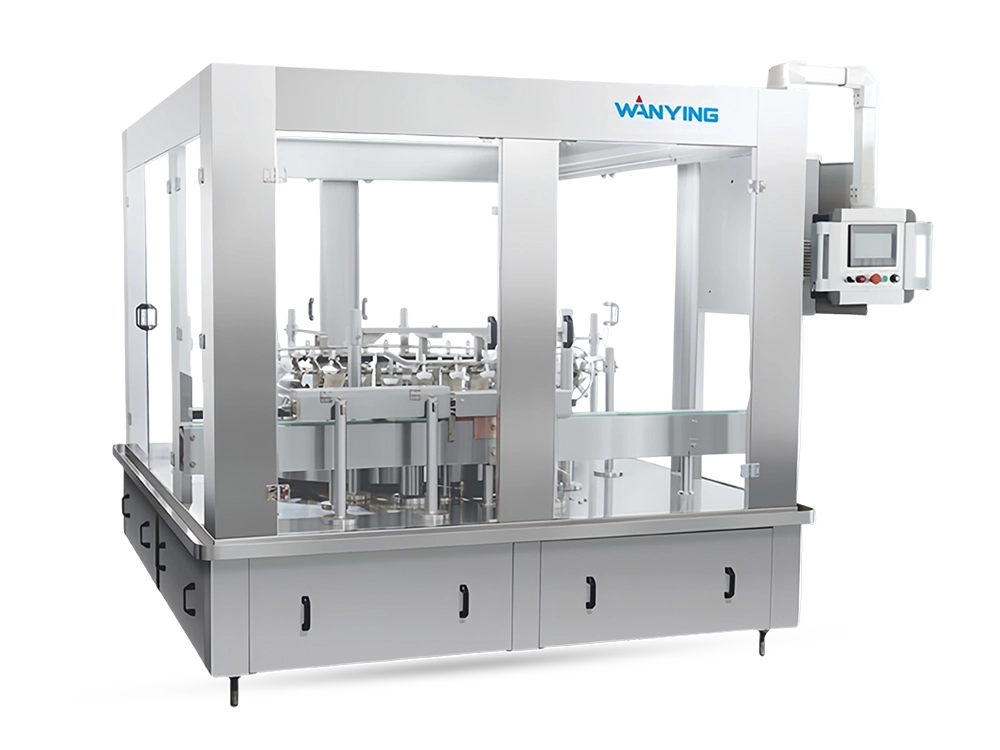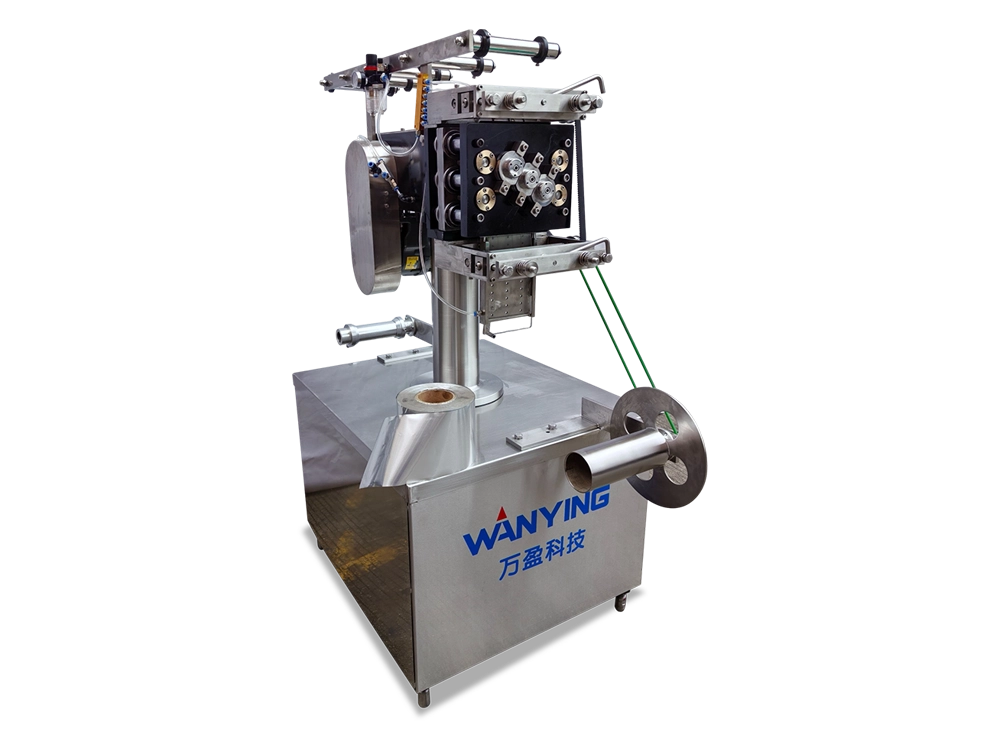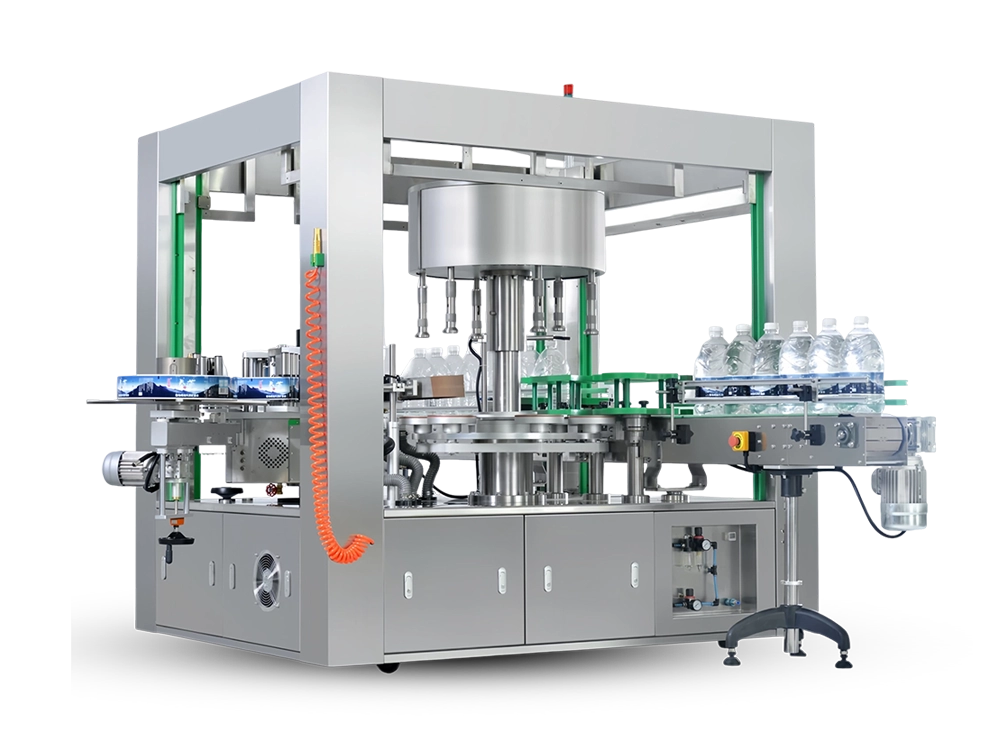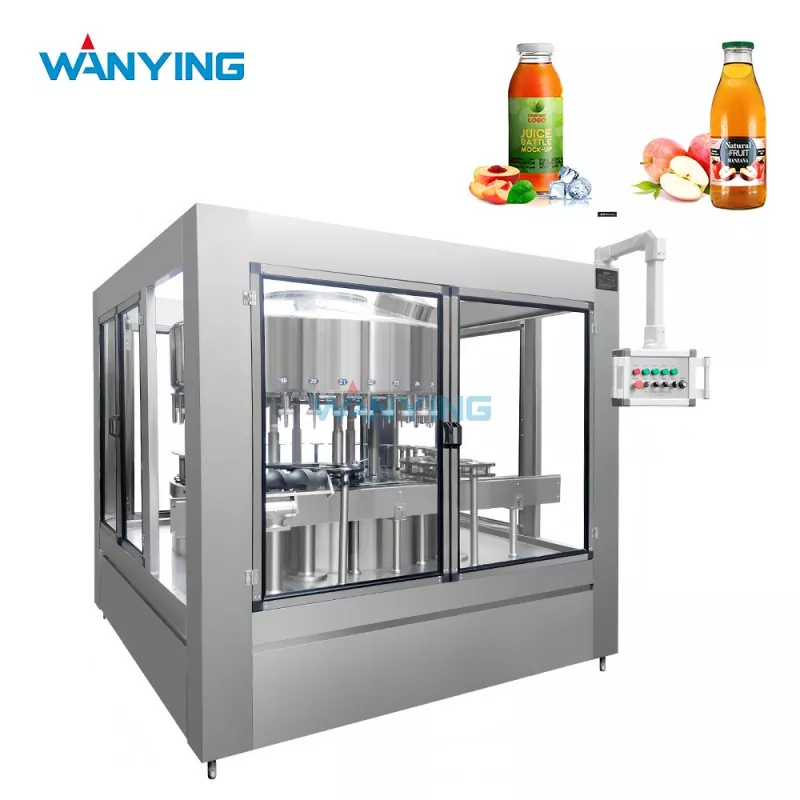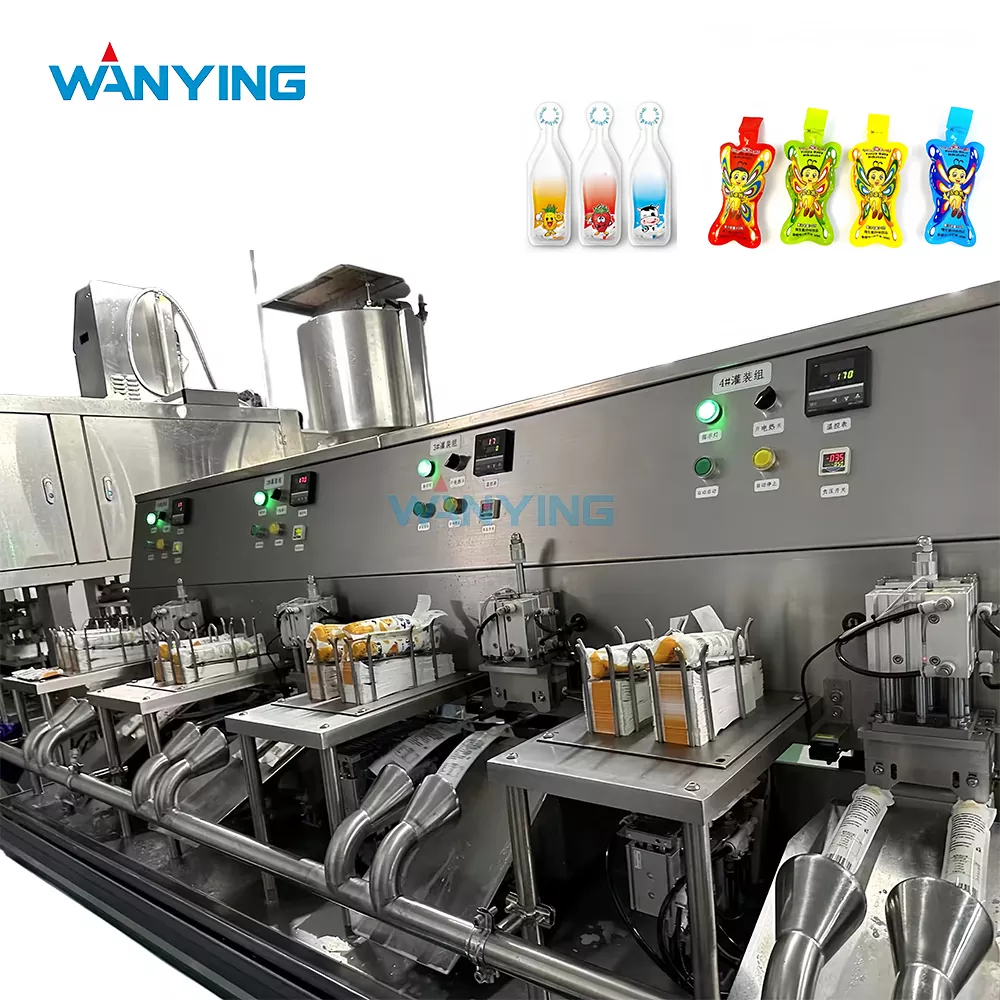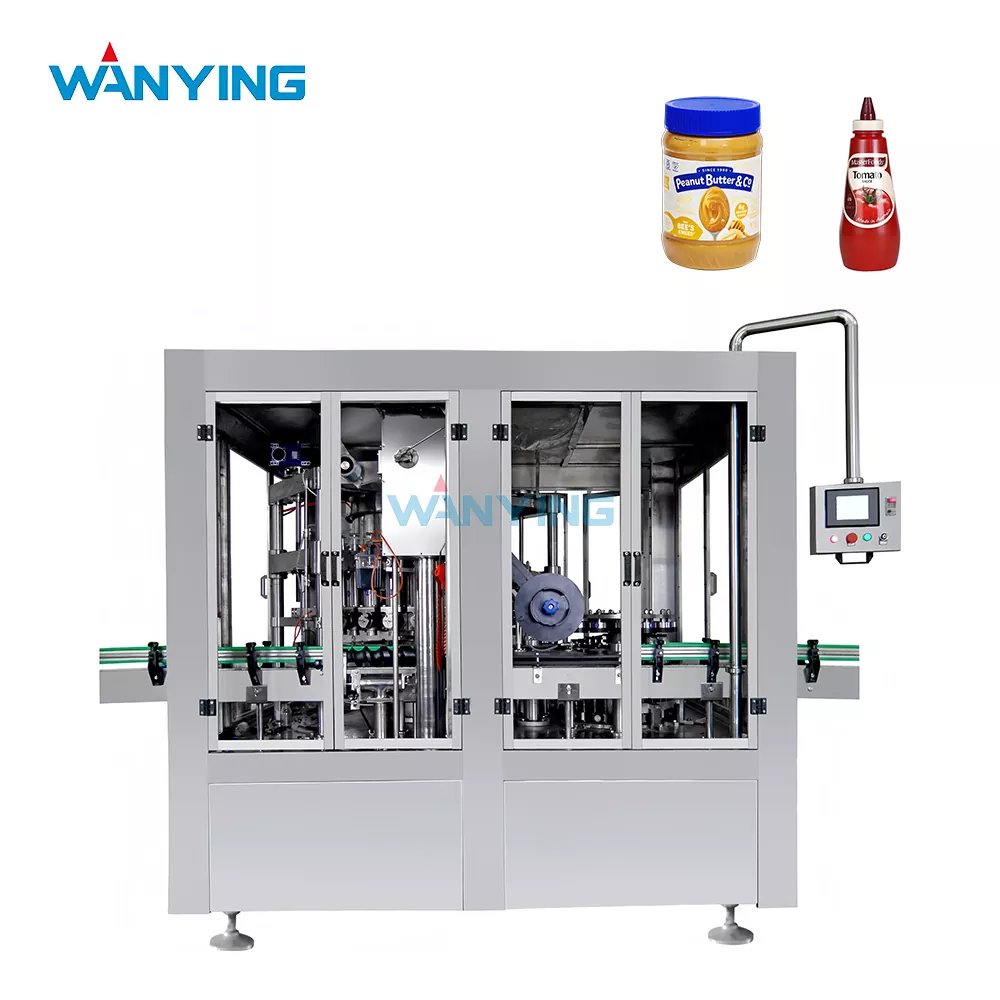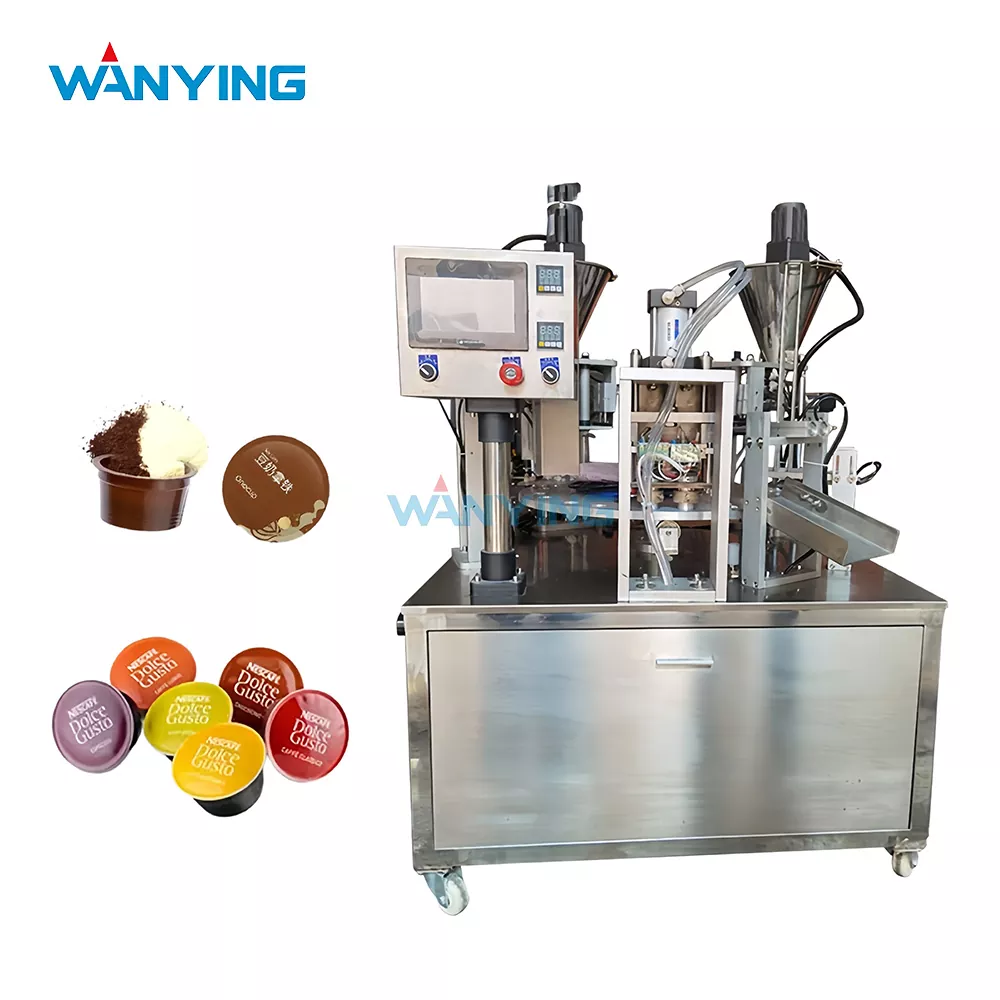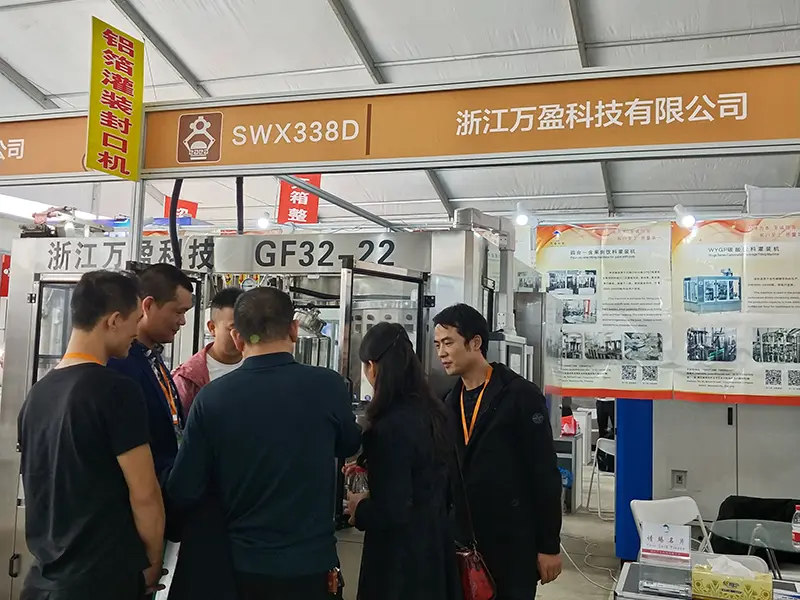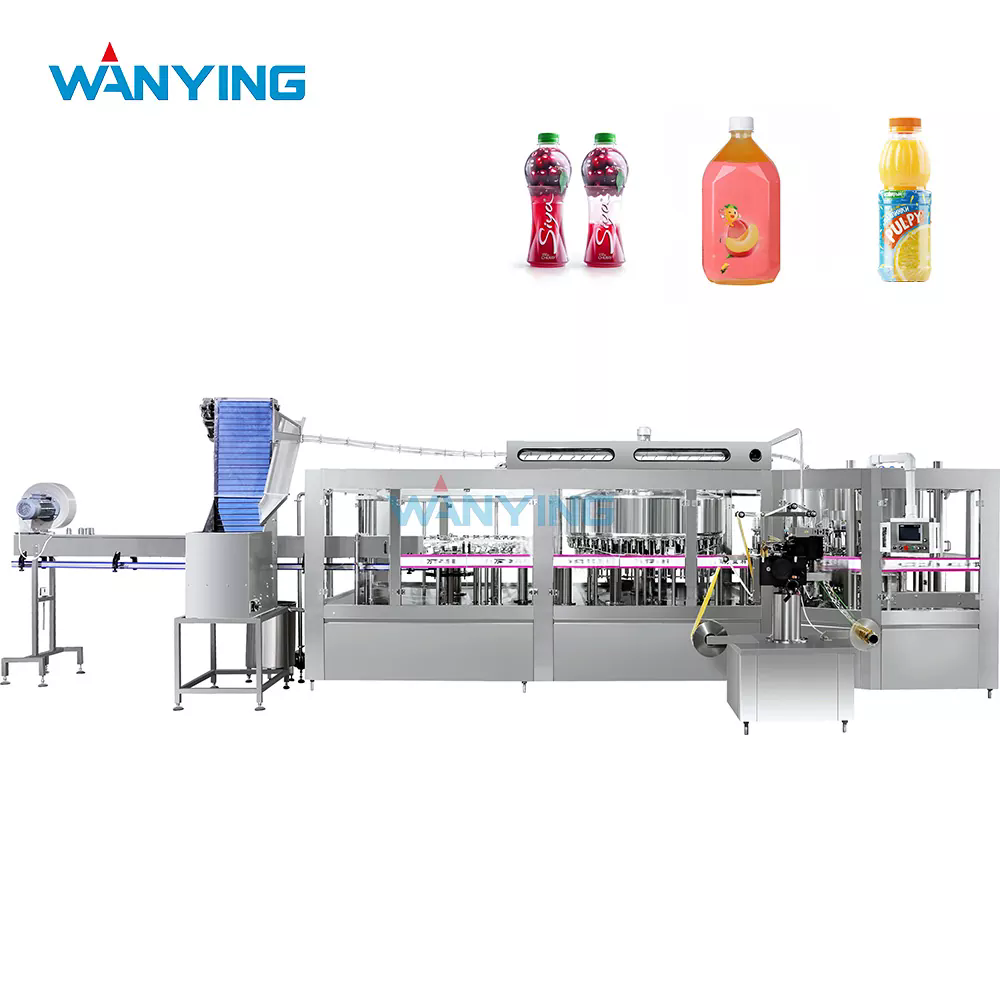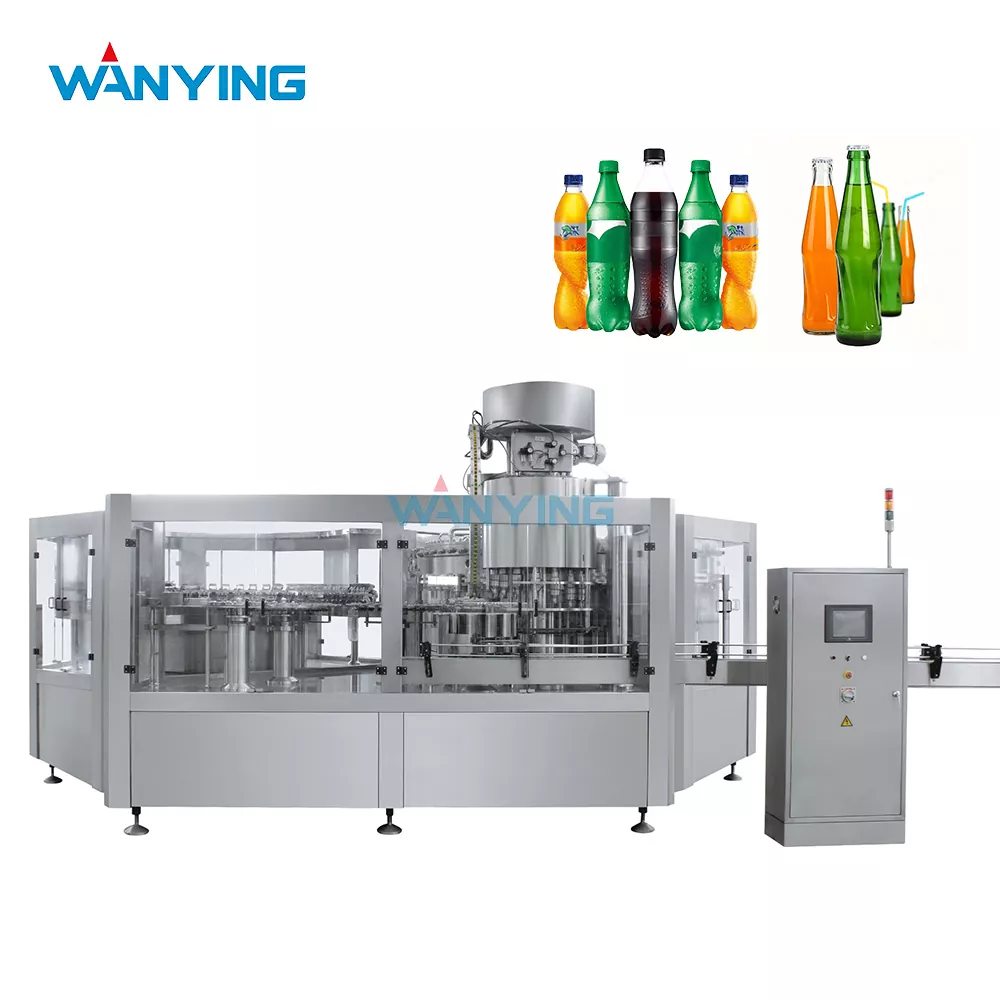
Wanying independently develops and manufactures a full range of capping machines—including aluminum screw-cappers for glass bottles, high-speed cappers, and fully automatic cappers—specifically designed for production lines handling condiments such as fermented bean curd, soy sauce, vinegar, cooking wine, and yellow rice wine. Backed by a 2,000 m² standardized factory, precision machining and testing equipment, and experience from over 300 food plant installations, all units utilize top-tier electrical and pneumatic components and undergo rigorous quality control during assembly. They can operate as standalone units or integrate with filling, bottle-washing, and bottle-unscrambling machines to form complete automated production lines.
1. Aluminum Screw-Capper for Glass Bottles: Specifically designed for the aluminum screw caps used on fermented bean curd jars. It features optimized clamping tooling for the jar's structure and applies gentle sealing pressure to prevent scratches on the glass body or the cap's surface, meeting the standard capacity needs of small-to-medium-sized processing plants.
2. High-Speed Capper: Features an enlarged capping module and conveyor system for continuous, stable operation. It is designed for large-scale condiment production facilities and synchronizes with high-speed filling machines to eliminate capacity bottlenecks between the filling and capping stages.
3. Fully Automatic Capper: Integrates automatic cap feeding, positioning, tightening, and rejection of defective caps. It requires no manual cap placement, making it ideal for fully automated, unmanned production lines in newly built, large-scale standardized condiment factories.
1. Preventing Stripped Threads and Loose Caps: Equipped with adjustable capping heads, the machine allows for precise torque settings based on cap thickness and thread depth. Consistent torque across every bottle eliminates the risk of liquid leakage during transport.
2. Preventing Bottle Crushing or Damage: The bottle positioning and clamping assembly features flexible cushioning materials and adjustable clamping force. This ensures stable holding for both glass and plastic condiment bottles without the risk of crushing or breakage.
3. Automatic rejection of defective capped products: Fully automatic, high-speed models are equipped with detection sensors. Products that are loosely capped, missing caps, or have misaligned caps are automatically diverted and rejected, preventing substandard items from entering the subsequent boxing stage and reducing post-sales losses.
1. The capping machine utilizes industry-leading brands for core electronic control and pneumatic components. The circuitry is interference-resistant, and the pneumatic capping mechanism offers excellent sealing, ensuring reliability during high-frequency, repetitive operation without air leaks or electrical failures.
2. Key transmission and gripping components undergo precision CNC machining to ensure consistent tolerances; this prevents loosening or jamming during prolonged, continuous operation.
3. Before shipment, the machine undergoes continuous testing that simulates factory mass-production conditions. Torque and conveyor speeds are fine-tuned for specific bottle and cap types, and the unit is only cleared for shipment after meeting quality standards for capping success rates.
1. Flexible production line integration: Customers can purchase the capping machine as a standalone unit or integrate it with our filling, bottle washing, bottle unscrambling, and boxing machines to form a complete production line. This supports both the retrofitting of existing facilities and phased implementation for new plants.
2. Personalized tooling customization: We offer custom gripping molds and capping heads tailored to specific glass bottle dimensions and unique aluminum screw caps, eliminating the need for customers to change their existing packaging formats.
3. Comprehensive technical support: We provide remote commissioning guidance after delivery. For complete production lines, we can arrange on-site installation and commissioning by technicians, alongside training for workshop operators on daily adjustments and basic maintenance.