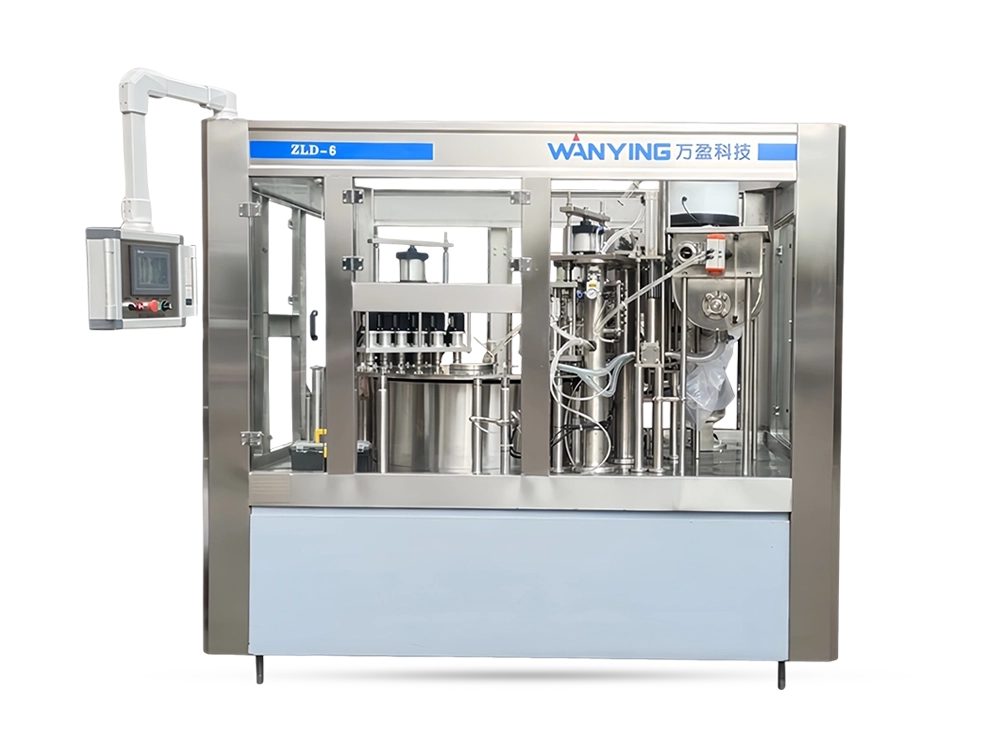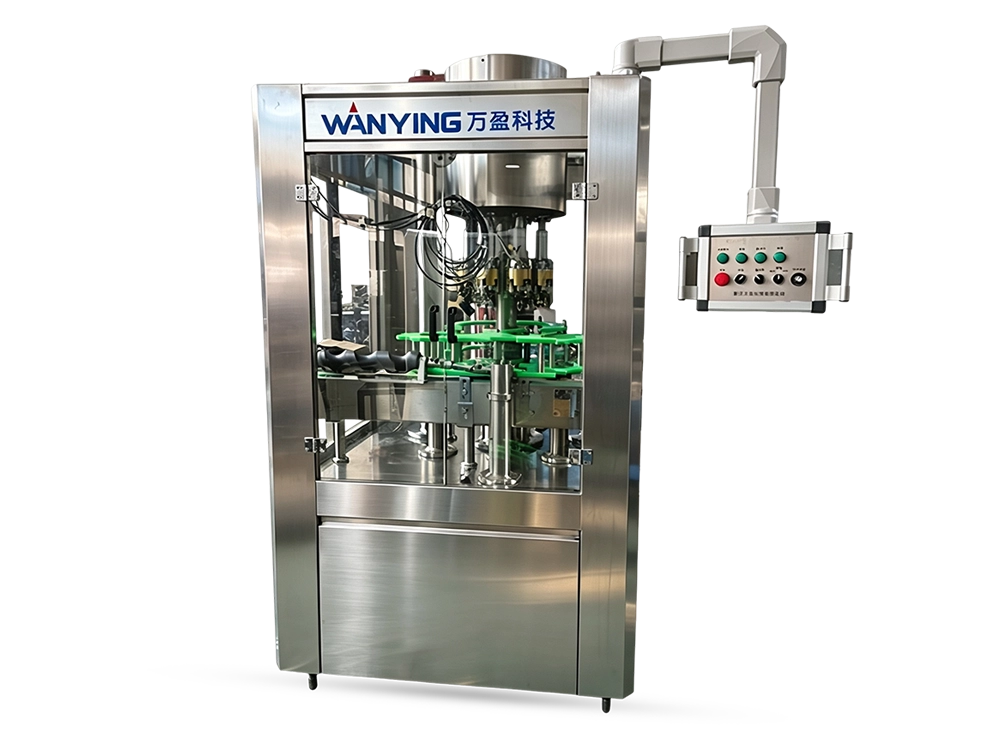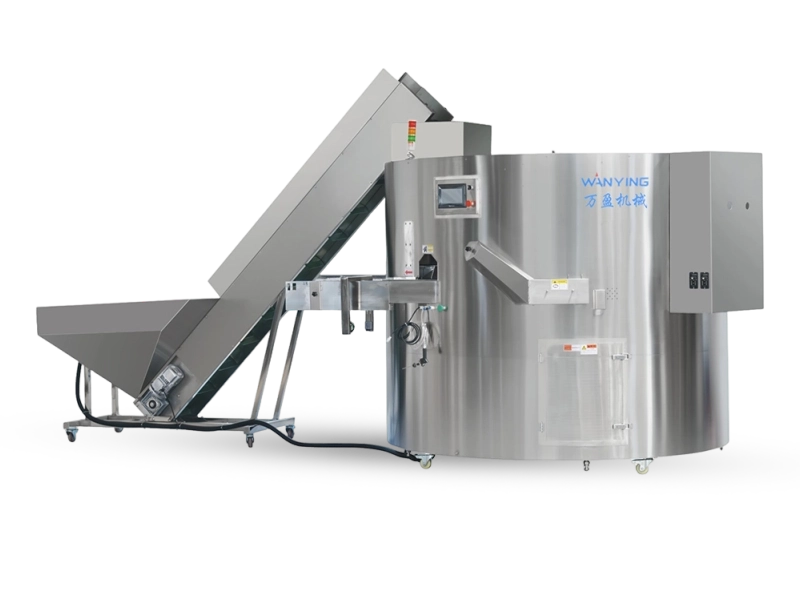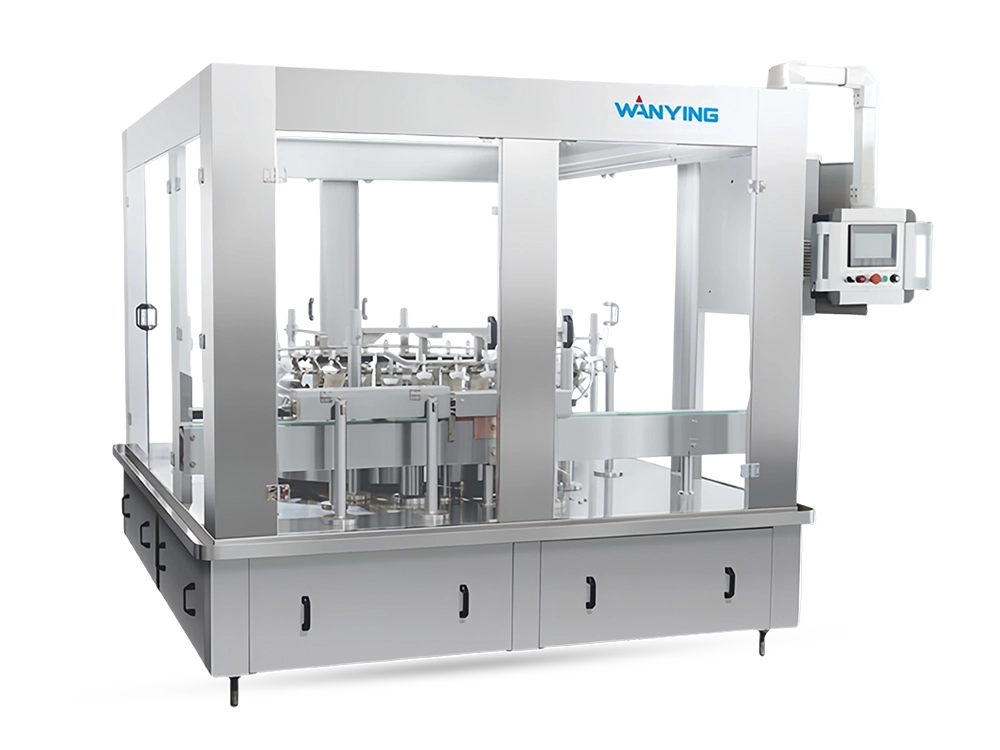
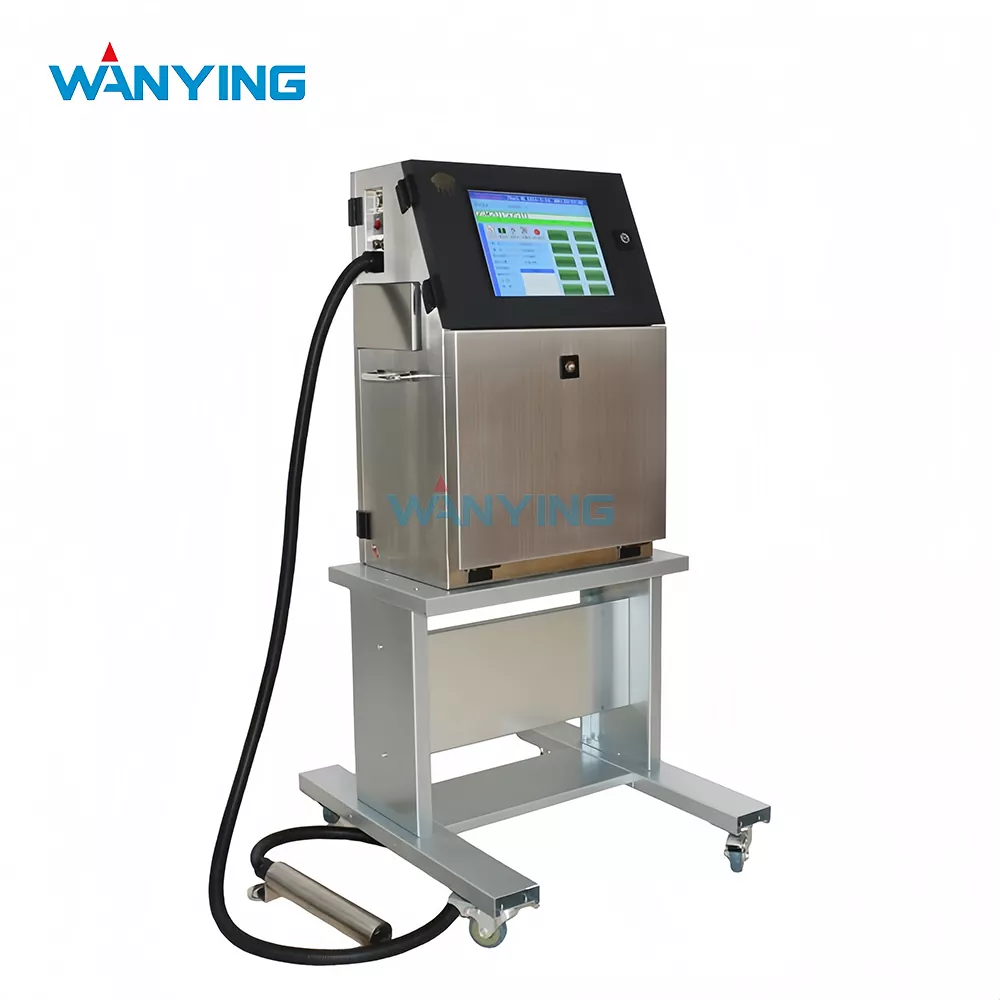
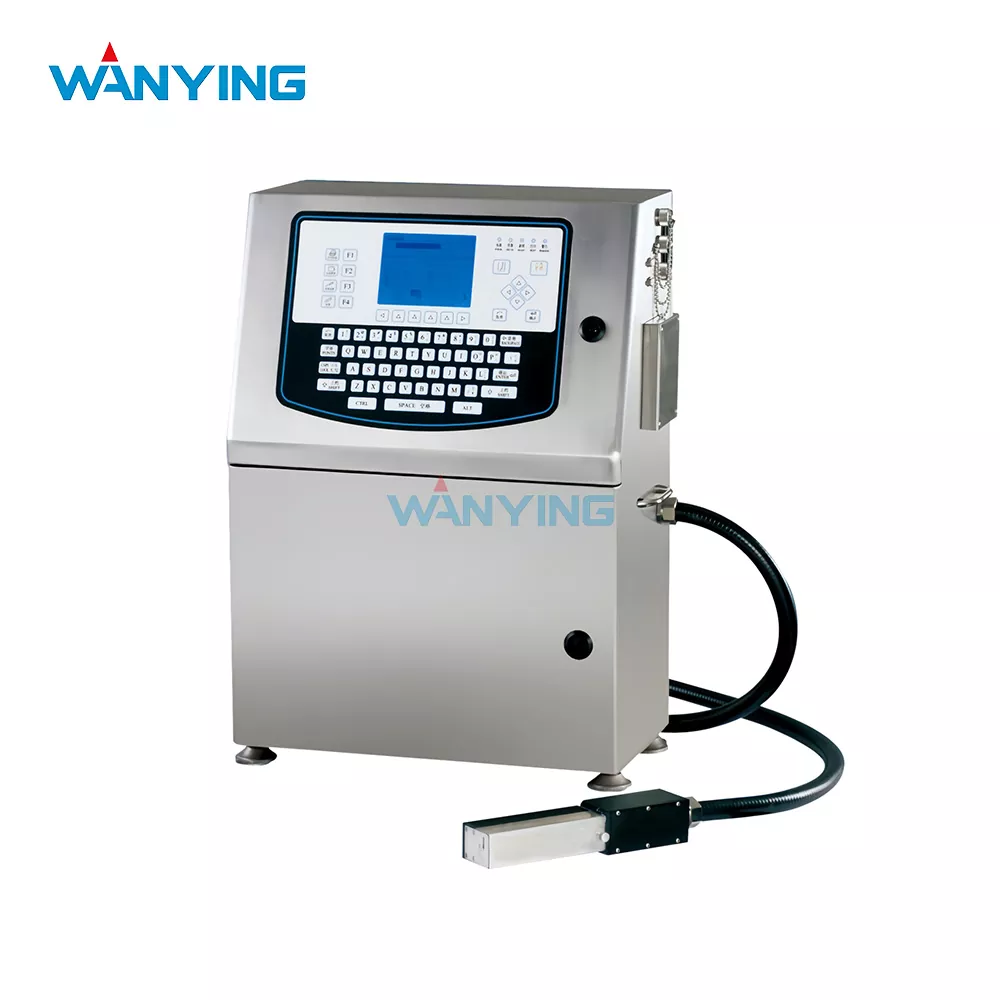
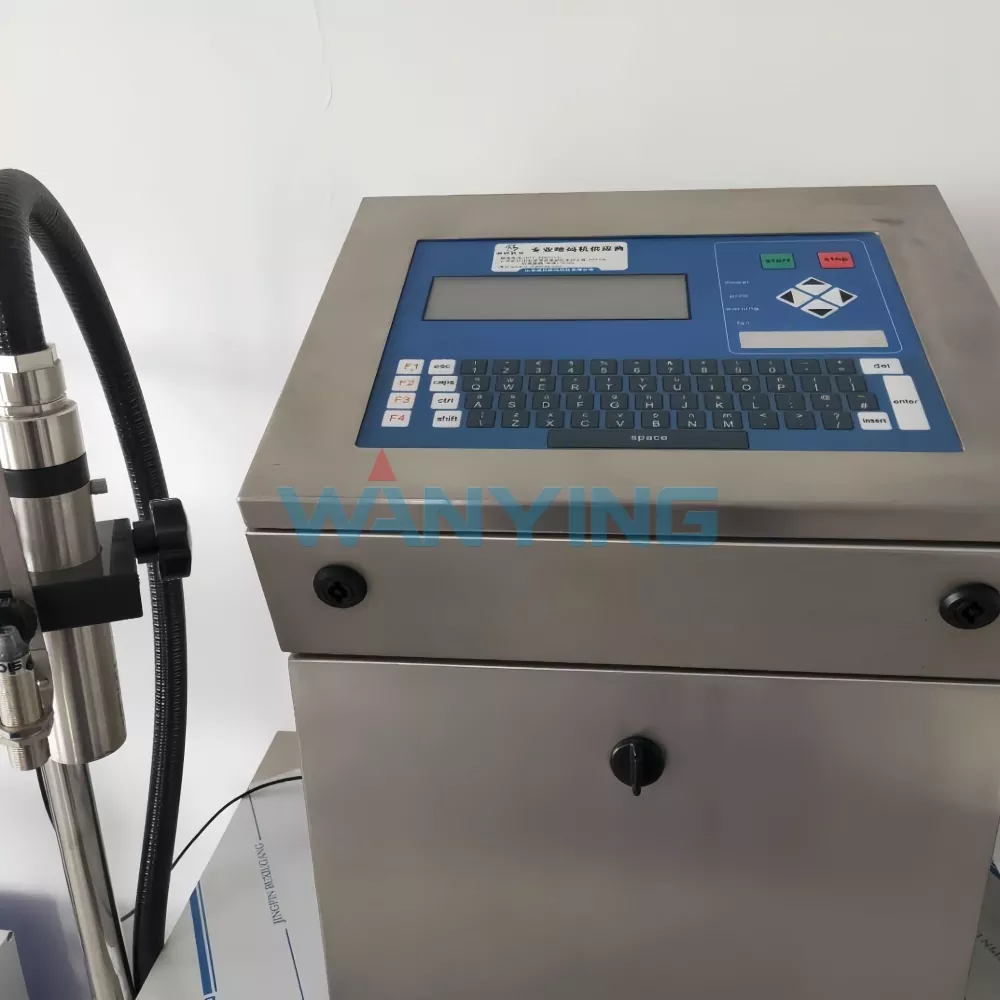
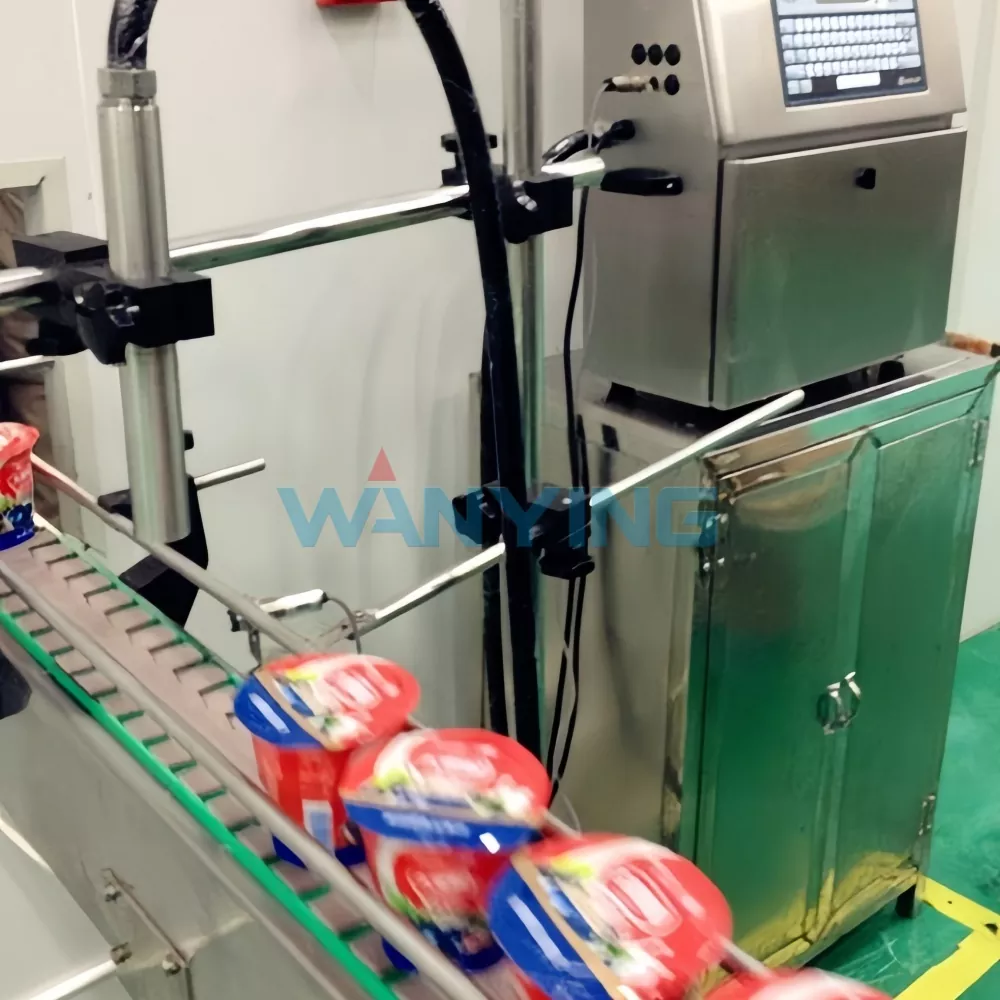
Unlike generic coders that struggle with dusty, humid, or high-temperature conditions, Wanying coders are built with sealed printheads, automatic nozzle cleaning, and robust industrial enclosures to ensure uninterrupted performance. With a focus on total cost of ownership, we combine reliable Japanese print engine technology with our own application expertise, delivering a coding system that integrates seamlessly with fillers, case packers, and labeling machines. Whether you need simple batch numbers, expiration dates, or complex 2D barcodes for traceability, our inkjet coders provide the clarity and consistency your production line demands.
Inkjet coding is the process of projecting microscopic ink droplets onto a moving product surface to create permanent, high-contrast alphanumeric characters, logos, or machine-readable codes. For food producers, this means:
· Legal compliance – meeting FDA, EU, and local food safety labeling regulations
· Traceability – enabling batch recall and supply chain visibility
· Brand protection – deterring counterfeiting and ensuring product authenticity
· Consumer trust – providing clear freshness and origin information
The Wanying Inkjet Coding Machine is engineered to deliver these outcomes while withstanding the wash-down routines and temperature fluctuations common in liquid food plants.
|
Feature |
Benefit |
|
High-resolution print (up to 600 dpi) |
Sharp text, logos, and barcodes on porous and non-porous surfaces |
|
Non-contact printing |
Safe for fragile packaging—no physical contact with bottles or pouches |
|
IP54-rated stainless steel enclosure |
Resists moisture, dust, and mild chemical exposure |
|
7-inch touchscreen interface |
Easy recipe creation, storage, and recall (up to 1000 job files) |
|
Automatic printhead cleaning |
Reduces manual intervention and extends nozzle life |
|
Ethernet/USB connectivity |
Enables remote monitoring, data logging, and integration with ERP systems |
|
Low-ink alarm and auto-shutdown |
Prevents incomplete prints and waste during unattended operation |
Wanying has supplied coding and marking equipment to food producers since 2010, with over 850 inkjet coders currently in operation across dairy, condiment, and beverage plants. We understand that coding failures—smudged dates, missing batches, or clogged nozzles—can halt an entire production line and result in costly rework or distributor penalties.Our experience has taught us that environmental factors (humidity from pasteurizers, dust from labelers, vibration from case packers) are the primary causes of coder downtime. This is why every Wanying coder features a positive-pressure air purge system that keeps contaminants away from the printhead, ensuring consistent print quality even in challenging conditions.
Different packaging materials demand different ink formulations and drying technologies. Our technical team has deep expertise in matching inks to substrates:
|
Substrate |
Recommended Ink Type |
Drying Method |
|
Glass bottles (sauces, fermented bean curd) |
Solvent-based, high-adhesion |
Fast-air drying |
|
PET/PVC bottles (water, juice) |
MEK-based or acetone-based |
Instant evaporation |
|
Laminated pouches (condiments, health drinks) |
Low-migration, food-contact-safe |
Heat-assisted or air |
|
Corrugated cases (secondary packaging) |
Water-based or pigment |
Absorption into fibers |
We also offer specialty inks for frozen products, high-moisture environments, and applications requiring UV resistance for outdoor storage.Expert Tip: For fermented bean curd glass jars that pass through a brine-dripping zone before coding, we recommend our anti-condensation printhead heating system, which prevents ink from spreading on cold, damp surfaces—a common issue our R&D team solved through field trials.
The print engine at the heart of every Wanying inkjet coder is supplied in partnership with HP Thermal Inkjet (TIJ) technology, widely recognized as the industry benchmark for reliability and print quality. We combine this core with our proprietary ink delivery system—featuring negative-pressure control and continuous ink circulation—to eliminate air bubbles and ensure consistent droplet formation.Our factory in China operates under ISO 9001:2015 quality management, with each coder undergoing:
· 48-hour burn-in test with continuous printing
· Ink adhesion test on three representative substrates (glass, PET, and coated paper)
· Electromagnetic compatibility (EMC) certification per CE standards
We hold design patents for our quick-release printhead mounting and tool-free nozzle cleaning port, both of which reduce maintenance time by over 60% compared to conventional designs.
We believe in honest, verifiable claims. Every Wanying Inkjet Coding Machine comes with:
· Printed sample sheets from your actual production run (we test with your products before delivery)
· Consumable cost calculator – showing estimated cost per 1,000 prints based on your code size and line speed
· 24/7 remote diagnostic access – our engineers can log into your coder (with permission) to troubleshoot without waiting for an on-site visit
· 12-month printhead warranty – covering nozzle failure under normal use
|
Parameter |
Specification |
|
Print height |
1.2 mm – 12.7 mm (adjustable) |
|
Print speed |
Up to 300 m/min (depending on resolution) |
|
Resolution |
300 dpi / 600 dpi selectable |
|
Nozzle count |
128 / 256 / 512 (model-dependent) |
|
Ink types |
Solvent-based, water-based, MEK, food-grade |
|
Ink cartridge capacity |
42 mL / 370 mL (refillable or sealed) |
|
Languages supported |
English, Chinese, Spanish, French, Arabic |
|
Communication ports |
Ethernet, USB, RS-232 |
|
Operating temperature |
5°C – 45°C |
|
Humidity tolerance |
10% – 90% RH (non-condensing) |
|
Power supply |
100–240V AC, 50/60Hz, 60W |
|
Machine dimensions |
520 × 420 × 240 mm (controller unit) |
Our coders feature:
· Auto-top-up from bulk ink reservoirs (optional) for high-volume lines
· Remaining ink estimation based on print count, not just level sensors, to prevent sudden outages
· Color-coded cartridges to avoid ink-type misloading (e.g., solvent vs. water-based)
The 7-inch color touchscreen uses icon-based navigation, allowing operators with minimal training to:
· Select stored job files by product name
· Adjust print position and size on-the-fly
· View real-time print quality via a built-in camera preview (optional)
· Access maintenance logs and error history
With Ethernet/IP and Profinet compatibility, the coder can:
· Receive batch data automatically from your production management software
· Send alerts to line supervisors when ink is low or print quality degrades
· Log print counts per batch for compliance auditing
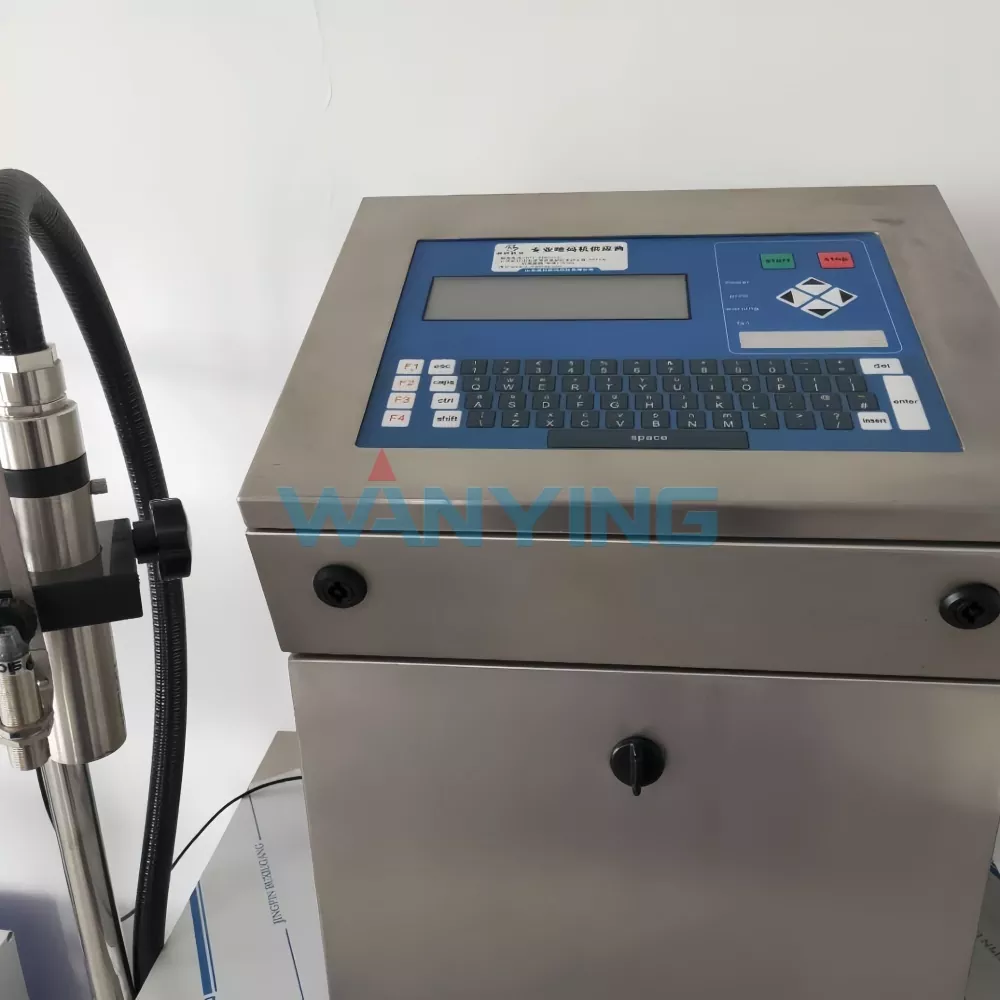
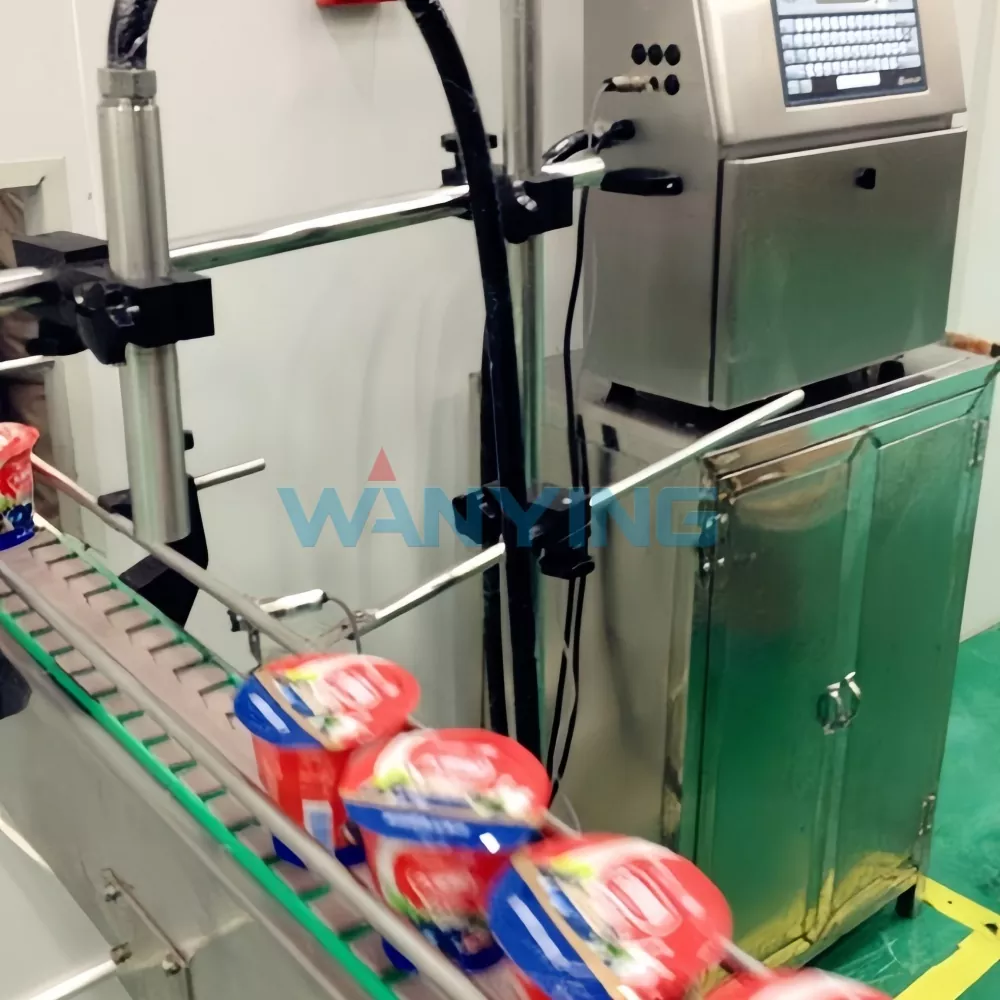
Challenge: A major sauce producer was experiencing high rejection rates (approx. 3.8%) due to smudged expiration dates on glass bottles. The existing continuous inkjet (CIJ) coder placed oily ink that rubbed off during the sleeve labeling process, leading to returns from supermarket chains.Wanying Solution:
· Installed a 600 dpi thermal inkjet coder with solvent-based, high-scratch-resistance ink
· Positioned the printhead before the labeling station, allowing the ink to fully dry before sleeves were applied
· Added an optional air-knife drying system to accelerate drying on warm bottles
Results:
· Rejection rate dropped from 3.8% to 0.2% within the first month
· Ink consumption reduced by 40% because the new system uses only 2 µL per character, compared to 15 µL on the previous CIJ
· Annual savings on consumables and rework: ~¥95,000
· The client now runs the same coder on both chili oil and vinegar lines, with a 2-minute changeover
Challenge: The plant printed production dates on flexible stand-up pouches at 80 pouches per minute. However, the flexible film surface caused ink to "puddle" and spread, making dates illegible. Additionally, the production floor had high humidity from nearby pasteurizers, causing frequent printhead clogs.Wanying Solution:
· Deployed a coder equipped with fast-drying MEK-based ink specifically formulated for non-porous films
· Integrated the coder with the pouch filler's encoder to synchronize print timing precisely
· Installed a printhead heating jacket to maintain optimal ink viscosity in humid conditions
Results:
· Legibility score (measured by OCR camera) improved from 82% to 99.6%
· Clogging incidents reduced from weekly to once per quarter
· Production line speed increased to 95 pouches/min after optimization
· The dairy has since ordered three additional coders for their other lines
Challenge: The bottler printed batch numbers and "best before" dates on 550 mL PET bottle caps. Their existing handheld printer was slow, inconsistent, and required two operators per shift. They needed an automatic, high-speed solution that could keep pace with a 36,000 BPH filler.Wanying Solution:
· Installed a high-speed inkjet coder with 512-nozzle printhead, printing a 3-line code (batch, date, and shift code) on each cap
· Mounted the printhead on a custom adjustable stand above the conveyor, with a synchronized strobe light for easy visual inspection
· Connected the coder to the plant's network for centralized data logging
Results:
· Printing speed matched the filler at 600 bottles per minute
· Operator requirement reduced from 2 to 0.5 FTE (one operator monitors three lines)
· Code readability passed rigorous retail audits with 100% success
· The plant expanded the solution to two additional water lines within the year
A: TIJ technology, used in Wanying coders, works by heating ink in microscopic chambers to form droplets that are precisely ejected onto the substrate. CIJ technology, on the other hand, continuously pumps ink through a pressurized nozzle and deflects droplets electrostatically.
|
Feature |
TIJ (Wanying) |
CIJ (Traditional) |
|
Print quality |
High resolution (600 dpi) – sharp text, barcodes |
Lower resolution (~300 dpi), more ragged edges |
|
Ink consumption |
Only when printing – very efficient |
Continuous ink circulation – higher consumption |
|
Maintenance |
Printhead clean rarely needed, simple |
Daily nozzle flushing, solvent make-up required |
|
Cost of ownership |
Lower – no pumps, filters, or makeup solvents |
Higher – requires solvents, filters, and regular service |
|
Suitable for |
Most food packaging (glass, PET, film, carton) |
Porous surfaces, large character heights (>12 mm) |
If your application demands high-resolution codes (especially 2D barcodes or small fonts) on rigid or semi-rigid surfaces, TIJ is the superior choice. Wanying's TIJ coder provides this at a significantly lower operating cost than traditional CIJ machines.
A: Absolutely. Our coders are designed for dynamic data printing. Using the built-in software, you can:
· Generate sequential serial numbers (e.g., lot numbers 001–999)
· Print expiry dates that automatically calculate from production date + shelf life
· Encode variable batch data into QR codes or DataMatrix 2D codes for full traceability
Data can be imported from a connected PC or server via Ethernet, making it easy to sync with your WMS (Warehouse Management System) or ERP platform. For clients in the pharmaceutical or high-end food sector, we offer audit trail software that logs every code printed with timestamp and printer parameters.
A: Routine maintenance on the Wanying Inkjet Coding Machine is minimal:
|
Task |
Frequency |
Time Required |
|
Clean printhead exterior |
Daily (end of shift) |
2 minutes |
|
Check ink level |
At start of each shift |
1 minute |
|
Automatic nozzle cleaning cycle |
Operator-initiated or schedule |
30 seconds (automated) |
|
Replace ink cartridge |
As needed (alert on screen) |
1 minute |
|
Replace air filter |
Every 3 months |
5 minutes |
We recommend keeping the following consumables and spares on-site:
· 1 spare ink cartridge per active printhead
· 1 spare printhead cleaning kit (includes swabs and cleaning fluid)
· 1 spare air filter (if operating in dusty environments)
· 1 spare power supply board (for mission-critical 24/7 lines)
As a reliable supplier, we maintain a regional spare parts warehouse that ships most components within 48 hours. For clients outside major cities, we offer a "critical parts kit" with the initial purchase to eliminate downtime risks.
The Wanying Inkjet Coding Machine interfaces seamlessly with:
· Fillers – receives start/stop signals to match product flow
· Labelers – prints variable data that matches label information
· Case packers – applies secondary codes to cases for pallet-level traceability
· Vision inspection systems – provides trigger signals for code verification
Depending on your conveyor and product height, we offer:
· Pedestal mount – fixed stand beside the conveyor
· Overhead gantry – suspended above the line (ideal for pouches and flat cartons)
· Side-mount bracket – attached to the conveyor frame
· Adjustable swing-arm – allows printhead retraction for cleaning or changeover
|
Factor |
Wanying Advantage |
|
Food-industry focus |
We know hygiene requirements, wash-down environments, and the importance of non-migration inks |
|
Proven reliability |
850+ coders installed; mean time between failures (MTBF) exceeds 8,000 hours |
|
Competitive consumable cost |
Our ink cartridges deliver up to 600,000 characters per 42 mL – among the best in class |
|
Local support, global reach |
As a manufacturer with in-house engineering, we offer factory-direct pricing and customized solutions not available through distributors |
|
Flexible terms |
Leasing options available for clients preferring opex over capex |
The Wanying Inkjet Coding Machine is more than a printing device—it is a quality assurance tool that protects your brand, satisfies regulators, and streamlines your operations. With robust construction, smart ink management, and a user interface designed for factory-floor conditions, it delivers legible, lasting codes on glass, plastic, film, and carton.Whether you are coding oyster sauce bottles in Sichuan, yogurt pouches in Shandong, or purified water caps in Guangxi, Wanying provides the expertise, service, and technology to keep your production running smoothly.
Address
Xihenao Industrial Zone, Fenglin Town, Yangxin County, Huangshi City, Hubei Province, China
Tel