Article Summary: Powder products are difficult to package consistently because their density, particle size, flowability, moisture content, and tendency to form dust can vary significantly. Manual or poorly matched filling equipment may result in inaccurate doses, material waste, inconsistent package weights, production interruptions, and higher labor costs. A properly configured Powder Filling Machine can address these problems through controlled dosing, adjustable filling parameters, automated operation, and integration with other packaging equipment. This article explains how powder filling technology works, what factors affect filling accuracy, how to select suitable equipment, and how manufacturers can improve productivity while maintaining reliable package quality.
Powder packaging may appear straightforward, but accurately transferring a measured quantity of powder into a container is considerably more complicated than filling many liquid products. Powders do not always flow in a predictable manner. Two materials with the same nominal weight can occupy different volumes, while the same material can behave differently when its moisture content, particle distribution, or compaction changes.
Fine powders can generate dust during handling. Lightweight materials may bridge inside a hopper, while cohesive powders can cling to equipment surfaces. Some products flow freely, whereas others require controlled mechanical feeding to maintain a stable output.
These characteristics create several common production challenges:
A purpose-designed Powder Filling Machine addresses these issues by controlling the quantity delivered during each filling cycle rather than relying on manual estimation.
The operating principle depends on the machine configuration and the characteristics of the product, but automated powder filling generally follows a controlled sequence.
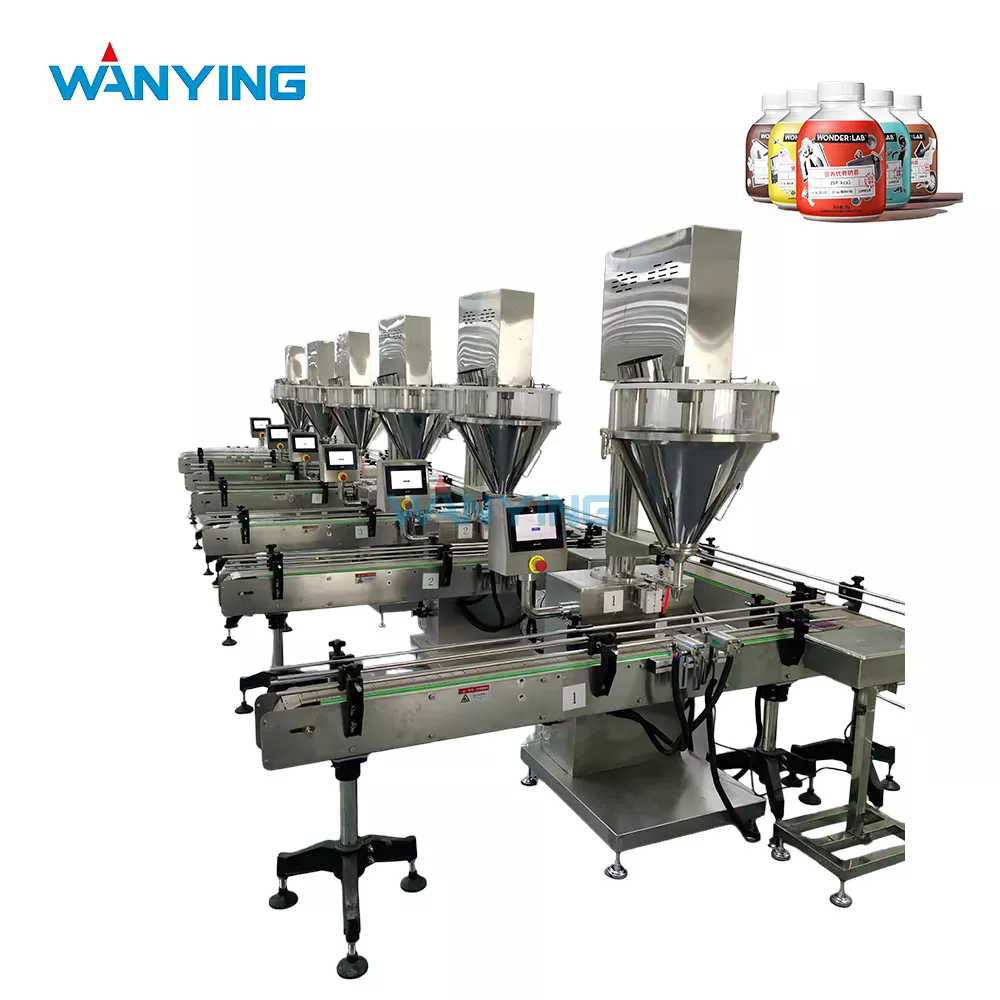
For many powder applications, an auger-based dosing mechanism is particularly useful because the rotating screw can control how much material is transferred during a filling cycle. Servo-driven control can further improve repeatability by allowing the rotation and filling parameters to be adjusted according to the product and target dose.
The practical objective is not simply to move powder quickly. The machine must establish a repeatable relationship between the product, dosing mechanism, container, and programmed filling parameters.
Filling accuracy is one of the most important considerations when purchasing powder packaging equipment. Even a small error repeated thousands of times can create substantial product loss or inconsistent package weights.
Several factors contribute to better filling consistency.
An auger provides mechanical control over powder movement. By adjusting parameters such as screw rotation and filling time, manufacturers can establish a repeatable dosing process.
Servo technology allows the dosing mechanism to be controlled precisely. This is especially useful when different products or package sizes require different filling parameters.
Powder density and flow characteristics affect the quantity delivered during each cycle. A suitable machine should therefore allow operators to adjust recipes rather than forcing every product to use identical settings.
Even an accurate dosing mechanism cannot compensate for unstable product feeding. Consistent powder supply to the dosing system is therefore essential for maintaining repeatable output.
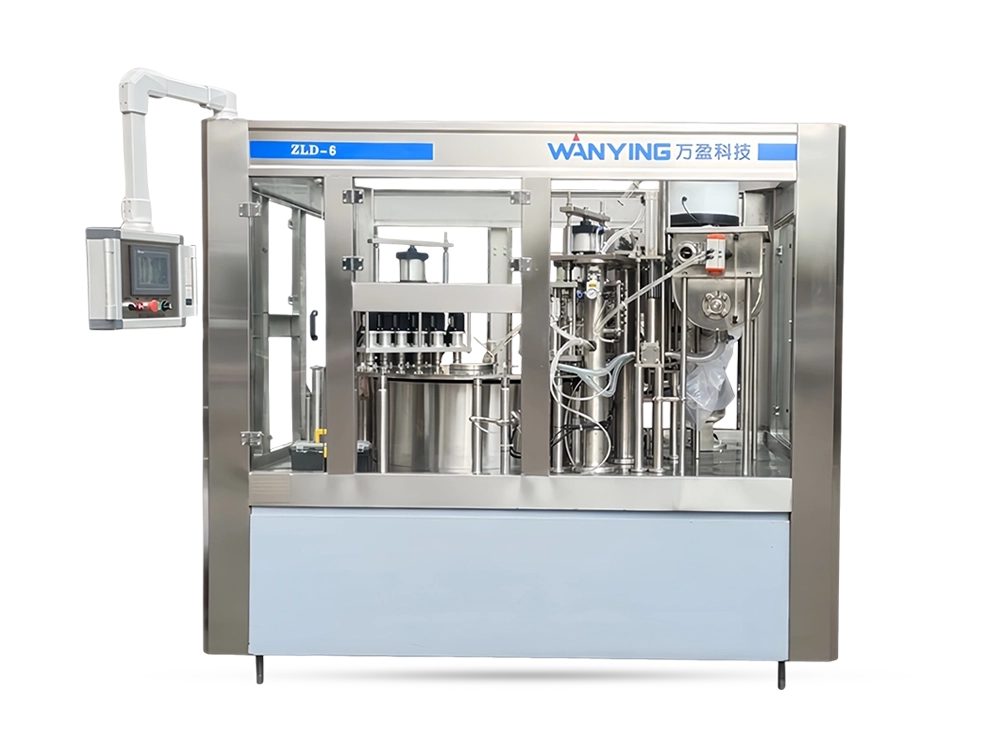
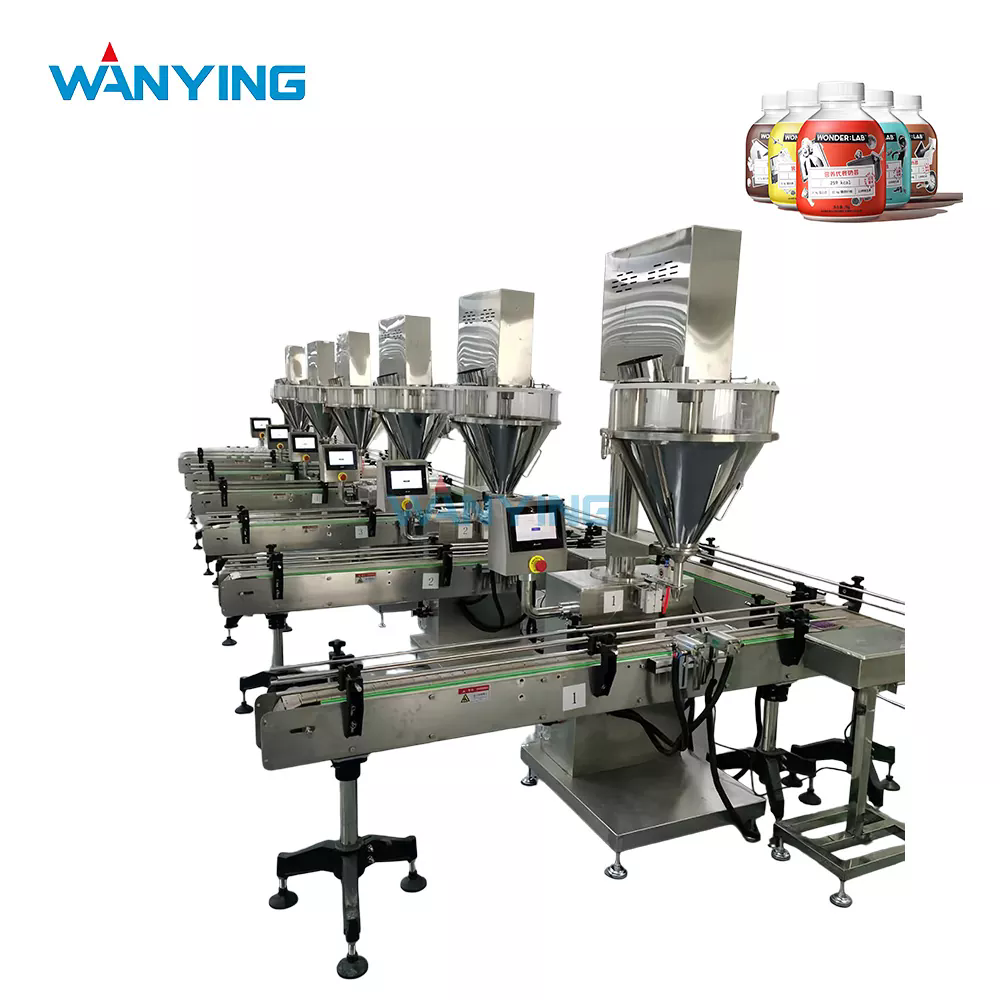
Wanying's Powder Filling Machine is designed with adjustable filling parameters and servo auger filling to accommodate different powder characteristics. Its stated filling range is approximately 10–5000 g, with filling accuracy of up to ±1% depending on material properties and operating conditions.
The value of a Powder Filling Machine becomes particularly apparent when a manufacturer moves from manual or semi-automatic packaging toward repeatable automated production.
| Production Challenge | Automated Filling Approach | Expected Operational Benefit |
|---|---|---|
| Inconsistent package weights | Controlled mechanical dosing | More consistent filling results |
| Excessive product giveaway | Adjustable target quantities | Reduced unnecessary material consumption |
| High labor requirements | Automated filling cycles | Lower dependence on repetitive manual work |
| Slow filling speed | Continuous automated operation | Higher production throughput |
| Frequent product changes | Programmable filling parameters | More efficient changeovers |
| Powder handling difficulties | Dedicated feeding and dosing structure | Better process control |
Automation does not eliminate the need for skilled operators. Instead, it shifts the operator's role from repetitive manual filling toward machine supervision, parameter management, quality inspection, sanitation, and production control.
One of the biggest mistakes when purchasing powder filling equipment is assuming that every powder behaves in the same way. The machine should be selected according to the actual material characteristics and target package size.
Common applications include:
Compatible non-food powder applications may also be possible when the equipment configuration, material-contact components, hygiene requirements, and safety conditions are appropriate.
Before selecting equipment, manufacturers should provide the supplier with representative samples or detailed information about particle size, bulk density, flowability, moisture sensitivity, and packaging requirements. This information can help determine whether an auger filling system or another dosing method is appropriate.
Modern powder packaging operations use many different container formats. The filling machine should therefore be evaluated as part of the complete packaging process rather than as an isolated piece of equipment.
Depending on the configuration, powder filling equipment may work with:
Container dimensions, opening diameter, material rigidity, target fill weight, and downstream sealing requirements all influence machine configuration.
For example, a narrow-neck bottle may require a different filling arrangement from a wide-mouth jar. A pouch-based application may also require a different handling sequence from a rigid container line.
For this reason, manufacturers should not evaluate a machine only by its advertised filling range. Container compatibility and the complete production sequence are equally important.
When comparing Powder Filling Machine suppliers, technical specifications provide a useful starting point. However, each specification should be considered in relation to the actual application.
| Specification | Why It Matters |
|---|---|
| Filling range | Determines whether the equipment can accommodate required package sizes. |
| Filling accuracy | Influences product consistency and material giveaway. |
| Production capacity | Shows whether the machine can meet the required output. |
| Dosing mechanism | Should match the flow and handling characteristics of the powder. |
| Control system | Affects parameter management, operation, and recipe changes. |
| Contact material | Important for hygiene, corrosion resistance, and product compatibility. |
| Container compatibility | Determines whether the machine can fit the intended packaging format. |
| Integration capability | Determines how easily the machine can connect to upstream and downstream equipment. |
For reference, Wanying lists a filling capacity of approximately 15–60 containers per minute for its Powder Filling Machine. The actual production rate can vary according to the powder, target quantity, container characteristics, machine configuration, and operating conditions.
The best Powder Filling Machine is not necessarily the machine with the highest theoretical speed. It is the machine that can reliably achieve the required filling performance under real production conditions.
Before making a purchasing decision, manufacturers should evaluate the following questions:
A detailed application discussion with the equipment manufacturer can prevent a common purchasing problem: selecting a machine that performs well in general but does not match the customer's actual powder and packaging conditions.
A powder filler can operate as a standalone machine, but many manufacturers achieve greater productivity by integrating it with other automated equipment.
A typical packaging sequence may include:
Container feeding → Filling → Capping or sealing → Coding → Labeling → Inspection → Cartoning
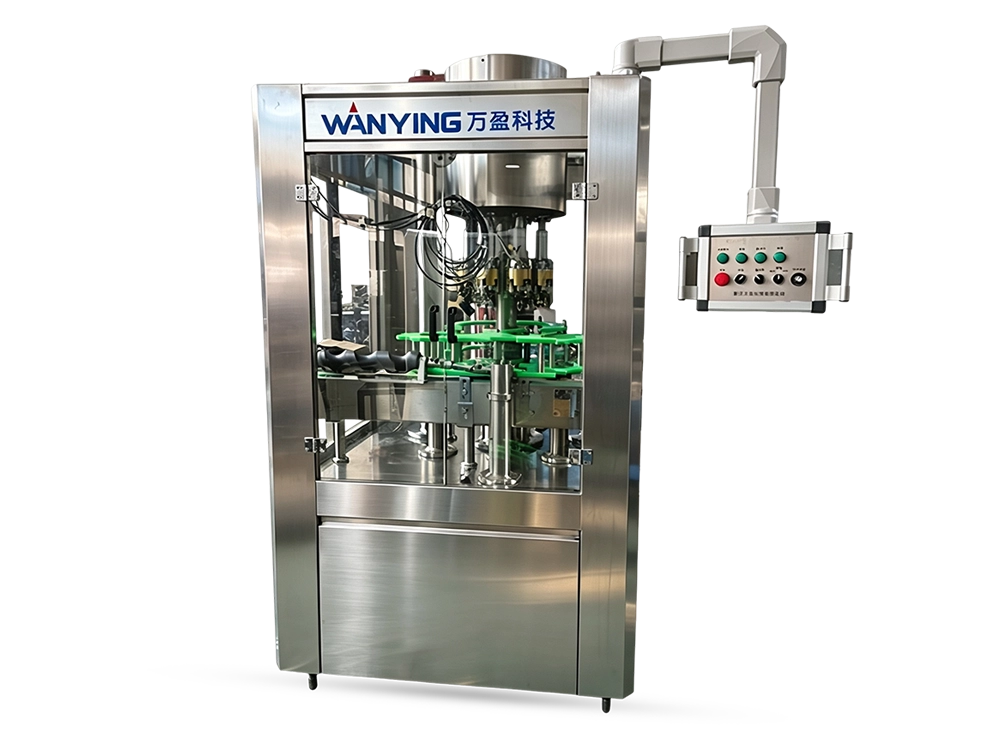
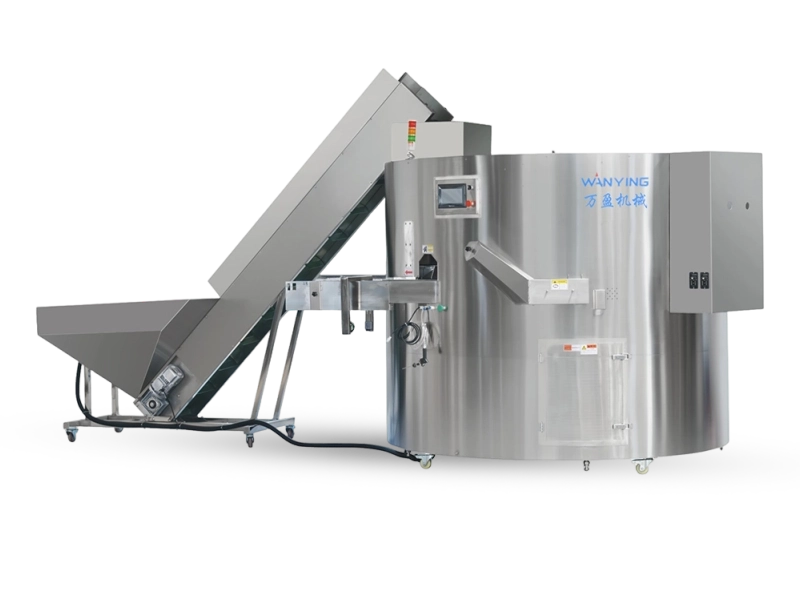
For bottle-based applications, an automated system may incorporate a bottle unscrambler before filling and a capping machine after filling. Labeling and coding systems can then complete product identification before finished packages are transferred to secondary packaging.
The major advantage of line integration is reduced manual handling between processes. This can improve production continuity and reduce the risk of bottlenecks caused by transferring containers manually from one machine to another.
However, integration should be planned around the actual line speed. If the filler operates significantly faster than the downstream capping machine, the capping process can become a bottleneck. A complete line should therefore be balanced according to the slowest critical process.
Powder can accumulate in hoppers, dosing components, transfer areas, and container openings. Regular cleaning is therefore essential, particularly in food and nutritional applications.
Manufacturers should establish a practical cleaning and inspection schedule that covers:
Quick-disassembly product-contact components can make routine sanitation easier. Wanying states that its powder filling equipment uses a structure intended to facilitate the removal of product-contact components for cleaning and maintenance.
Preventive maintenance is also preferable to waiting for a failure. Operators should monitor abnormal noise, changes in dosing consistency, loose components, sensor problems, and unusual powder accumulation before these conditions develop into production interruptions.
Hubei Wanying Machinery Co., Ltd. specializes in filling and packaging equipment for food processing and related applications. According to the company's product information, its manufacturing operation includes machining, assembly, testing, and commissioning processes, supported by a standardized production facility.
Rather than treating powder filling as a single standard application, Wanying approaches equipment configuration according to several practical variables, including:
The company's listed Powder Filling Machine uses a servo auger filling method, PLC touchscreen control, and food-grade SUS304 product-contact material, with SUS316 available as an option according to the stated specifications.
Wanying also reports experience serving more than 1,300 customers and provides support covering installation guidance, remote technical assistance, operator training, spare parts, and production-line optimization.
These services are particularly valuable for manufacturers purchasing automated filling equipment for the first time. Machine performance depends not only on hardware selection but also on commissioning, parameter adjustment, operator training, and integration with the rest of the packaging line.
Yes, provided the products are compatible with the machine's dosing system. Filling parameters can be adjusted according to differences in powder density, particle size, flowability, and target quantity. Testing is recommended when switching between substantially different materials.
The appropriate range depends on the machine configuration. Wanying's listed model provides an adjustable range of approximately 10–5000 g. The practical operating range should always be confirmed according to the specific powder and container.
Accuracy depends on the material and operating conditions. Wanying lists a filling accuracy of approximately ±1% depending on powder properties. Actual results should be verified through product testing because density and flow behavior can affect dosing consistency.
Yes. Servo auger filling can be suitable for many fine powder applications. However, fine powders can have challenging flow and dust characteristics, so the correct screw, feeding arrangement, filling parameters, and machine configuration should be selected for the specific material.
Yes. The filler can be configured for integration with equipment such as bottle unscramblers, capping machines, labeling machines, coding systems, inspection equipment, and automatic cartoning systems, depending on the required production process.
Depending on the configuration, powder filling equipment can handle containers such as plastic bottles, glass jars, composite cans, and compatible pre-made pouches. Container dimensions and filling requirements should be confirmed before equipment selection.
Stainless steel is widely used for product-contact components in food processing because of its corrosion resistance, cleanability, and suitability for hygienic applications. The correct material grade should be selected according to the product, sanitation method, and applicable production requirements.
Waste can be reduced by improving dosing consistency, selecting an appropriate filling mechanism, controlling powder feeding, optimizing filling parameters, and preventing unnecessary overfilling. Proper equipment selection is particularly important because powder behavior varies considerably between products.
Manufacturers should provide the powder name and characteristics, target filling weight, container dimensions, packaging format, desired production capacity, available factory space, power requirements, automation expectations, and any applicable hygiene or regulatory requirements. Product samples may also be useful for machine testing.
A Powder Filling Machine is more than a device for transferring powder into containers. When correctly selected and configured, it becomes an important part of a controlled packaging process that can improve dosing consistency, reduce material giveaway, decrease repetitive labor, increase production efficiency, and support more stable product quality.
The key to successful powder filling is matching the equipment to the material. Powder density, particle size, flowability, moisture, package size, container design, required output, and downstream processes all influence machine performance. Manufacturers should therefore evaluate the complete application rather than selecting equipment based solely on speed or nominal filling capacity.
For companies seeking a configurable solution for food powders, nutritional products, seasonings, flour, coffee, and other compatible applications, Hubei Wanying Machinery Co., Ltd. provides Powder Filling Machine solutions with adjustable dosing, automated control, multiple packaging options, and customized engineering support.
Ready to improve powder filling consistency and production efficiency? Discuss your powder characteristics, target filling range, container format, and production requirements with the Wanying team today. Contact us to explore a Powder Filling Machine configuration designed around your actual production needs.
Note: Machine performance and filling accuracy can vary according to powder characteristics, container specifications, operating parameters, and equipment configuration. Production testing should be carried out before finalizing a machine for a specific application.